
 “Some people tell us that we need to have beautiful homes in order to draw people to Christ. They say that our beautiful home is analogous to God’s beauty…they obviously have forgotten the manger, a squalling infant covered in amniotic fluid and blood, wrapped in coarse rags, and the bleeding and bruised naked man hanging on a cross. It’s his beauty, not our homemaking skills that draws a heart to love and worship.”
christianity
Advent Acts of Kindness
I love this Christmas project which Julie Fisk at “She Loves Magazine” has come up with. It is a brilliant way of sharing the GRACE of God with others and focusing on the true GIFT of Christmas (Christ!) Here is an excerpt of the post, but click on the link at the end for the whole story:
“It’s hard to notice the clanging of commercialism when you are searching high and low for the next person to help.”

Every December I struggle with how to refocus my family’s attention on Christ, on giving, and on thinking of something or someone other than ourselves, or on what Santa might bring, or the presents on our list.
It’s a battle against stores, commercials and our culture as we enter a crazy, too-early, over-hyped holiday season, intent on talking about spending money and buying gifts and going to parties. . . .
And so, last year, as two friends and I lamented over yet another over-commercialized Christmas and our struggles to teach our children something different, we decided to fight back against the holiday insanity and join forces for our first Advent Acts of Kindness (AAK).
Our inspiration was found in Mark 12:28-31:
One of the teachers of the law came and heard them debating. Noticing that Jesus had given them a good answer, he asked him, “Of all the commandments, which is the most important?”
“The most important one,” answered Jesus, “is this: ‘Hear, O Israel: The Lord our God, the Lord is one. Love the Lord your God with all your heart and with all your soul and with all your mind and with all your strength.’ The second is this: ‘Love your neighbor as yourself.’ There is no commandment greater than these.”
We celebrated Advent (24 days, plus our Christmas Finale) with a daily kind act—most of which included our children’s direct participation—but this could easily be scaled back to a weekly kind act or any number that fits your life and your schedule.
We rotated between community acts (quarters in the laundry mat, cookies for the police department), national acts (Red Cross Mail for Heroes, Toys for Tots), and international acts of kindness (World Vision, International Justice Mission, Heifer International).
As our children helped us deliver gifts, write cards and make projects, we found ourselves talking about Christ, about sacrifice, and about the true meaning of Christmas in our families and amongst ourselves.
And, truthfully, our eyes became less focused on the commercialism of Christmas.
My girlfriends and I found ourselves walking through the days with our eyes and ears and hearts open wide—searching for a need to meet. Searching for our next kind act. It’s hard to notice the clanging of commercialism when you are searching high and low for the next person to help.
What I realized during this inaugural Advent Acts of Kindness, as I watched my daughter’s head bent low over her card written to a child stricken with cancer, was that this time redefining Christmas was just as important for my soul as it was for my children. Culture seeps into me when I’m not looking, not paying attention, distracted by a million other things.
My family will be celebrating our Second Annual Advent Acts of Kindness this Christmas season, and we invite you to join us.
http://shelovesmagazine.com/2013/advent-acts-kindness/
You may also enjoy:
Why wouldn’t we Remember Christmas?

The hope of redemption behind prison bars
This is a great clip – it is a remarkable story of redemption: “Timothy made a horrible choice when he was just a kid, but God is using him for some serious kingdom good.” It is also a testimony to the power of music to impact the hardest of hearts. You can read more about Timothy’s gift here: http://timothysgift.com/
You may also enjoy:
What’s so Amazing about Amazing Grace?

10 Big Daily Reminders
 This is a post I found at Desiring God. It is a great summary of the things we are so quick to forget (overnight)! We now have several copies around the house. Enjoy.
Ten Big, Daily Reminders by Matt Reagan | March 20, 2013
I wake up lost every morning. At least that’s what it feels like. Perhaps something similar is true of you. Somehow during the night I’ve forgotten the big realities about God and the universe and myself and the gospel. I desperately need to steady myself with biblical truth rather than stumbling forward to live from unbelief.
I tend to forget the big realities during the day as well. I regularly catch myself living on the idiotic assumption that I will constantly remember the things that really matter — and that I will act in line with them. I assume that the realm of the seen and touched will not overwhelm the realm of the unseen and hoped for.
But in reality, whether it’s night or day, I don’t stay awake to what’s truly important for very long. I am like that college kid who sits in church on Sunday morning trying to keep his eyes open after an irresponsibly late Saturday night. My eyelids droop by default, and my mind wanders from the glories of the Bible to superfluous, naturalistic daydreams (that may or may not end with an embarrassing full-body twitch that snaps me awake again). So I’ve learned over time to put structures in place that remind me of those unseen things, especially during my bleary-eyed, half-conscious mornings. One effort is this list of ten truths. I hung it up next to our dining room rocking chair (my preferred spot for study and contemplation). It’s developed over the years as a list of the daily reminders I need most. Many of them overlap substantially, but a double reminder only reinforces the original purpose.
1) God exists. (Exodus 3:14; John 8:58)
It seems so simple, so basic, but I tend to wake up a naturalist, and a narcissistic one at that. I assume that all there is in the world is what is in front of my face. My bed, my wife, my kids, and most importantly myself. The simple yet ultimate existence of God immediately clears my lens, makes me small, and infuses meaning into every step. God exists — and that changes everything.
2) God loves you. (Romans 5:8; John 16:27; Jeremiah 32:40–41)
Another massive biblical reality, this immediately counters my hesitation to embrace God’s ultimate authority, reminding me that he has set his affections on this little speck of a person. He is far from indifferent toward me.
3) Jesus died for you, and the Father has now bound himself to give you only good things. (Romans 8:28; Romans 8:32)
This draws me quickly to the central reality of all history: the cross. It is an objective truth set in time and space, so it immediately draws my gaze away from my own capacity to garner acceptance from God through my efforts. Furthermore, the outworkings of the cross make clear that even the harshest trials will come to me as blessing, for my ultimate good, no matter how bad I feel at the time.
4) God sees you as perfect. (Hebrews 10:14; 2 Corinthians 5:21)
My self-absorption, anxiety, and self-pity know no bounds. They must be beaten into submission by the beauty of imputed righteousness. The question, “How am I doing?” is met head-on with the answer, “Perfect.” In that regard, every day is a good day.
5) That is because of Jesus’ perfection, not yours. You deserve hell. (Romans 3:10; 1 Timothy 1:15)
There are two main purposes here: first, to counterpunch when my flesh looks for a way to subtly claim credit for the perfection that is mine only in Jesus; second, to maintain a sense of trembling gratitude for my salvation. While I enjoy the glory of the gospel, there should always be an awestruck voice in the back of my mind that is whispering, “I shouldn’t be here.”
6) You will die. (James 4:14, Hebrews 9:27)
Nothing brings clarity to me like this simple and straightforward reminder. How quickly I assume my earthly immortality, and how often I need to think of myself as a terminal cancer patient.
7) You will live forever in the new heavens and new earth. (Romans 8:18, Hebrews 10:34)
I don’t want to be a clear-headed fearer of death, like some atheistic poet. I want to glory in the guarantee of indescribable bliss that is just around the corner. And I want to live like it’s real — because it is.
8) For now, you are an exile on the earth. (Hebrews 11:13–16)
This keeps me from feeling at home when I’m not at home (especially in my own home). It prepares me for not fitting in, for weird looks when I speak with conviction about Jesus, and for holding loosely to every bit of earthly life.
9) Nothing on earth is truly worth putting your hope in. (Jeremiah 2:13; Galatians 6:14)
This is a practical specification of #8. It is right for me to remember that I will inevitably be disappointed by every earthly pursuit or relationship or emotional experience. It runs me back to my true Home and the true Bridegroom.
10) You have no right to be unhappy. (Philippians 4:4; 1 Peter 1:8–9)
This is a summarizing application of all the previous reminders, but it merits its own slot. How quick I am to become “blah” when there is a treasure trove of happy reality at my disposal! I must beat this into my discontent little brain. I can be plenty unhappy, but I have no right to be.
These reminders flee from my mind like stray socks in an armful of laundry. Every time I pick one up, another falls. By the time I read #10, #1 is beckoning again. What a grace that #4 is still true!
You may also enjoy:
Song of the Morning (at A Needed Word)
Why wouldn’t we remember Christmas? Is Your Smart Phone making you dumb?

The blessed and God-breathed Book (2 Timothy 3:16)
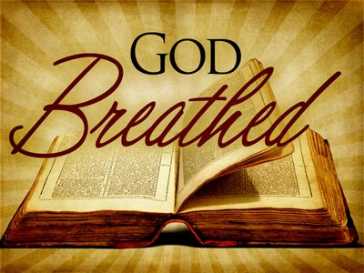 This is one of the most breath-taking Three Sixteens, one which you may have already committed to memory. 2 Timothy 3:16-17 is that great statement of assurance concerning God’s Word, the Bible, the God-breathed book on which we build our faith.
“All Scripture is breathed out by God and profitable for teaching, for reproof, for correction, and for training in righteousness, that the man of God may be competent, equipped for every good work.” (ESV)
“All Scripture is inspired by God and is useful to teach us what is true and to make us realise what is wrong in our lives. It corrects us when we are wrong and teaches us to do what is right. God uses it to prepare and equip his people to do every good work.” (NLT)
I recently read through 2 Timothy with a friend, over several weeks and many great coffees! The whole letter is a call to persevere in the faith, despite persecutions and difficult people. These are (possibly) Paul’s parting and most important words. He wants Timothy to stick to the truth of the Scriptures, which he’d been taught from his earliest days. (For Timothy this would mean the Old Testament scriptures as well as the teachings of the apostles.) There are so many treasures in this 3:16 (and 17), but I’ll focus on just three points:
1. The Word is God-breathed: Just as we speak with our actual breath, which forms and carries the sounds of our words, so it is with God’s breath. He has exhaled these words, he has breathed them into the minds and hearts of people who have faithfully written them down, carried along by the Holy Spirit who always does the Father’s will. How else could this extraordinary book, penned by so many authors across millennia, have such consistency and unity of message? This is His Word to us and he has ensured that his breath, his voice, will continue to be heard as we await the return of Christ, the Word of God.
I love what Peter Blowes says about the way the words of the omnipresent and eternal God apply across all time and space:
“. . . God had every reader of Holy Scripture in mind at the time of its ‘exhalation’. This means not only that God’s word is inspired and universally applicable, but also that, in it, God is speaking presently to every particular reader (or hearer) of his Word.” (2011, “Reading the Bible”, Matthias Minizine).
This leads to my second point.
2. Reading the Word is the most profitable thing we can do.
More than the early morning coffee, jog, paper, news update, more than crossing things off our to do list, more than any amount of television viewing, study or social media, more than relaxing with the family, more than making money . . . investing in the Word of God is THE most profitable thing we can do. The world shouts at us, calling for our attention, telling us that those ancient words are dead, irrelevant and useless. But as we immerse ourselves more and more in his Word we understand why reading it is the most profitable thing we can do. By reading we come to know our immortal, invisible, all wise, good and gracious God. The Spirit works in us and we grow in confidence of his power, his might and the reality of his work in our world and hearts. We grow in the certainty of our salvation won in Christ.
3. The Word is wonderfully sufficient, equipping us for every good work.
The Bible equips us not by containing enough lists of do’s and don’ts to train us how to do good in every situation (this is the world’s view of the “good book” – which shouldn’t be ours. Christ has fulfilled the law!) Instead, the Word of God equips us by making us more like Christ – who is entirely and always about the Father’s good work. The Word changes us from the inside out and drives our behaviour. This behaviour becomes good work, good fruit (like those good works prepared in advance for us, which Paul described in Ephesians 2:8-10).
John Piper explains well:
“Bearing fruit in “every good work” (see Colossians 1:10 ) means that it comes out on the branches of your life naturally from something that has changed inside. And what has changed is that you are dead to the law as a set of lists to constrain from the outside, and are now united to Jesus Christ in a relationship of joyful trust so that when he speaks—even speaks some of that same law—it comes from within as the desire of your heart. . . .The Scripture, day after day, reveals to us the greatness and the beauty and the power and the wisdom and the mercy of all that God is for us in Christ so that by the power of the Spirit we find our joy in him, and the ways of sin become distasteful—indeed ugly and repugnant. Yes the Bible gives us many specifics as pointers how to live. But most deeply the way the Bible equips us for every good work is by changing what we find satisfaction in so that our obedience comes from within freely, not by coercion from without. It does this when we read it and meditate on it and memorize it and meditate over it every day.”
(John Piper from Desiring God)
You may also enjoy:
Sharing the rich, indwelling Word Sharing the perspicuity of God’s gracious Word

All of Creation, sing with me now, the veil is torn!
 “Therefore, brothers and sisters, since we have confidence to enter the Most Holy Place by the blood of Jesus, by a new and living way opened for us through the curtain, that is, his body, and since we have a great priest over the house of God, let us draw near to God with a sincere heart and with the full assurance that faith brings. . . “ (Hebrews 10: 19-22)
For me one of the most striking events of Christ’s crucifixion is that moment when the temple curtain is torn from top to bottom. I always wonder who heard or saw that, who were witnesses to that moment? And what an astounding occurrence, coinciding with the death of the one who was Son of God, Son of Man, the promised King of the Jews who would reconcile God and man. But this is no happy coincidence or accident or furnishing fail! It is God’s clear and powerful object lesson. Listen to what Spurgeon says (1888):
“The rending of the veil of the temple is not a miracle to be lightly passed over. It was made of “fine twined linen, with Cherubims of cunning work.” This gives the idea of a substantial fabric, a piece of lasting tapestry, which would have endured the severest strain. No human hands could have torn that sacred covering; and it could not have been divided in the midst by any accidental cause; yet, strange to say, on the instant when the holy person of Jesus was rent by death, the great veil which concealed the holiest of all was “rent in twain from the top to the bottom.”
This supernatural event says that sinful man, who could not look on the glory of God, could now access God by the death of his perfect Son on the cross. Without being zapped or burnt to a crisp we sinful humans can now see the “glory of God in the face of Christ” (2 Cor 4:6). We can have direct access to a Holy God by trusting in the death of His Son for us, by His Spirit poured into our hearts, making us right with Him! Until this thick and weighty ‘veil’ was torn we were separated from God and knew only guilt. We had no hope. But from this point on we can have the certainty that we are acceptable to God because of Christ. This is amazing grace!
I love what the band Mercy Me have done in their song “All of Creation” – which takes us from this point where hope was born to singing out in praise to God. It calls for all of creation, both people and the natural world, to join and sing to the glory of their Creator. All creation is groaning, waiting the complete restoration when Christ returns, when the sons of God will be revealed (see Romans 8:19-24) – well I know I am! What better way to pass the time than to sing out praises to the one we wait for?
Separated until the veil was torn
The moment that hope was born
and guilt was pardoned once and for all
Captivated but no longer bound by chains
left at an empty grave
the sinner and the sacred resolved
And all of creation sing with me now
Lift up your voice and lay your burden down
And all of creation sing with me now
Fill up the heavens let his glory resound
Time has faded and we see him face to face
every doubt erased forever we will worship the king
The reason we breathe is to sing of his glory
And for all he has done
Praise the father, praise the son and the spirit in one
And every knee will bow oh and every tongue
Praise the father, praise the son, and the spirit in one.
You may also like:
The Great Unveilling
Creation calls – are you listening?
Science and God – still playing on the same team
Jesus, friend of sinners
 Jesus, Friend of Sinners is the title of a beautiful song from Casting Crowns’ most recent album “Come to the Well“. It is a song which speaks of need for us to show the love of Christ to others, to show what we stand for . . . that we stand for and by the grace that has been shown to us in Christ. We stand for His forgiveness, won on the cross. We want the world to know that our God shows unmeasured grace and love to those who are his enemies. We don’t want the world to define Christians as those who simply oppose everything, and who stand against them. Jesus is the only righteous Judge of those for whom he died, so let’s leave the judging to him. Let this resounding challenge (from the chorus) go with you today:
“Oh Jesus, friend of sinners, Open our eyes to the world at the end our pointing fingers
Let our hearts be led by mercy, Help us reach with open hearts and open doors
Oh Jesus, friend of sinners, Break our hearts for what breaks Yours.”
Jesus, Friend of Sinners
Jesus, friend of sinners, We have strayed so far away
We cut down people in Your name
But the sword was never ours to swing
Jesus, friend of sinners, The truth’s become so hard to see
The world is on their way to You
But they’re tripping over me
Always looking around but never looking up, I’m so double minded
A plank-eyed saint with dirty hands and a heart divided
Oh Jesus, friend of sinners
Open our eyes to the world at the end our pointing fingers
Let our hearts be led by mercy
Help us reach with open hearts and open doors
Oh Jesus, friend of sinners
Break our hearts for what breaks Yours
Jesus, friend of sinners
The One whose writing in the sand made the righteous turn away
And the stones fall from their hands
Help us to remember we are all the least of these
Let the memory of Your mercy
Bring Your people to their knees
Nobody knows what we’re for, only what we’re against
When we judge the wounded
What if we put down our signs, Crossed over the lines
And loved like You did
You love every lost cause, You reach for the outcast
For the leper and the lame, They’re the reason that You came
Lord, I was that lost cause, And I was the outcast
But You died for sinners just like me, a grateful leper at Your feet
‘Cause You are good, You are good
And Your love endures forever
And I was the lost cause, And I was the outcast
You died for sinners just like me
A grateful leper at Your feet
by Mark Hall, Matthew West © 2011 Sony/ATV Tree Publishing (BMI)
Listen to Mark Hall speak about the story behind the song – click HERE
You may also like:


Why men have stopped singing in church
This is one of the most thought-provoking articles I have read about congregational singing in quite a while. As musicians we appreciate the freedom we now enjoy to learn and teach an infinite number of great songs in our gatherings. We are no longer limited to the several hundred in our now passé hymn book. But what is the impact of this change, particularly for men? This post suggests many things we should perhaps take heed of. It reminds me of the benefits that come from sticking to a smaller playlist for a term, as people get to know songs better. Let me know what you think.
WHY MEN HAVE STOPPED SINGING IN CHURCH
 It happened again yesterday. I was attending one of those hip, contemporary churches — and almost no one sang. Worshippers stood obediently as the band rocked out, the smoke machine belched and lights flashed. Lyrics were projected on the screen, but almost no one sang them. A few women were trying, but I saw only one male (other than the worship leader) making the attempt.
A few months ago I blogged, “Have Christians Stopped Singing?” I did some research, and learned that congregational singing has ebbed and flowed over the centuries. It reached a high tide when I was a young man – but that tide may be going out again. And that could be bad news for men.
First, a very quick history of congregational singing.
Before the Reformation, laypersons were not allowed to sing in church. They were expected to stand mute as sacred music was performed by professionals (priests and cantors), played on complex instruments (pipe organs), and sung in an obscure language (Latin).
Reformers gave worship back to the people in the form of congregational singing. They composed simple tunes that were easy to sing, and mated them with theologically rich lyrics. Since most people were illiterate in the 16th century, singing became an effective form of catechism. Congregants learned about God as they sang about God.
A technological advance – the printing press – led to an explosion of congregational singing. The first hymnal was printed in 1532, and soon a few dozen hymns became standards across Christendom. Hymnals slowly grew over the next four centuries. By the mid twentieth century every Protestant church had a hymnal of about 1000 songs, 250 of which were regularly sung. In the church of my youth, everyone picked up a hymnal and sang every verse of every song.
About 20 years ago a new technological advance – the computer controlled projection screen – entered America’s sanctuaries. Suddenly churches could project song lyrics for all to see. Hymnals became obsolete. No longer were Christians limited to 1,000 songs handed down by our elders.
At first, churches simply projected the songs everyone knew – hymns and a few simple praise songs that had come out of the Jesus Movement. People sang robustly.
But that began to change about ten years ago. Worship leaders realized they could project anything on that screen. So they brought in new songs each week. They drew from the radio, the Internet, and Worship conferences. Some began composing their own songs, performing them during worship, and selling them on CD after church.
In short order we went from 250 songs everyone knows to 250,000+ songs nobody knows.
Years ago, worship leaders used to prepare their flocks when introducing a new song. “We’re going to do a new song for you now,” they would say. “We’ll go through it twice, and then we invite you to join in.”
That kind of coaching is rare today. Songs get switched out so frequently that it’s impossible to learn them. People can’t sing songs they’ve never heard. And with no musical notes to follow, how is a person supposed to pick up the tune?
And so the church has returned to the 14th century. Worshippers stand mute as professional-caliber musicians play complex instruments, sung in an obscure language. Martin Luther is turning over in his grave.
What does this mean for men? On the positive side, men no longer feel pressure to sing in church. Men who are poor readers or poor singers no longer have to fumble through hymnals, sing archaic lyrics or read a musical staff.
But the negatives are huge. Men are doers, and singing was one of the things we used to do together in church. It was a chance to participate. Now, with congregational singing going away, and communion no longer a weekly ordinance, there’s only one avenue left for men to participate in the service – the offering. Is this really the message we want to send to men? Sit there, be quiet, and enjoy the show. And don’t forget to give us money.
There’s nothing wrong with professionalism and quality in church music. The problem isn’t the rock band, or the lights, or the smoke machine. The key is familiarity. People enjoy singing songs they know.
How do I know? When that super-hip band performed a hymn, the crowd responded with gusto. People sang. Even the men.
http://www.patheos.com/blogs/afewgrownmen/2013/05/why-men-have-stopped-singing-in-church/
You may also enjoy:
How Church music can welcome newcomers When should we sing that song?


Living under the power of grace
 “Sin will have no dominion over me! Why? Because I’m not under the law any more. I’ve died to the law of Moses. The law of Moses did not give me power to obey God’s commands, it only informed me of God’s commands. But I’m not under the law any more, I’m under grace, and God’s grace is pulsing with power. God’s grace at work within me ensures that sin will have no dominion over me.”
(Stephen Altrogge. ‘The Blazing Centre‘)
You may also like:
This is Amazing Grace What is so amazing about “Amazing Grace”?
Love affair with the secular worldview?
 Planning today for songs to share with those who attend the intensive CMS Summer School at Mt Tamborine in January 2014. The theme is Christ’s Victory, specifically in the book of Revelation. I have been having a meeting with myself at a coffee shop and the level of agreement is quite remarkable!
One of the speakers for the conference is federal Secretary of CMS Australia, Peter Rodgers. At a recent speaking engagement, he shared some words which stand as a challenge to my comfortable, middle-class Aussie, Christian outlook. He suggests that Christians have a love affair with the secular worldview: “Australian Christians often value exactly the same things non-Christians value. They prioritise their own comforts over the gospel and consequently have a low commitment to global mission. The antidote to this is to help people develop a biblical worldview. The gospel of Jesus Christ is the central message of the bible. If people put Jesus and the gospel at the centre of their lives then mission will receive the attention it deserves.” from SMBC news winter 2013 issue 29.
The sad thing about these words is the extent to which I know they are true – for me, and most other Christians I know. But is it any wonder considering the amount of time we spend soaking ourselves in the worldview of the world’s media? (Read more on this here.) Oh that we would soak our minds more in the truths of God’s Word and keep the gospel at the centre of our lives.
‘Do not conform any longer to the pattern of this world, but be transformed by the renewing of your mind. Then you will be able to test and approve what God’s will is–his good, pleasing and perfect will.’ Romans 12:2
And in case you are curious, here are some of the songs I have selected to go with the Revelation/Christ’s victory theme: All I have is Christ (Sovereign Grace), Behold the Lamb (Communion Hymn – Getty), Beautiful Saviour (Stuart Townend), Come Hear the Angels Sing (EMU), Crown Him with Many Crowns (Hymn), Glorious Day (Casting Crowns), Grace has now appeared (EMU), Hail the Day (EMU), Hope of the Nations (Doerksen), It is Well (Todd Fields), Jesus Thankyou (Sovereign Grace), Let Your Kingdom Come (Sov Grace), Majesty of Heaven (Tomlin), No Other Name (Trevor Hodge), See Him Coming (EMU), We Belong to the Day (Michael Morrow).
You may also like:
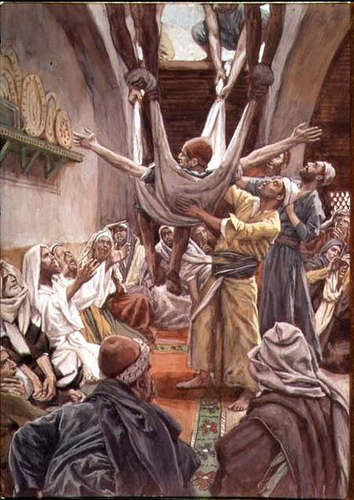
On being persistent, creative and sacrificial to bring people to Christ
 sevennotesofgrace