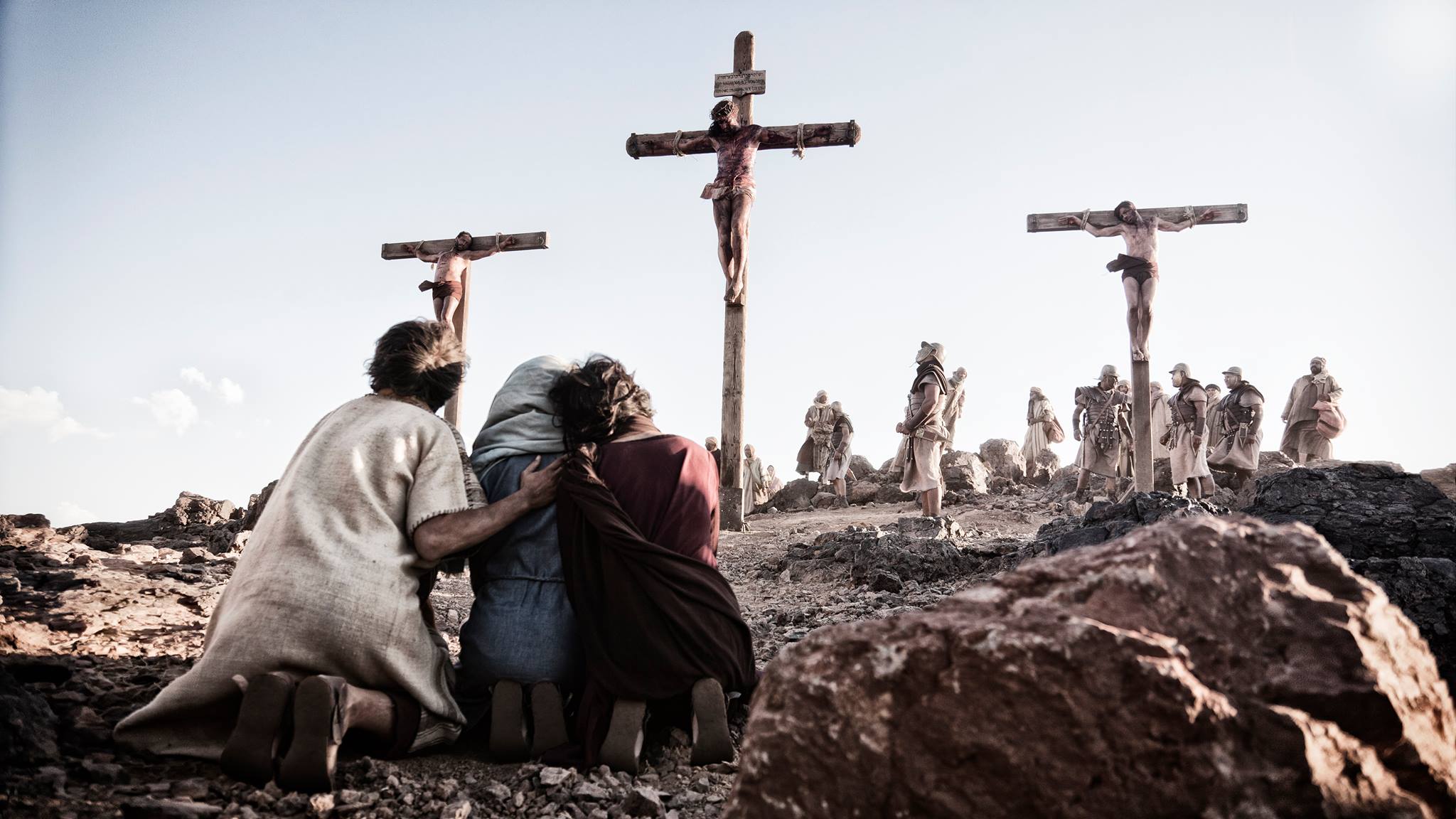
3/7: Affection (The Significance of Jesus’ Final Words on the Cross)

If you have just joined me for this series exploring Jesus’  final words on the Cross, please see also my previous two daily posts. This series combines key ideas from Arthur W. Pink’s “The Seven Sayings of the Saviour on the Cross” with my own observations and highlights.

Jesus’ first two phrases focus on forgiveness (for those who know not what they do) and then salvation (for the repentant thief on the cross, who would certainly share paradise with Jesus). We looked at Christ as our substitute, who dies in our place – who rescues repentant sinners to forgiveness and eternal life.

III. Words of Affection

The third set of words Jesus utters is recorded in John 19:26-27. They are a compassionate request of two people who stand by the Cross, a request which ensures their relationship and care into the future. These two are Mary (his mother) and John, the disciple. In Christ’s most dire moment, his focus includes providing for the earthly needs of those he loves.

When Jesus saw his mother there, and the disciple whom he loved standing nearby, he said to her, ‘Woman, here is your son,’  and to the disciple, ‘Here is your mother.’  From that time on, this disciple took her into his home.”

This request (and the response noted) reveals the heart and faithfulness of all three involved. There is much to unpack, but I will focus on just a few points.

  1. Jesus honouring his parent
    Amidst the sufferings of the Cross, Christ thinks of the woman who loved him best, whom he loved. “This is one of the greatest wonders of His person – the blending of the most perfect human affection with His divine glory” (Pink, p.68). He knows Mary is a widow in need of provision and home. He sees her present and future needs and commits her to his most trustworthy and dear friend, John. Here, Jesus is the perfect man giving the perfect example of the care that we are all to show our parents, especially in their later years. The command to “Honour thy parents” is vividly portrayed in Christ’s last words of care for his mother. Pink sees this as a stark reminder of the fifth commandment, embedded in the sufferings of Christ. He says that to honour our parents with care, attention, provision and love is a “sacred duty” which Christ displays from the Cross.

  2. Mary needed a Saviour and stood by him
    The Mary of the Bible is not the revered “Mother of God” who is put on a pedestal. In fact, never once in the Bible is it recorded that Jesus called her ‘mother’. So to address her here as ‘woman’ is not a demeaning statement, but it is to remind us that she is a member of a fallen race, a woman in need of a Saviour. She has faith in her Son as Saviour and understands (probably) better than the disciples that he must die to deal with our sin debt. “Before the birth of Christ, she declared ‘My soul doth magnify the Lord, and my spirit hath rejoiced in my Saviour(Luke 1:46-47) . . . And now at the death of the Lord Jesus she is found at the Cross” (p.67). Pink also reminds us of the courage and strength Mary shows in this moment, to stand for the full day and watch her Son endure the agony of the cross – and breathe his last. “Who can measure those hours of suffering as the sword was slowly drawn through Mary’s soul? (See Luke 2:35) . . . She suffered in unbroken silence . . . in profound desolation of spirit” (p.57). Yet John was by her side.

  3. What better choice than John?
    Of all the disciples, the one who returned to the cross was John, the disciple ‘whom Jesus loved‘. Clearly there was a great level of affection and friendship between them, so it was natural that after the other disciples fled in fear, John was the one who would return. Perhaps he understood the Saviour almost as well as Mary, so it was a fitting choice to hand them into each other’s care. There was “none so well suited to take care of Mary, none whose company she would find so congenial, and . . . none whose fellowship John would more enjoy” (p.65). Pink further explains why leaving John in the care of Mary who knew him best was so wise. He points out “that a wondrous and honorous work was waiting for John. Years later the Lord Jesus was to reveal himself to this apostle in glorious apocalypse” (referencing the visions of Revelation) . . . How better then could he equip himself than being constantly with her” (Mary), who knew Jesus so intimately for 30 years?

Join me for 4/7 next time, the words of Christ in Matthew 27:46. Blessings!
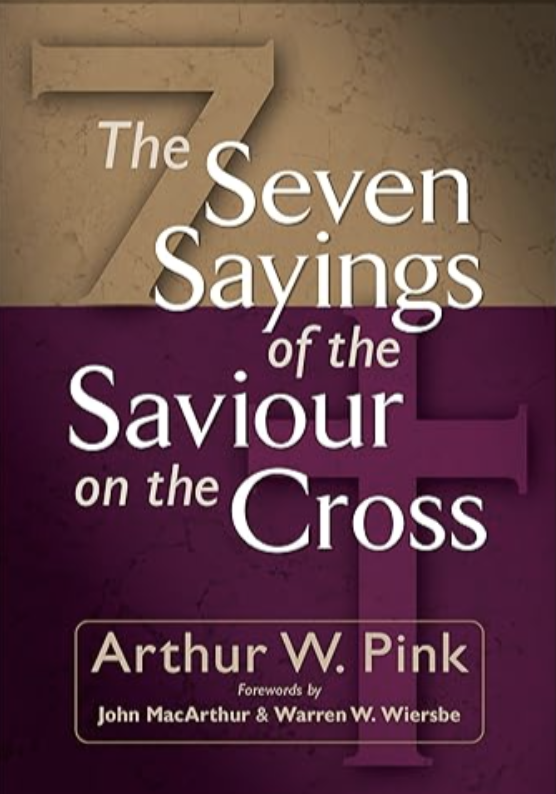
This series draws on the structure and ideas in “The Seven Sayings of the Saviour on the Cross” by Arthur W. Pink, 1984, Baker Book House. Direct quotations are indicated. AI was NOT used in the creation of this Blog post.


 

Explaining Christmas (from John Piper)

From the devotional app, Solid Joys, a great explanation of Jesus, God’s gift of grace to the world:

Why Jesus Came

Since therefore the children share in flesh and blood, he himself likewise partook of the same things, that through death he might destroy the one who has the power of death, that is, the devil, and deliver all those who through fear of death were subject to lifelong slavery. (Hebrews 2:14–15)

This, I think, is my favorite Advent text because I don’t know any other that expresses so clearly the connection between the beginning and the end of Jesus’s earthly life — between the incarnation and crucifixion. These two verses make clear why Jesus came; namely, to die. They would be great to use with an unbelieving friend or family member to walk them step-by-step through your Christian view of Christmas. It might go something like this, a phrase at a time:

“Since therefore the children share in flesh and blood . . . ”

The term “children” is taken from the previous verse and refers to the spiritual offspring of Christ, the Messiah (see Isaiah 8:18; 53:10). These are also the “children of God” (John 1:12). In other words, in sending Christ, God has the salvation of his “children” especially in view. 

It is true that “God so loved the world, that he gave [Jesus]” (John 3:16). But it is also true that God was especially gathering “the children of God who are scattered abroad” (John 11:52). God’s design was to offer Christ to the world, and to effect the salvation of his “children” (see 1 Timothy 4:10). You may experience adoption by receiving Christ (John 1:12).

“ . . . he himself likewise partook of the same things [flesh and blood] . . . ”

This means that Christ existed before the incarnation. He was spirit. He was the eternal Word. He was with God and was God (John 1:1; Colossians 2:9). But he took on flesh and blood, and clothed his deity with humanity. He became fully man and remained fully God. It is a great mystery in many ways. But it is at the heart of our faith — and what the Bible teaches.

“ . . . that through death . . . ”

The reason he became man was to die. As God pure and simple, he could not die for sinners. But as man he could. His aim was to die. Therefore he had to be born human. He was born to die. Good Friday is the purpose of Christmas. This is what most people today need to hear about the meaning of Christmas.

“ . . . he might destroy the one who has the power of death, that is, the devil . . . ”

In dying, Christ de-fanged the devil. How? By covering all our sin. This means that Satan has no legitimate grounds to accuse us before God. “Who shall bring any charge against God’s elect? It is God who justifies” (Romans 8:33) — on what grounds does he justify? Through the blood of Jesus (Romans 5:9).

Satan’s ultimate weapon against us is our own sin. If the death of Jesus takes it away, the chief weapon of the devil — the one mortal weapon that he has — is taken out of his hand. He cannot make a case for our death penalty, because the Judge has acquitted us by the death of his Son!

“ . . . and deliver all those who through fear of death were subject to lifelong slavery.”

So, we are free from the fear of death. God has justified us. Satan cannot overturn that decree. And God means for our ultimatesafety to have an immediateeffect on our lives. He means for the happy ending to take away the slavery and fear of the Now.

If we do not need to fear our last and greatest enemy, death, then we do not need to fear anything. We can be free. Free for joy. Free for others.

What a great Christmas present from God to us! And from us to the world!

From “Born to Die for Freedom”


Day 12/12: Amazing Grace (Christmas Songs countdown)

As we celebrate Christmas Eve today, I thought it appropriate that the final Christmas song be an expression of the grace that comes wrapped up in the gift of Christ. This is “Amazing Grace” performed by Human Nature. Merry Christmas to you all!!

Amazing Grace, how sweet the sound,
That saved a wretch like me.
I once was lost but now am found,
Was blind, but now I see.
T’was Grace that taught my heart to fear.
And Grace, my fears relieved.
How precious did that Grace appear

The hour I first believed.

Amazing grace, amazing grace…
Amazing grace
My chains are gone
I’ve been set free
My God, my Savior has ransomed me
And like a flood His mercy reigns
Unending love, amazing grace
Amazing grace… amazing grace…
Amazing grace…
Amazing Grace, how sweet the sound,
That saved a wretch like me.
I once was lost but now am found,
Was blind, but now I see.
Amazing Grace… amazing grace…
Amazing grace… amazing grace…
Was blind, but now I see

Day 11/12: Mary did you know?

This song seems to divide people (into those who dislike it and those who love it). I’m somewhere in the middle regarding the lyrics. But this arrangement by the Pentatonix has such drama and beautiful harmony, it is definitely worth a listen.

And in answer to the question, did Mary know? The short answer is yes, in some small measure, she did know who Christ would be and what he would do (see Luke 1:46-55 for details). No doubt the reality was both much worse and much better!

Mary, Did you know?

Mary did you know that your baby boy would one day walk on water?
Mary did you know that your baby boy would save our sons and daughters?
Did you know that your baby boy has come to make you new?
This child that you’ve delivered, will soon deliver you
Mary did you know that your baby boy will give sight to a blind man?
Mary did you know that your baby boy will calm a storm with his hand?
Did you know that your baby boy has walked where angels trod?
When you kiss your little baby, you kiss the face of God

Mary did you know? Mary did you know? Mary did you know?

Mary did you know? Mary did you know? Mary did you know?
The blind will see, the deaf will hear, the dead will live again
The lame will leap, the dumb will speak, the praises of the lamb
Mary did you know that your baby boy is Lord of all creation?
Mary did you know that your baby boy would one day rule the nations?
Did you know that your baby boy is heaven’s perfect lamb?
That sleeping child you’re holding is the great I am
Mary did you know? Mary did you know? Mary did you know?

Mary did you know? Mary did you know? Mary did you know? Oh

Mary did you know?

Songwriters: Buddy Greene / Mark Lowry
Mary, Did You Know? lyrics © Warner/Chappell Music, Inc, Capitol Christian Music Group

Day 10/12: Christmas changes everything (Josh Wilson)

O Holy night, starry sky
We were dead until tonight
Christmas changes everything
Long lay the world inside our sin
He has come here to forgive
Christmas changes everything
[Chorus]
Hallelujah, love has found us
Hope in a manger our Saviour is setting us free
This is rescue, Christ has come to make us new
Oh Christmas changes everything
Now God has met us where we are
A thrill of hope for hopeless hearts
His perfect love will shatter every fear
We’re coming back to life again
And it’s all because of Bethlehem
Rejoice, oh rejoice!
[Chorus]
Hallelujah, love has found us
Hope in a manger our Saviour is setting us free
This is rescue, Christ has come to make us new
Oh Christmas changes everything
We will fall on our knees
O Holy night, holy child
We were dead till you came to life
[Chorus]
Hallelujah, you have found us
Hope in a manger, oh Saviour we fall on our knees
You are rescue, you are making all things new
Oh Christmas changes everything
Yeah Christmas changes everything
Christmas changes everything.

Day 9/12: The bells of Christmas

I Heard the Bells on Christmas Day
I heard the bells on Christmas day
Their old familiar carols play
And mild and sweet their songs repeat
Of peace on earth good will to men
And the bells are ringing (peace on earth)
Like a choir they’re singing (peace on earth)
In my heart I hear them (peace on earth)
Peace on earth, good will to men
And in despair I bowed my head
There is no peace on earth I said
For hate is strong and mocks the song
Of peace on earth, good will to men
But the bells are ringing (peace on earth)
Like a choir singing (peace on earth)
Does anybody hear them? (peace on earth)
Peace on earth, good will to men
Then rang the bells more loud and deep
God is not dead, nor does he sleep (peace on earth, peace on earth)
The wrong shall fail, the right prevail
With peace on earth, good will to men
Then ringing singing on its way
The world revolved from night to day
A voice, a chime, a chant sublime
Of peace on earth, good will to men
And the bells they’re ringing (peace on earth)
Like a choir they’re singing (peace on earth)
And with our hearts we’ll hear them (peace on earth)
Peace on earth, good will to men
Do you hear the bells they’re ringing? (peace on earth)
The life the angels singing (peace on earth)
Open up your heart and hear them (peace on earth)
Peace on earth, good will to men
Peace on earth, peace on earth
Peace on earth, Good will to men

Songwriters: John Mark Hall / Dale Oliver / Bernie Herms

I Heard the Bells on Christmas Day lyrics © Sony/ATV Music Publishing LLC, Warner/Chappell Music, Inc, Capitol Christian Music Group

Songwriters: John Mark Hall / Dale Oliver / Bernie Herms

I Heard the Bells on Christmas Day lyrics © Sony/ATV Music Publishing LLC, Warner/Chappell Music, Inc, Capitol Christian Music Group

Songwriters: John Mark Hall / Dale Oliver / Bernie Herms
I Heard the Bells on Christmas Day lyrics © Sony/ATV Music Publishing LLC, Warner/Chappell Music, Inc, Capitol Christian Music Group

Day 6/12: Heaven Everywhere (Christmas songs Countdown)

Here is a cheery song which reminds us that Christmas brings a sense of hope: we truly can be the selfless people we were designed to be, as we turn our eyes from ourselves and become just a little kinder and more generous towards our fellow humans. There is a little bit of ‘Heaven Everywhere’ at Christmas. The song is from Francesca Batistelli’s 2012 ‘Christmas‘ album.

Heaven Everywhere

I hear the bells, they’re ringing loud and clear
You can’t help but love this time of year
It’s Christmastime, there’s something in the air
There’s a little bit of heaven everywhere

Somehow there’s a little more of love
And maybe there’s a little less of us
Or maybe we’re just slightly more aware
There’s a little bit of heaven everywhere

It’s the smile on a man who has finally found hope
It’s the tears of a mother whose child has come home
It’s the joy that we feel and the love that we share
There’s a little bit of heaven everywhere

It’s funny how it takes a holiday
To show us how the world could truly change
If we all took the time to really care
There’d be a little more of heaven everywhere

It’s the smile on a man who has finally found hope
It’s the tears of a mother whose child has come home
It’s the joy that we feel and the love that we share
There’s a little bit of heaven everywhere
It’s the grace that we show to a world that needs hope
It’s giving our lives knowing they’re not our own
It’s the joy that we feel and the love that we share
There’s a little bit of heaven everywhere
Angels we have heard on high
Sweetly singing o’er the plain
And the mountains in reply
Echoing their joyous strains
Hallelujah, halleljuah

It’s the joy that we feel and the love that we share
There’s a little bit of heaven everywhere
Angels we have heard on high
Sweetly singing o’er the plain

Songwriters: Ben Glover / Francesca Battistelli

Heaven Everywhere lyrics © Warner/Chappell Music, Inc, Capitol Christian Music Group

The glory of Christmas is Christ!

I just commissioned this Christmas card design, featuring a line from Matt Redman’s ‘O Little Town/Glory of Christmas’. Thanks to my daughter Emily, you can buy yours here:

https://www.redbubble.com/people/emilyrdesign/works/29091114-glory-of-christmas-card?p=greeting-card

What we’re singing this Easter

Today a good friend asked me what songs were on our music roster for next weekend. It then struck me that it might be a useful list to share more widely. Here it is. I’d love to hear what your church is singing . . . and where in the world you are. Please comment!

GOOD FRIDAY

Glories of Calvary (Sovereign Grace)

Man of Sorrows (Hillsong)

Behold the Lamb (Getty)

The Power of the Cross (Getty)

EASTER SUNDAY

The Father’s Love (Sovereign Grace)

Christ is Risen, He is Risen Indeed (Getty)

Grace has now appeared (EMU)

How deep the Father’s Love (Townend)

Here is the Spotify playlist

More Than A Birthday Party For Jesus? 

away-in-a-manger-king-size-bed-jesus

What can worship leaders, pastors and creative leaders do to help Christians experience the ‘true meaning’ of Christmas? http://worshipsessions.com.au/site/teaching

Christmas can be a stressful time of year, and Christians are not immune to the pressures and demands of this season. Many Christians find it difficult to significantly engage with Christmas on a spiritual level. Have you ever heard a Christian say “it just doesn’t feel like Christmas?”

The Christian experience of Christmas should be much richer, more distinct and more meaningful than the Christmas experience promoted across our culture. But for this to happen, Christmas must become more than just a birthday party for Jesus and a time for family reunions.

For Christians to gain a deeper and richer appreciation for the Christmas season as a Christian event (rather than just a cultural one) we must take a step back and look at Christmas in the broader context of the historical Christian calendar.

For centuries believers have followed the Christian Year as part of their spiritual formation and discipleship. According to this ancient tradition, Christmas was celebrated as a twelve-day feast, not just a one-day event. This celebration was the culmination of four weeks of spiritual preparation and anticipation known as Advent.

The well-known Internet Monk blogger Michael Spencer illustrates the difference between Advent and Christmas. He says, “Christmas is joyous, but the joy comes after weeks of waiting, watching, lamenting and calling upon God. Advent is that season of waiting; of looking for the signs and promises of the Saviour in the Scriptures and in the world.”1

I believe that rediscovering the spiritual rhythm and preparation of Advent will help Christians experience the true meaning of Christmas.

In the weeks leading up to Christmas – when our culture is shouting at us to “spend!” “buy!” and “consume!” – the season of Advent teaches us to slow down and reflect on God’s story and our place in it, it teaches us patience, and cultivates within us a child-like sense of anticipation and longing. Advent does this by helping us to remember the historical silence of the Scriptures between the Old and New Testaments and the expectation of a soon-coming Messiah. Advent also helps us to anticipate Jesus’ future return and the eventual completion of His work in redeeming and renewing all of Creation.

Advent spirituality is about recognising that we are living in the “now, but not yet…” between the inauguration and fulfilment, between promise and completion. During Advent, the words of John the Baptist ring in our ears “Prepare the way for the Lord, make straight paths for him,”2 as we eagerly await the Messiah’s return. For Christians, Advent is a time for spiritual preparation, reflection and repentance, which directly opposes our culture’s penchant for busy-ness, over-spending and over-indulgence in the lead up to Christmas.

Christmas is more than just a celebration of Christ’s arrival. In the light of Advent, Christmas becomes the fulfilment of the expectation that builds throughout the Advent season. At Christmas, we remember that God broke through into our earthly dimension. Through His birth, life, ministry, death and resurrection, Jesus Christ worked to restore the earth and all creation from within, according to God’s good plan and purpose. Our response as His followers is to join with Him, today and every day, in His ongoing work of restoring the world unto Himself, until the day that He returns.3

In this way, Christmas calls us to a tangible response as followers of Jesus: to live out ‘incarnational spirituality’4 – an expression of Christian faith that embodies the life of Christ into the world in which we live. The prayer of the Christmas season is “Your kingdom come, your will be done on earth as it is in heaven.”5 It is a reminder that “the work of restoring creation has begun,”6 and that we are called to join in that work, empowered and enabled by the Holy Spirit.

By understanding and integrating these historically important Christian ideas into worship gatherings leading up to Christmas, worship leaders and pastors can help those they lead to discover a deeper and more significant Christmas spirituality. That is, where faith overflows into tangible and intentional expressions of incarnational Christianity – a faith that is in the world but not of it.

Worship leaders and songwriters can help their communities experience Advent by choosing and writing songs, prayers and using language that focuses on the expectation of Christ’s coming; and saving the celebration of his arrival until Christmas Day.

Worship leaders can research, read and learn more about the seasons of Advent and Christmas in order to help their congregations wrap their Christmas experience around God’s story, not the story of commerce, culture and consumption.7

As worship leaders and creative influencers, we have the opportunity to shape the ways in which our worshipping communities experience Christmas, and ultimately influence the kind of Christianity the live out between Sundays. As we learn and immerse ourselves in the rich meaning of the “Christian Year” and prayerfully contextualise the themes and ideas of these seasons into our worship gatherings, I believe that Christmas can once again become a primarily Christian event in our churches – one that encourages us in our faith and empowers us in our witness as we remember, experience and live out the Truth of Christmas.

Ryan Day is the Worship Pastor at Gymea Baptist Church
www.gymeabaptist.org.au   www.ryanday.com.au

References:
1.      Spencer, Michael; http://www.internetmonk.com/archive/imonk-classic-michael-spencer-helps-us-prepare-for-advent (Accessed on 1 December 2011)
2.      Matthew 3:3b (See also John 1:23 and Isaiah 40:3) (NIV)
3.      For a balanced and insightful look at the role of Christians as restorers, see “The Next Christians” (DoubleDay Publishing, 2010) by Gabe Lyons.
4.      Webber, Robert “Ancient-Future Time”, Baker Books (Grand Rapids, MI), 2004, page 61-71.
5.      Matthew 6:10 (NIV)
6.      Webber, page 61
7.      Robert Webber’s book “Ancient-Future Time” would be a great introduction to understanding Advent, Christmas and the entire Christian calendar.

THIS ARTICLE CAME FROM http://worshipsessions.com.au/site/teaching