3/7: Affection (The Significance of Jesus’ Final Words on the Cross)

If you have just joined me for this series exploring Jesus’  final words on the Cross, please see also my previous two daily posts. This series combines key ideas from Arthur W. Pink’s “The Seven Sayings of the Saviour on the Cross” with my own observations and highlights.

Jesus’ first two phrases focus on forgiveness (for those who know not what they do) and then salvation (for the repentant thief on the cross, who would certainly share paradise with Jesus). We looked at Christ as our substitute, who dies in our place – who rescues repentant sinners to forgiveness and eternal life.

III. Words of Affection

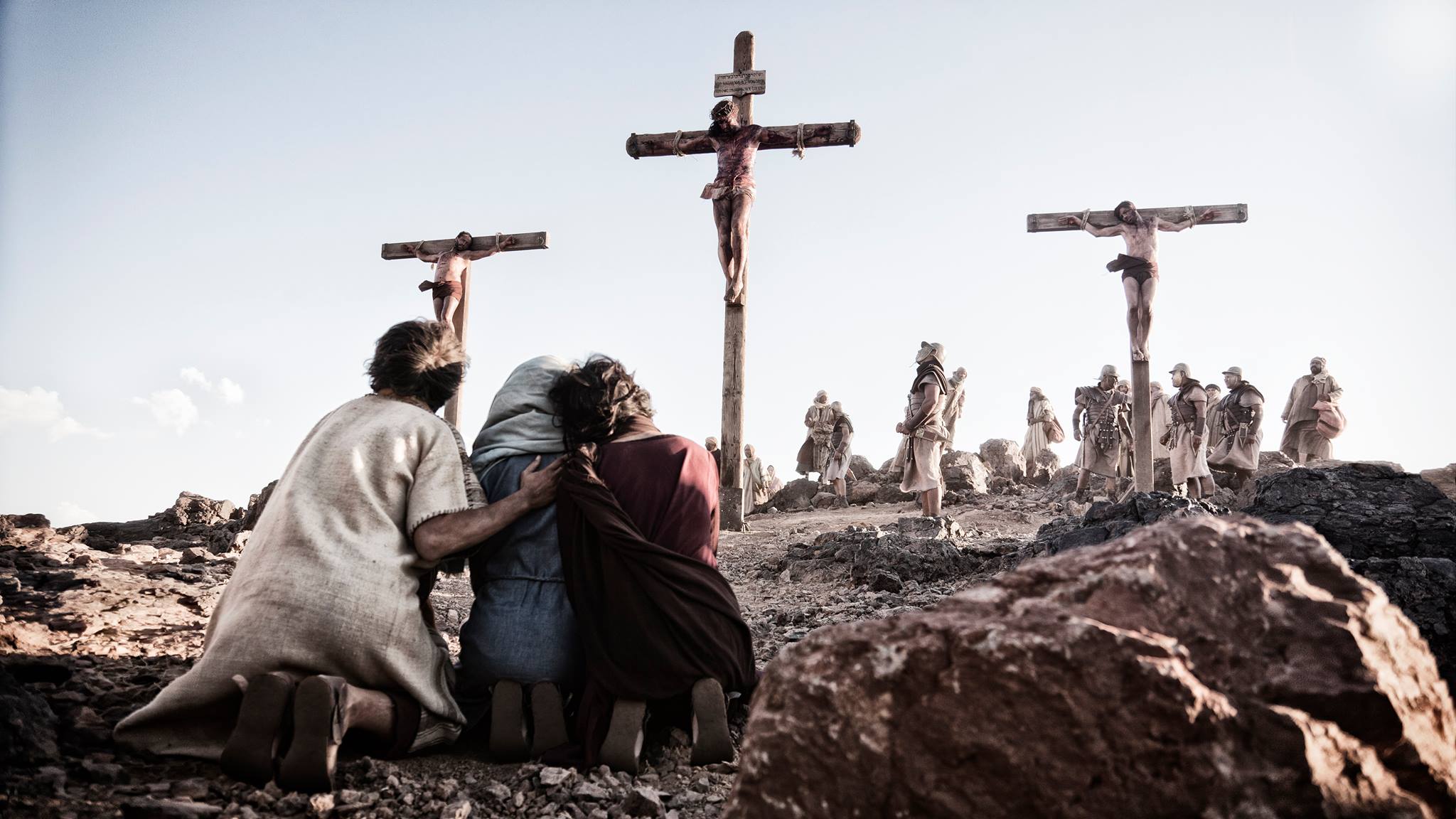
The third set of words Jesus utters is recorded in John 19:26-27. They are a compassionate request of two people who stand by the Cross, a request which ensures their relationship and care into the future. These two are Mary (his mother) and John, the disciple. In Christ’s most dire moment, his focus includes providing for the earthly needs of those he loves.

When Jesus saw his mother there, and the disciple whom he loved standing nearby, he said to her, ‘Woman, here is your son,’  and to the disciple, ‘Here is your mother.’  From that time on, this disciple took her into his home.”

This request (and the response noted) reveals the heart and faithfulness of all three involved. There is much to unpack, but I will focus on just a few points.

  1. Jesus honouring his parent
    Amidst the sufferings of the Cross, Christ thinks of the woman who loved him best, whom he loved. “This is one of the greatest wonders of His person – the blending of the most perfect human affection with His divine glory” (Pink, p.68). He knows Mary is a widow in need of provision and home. He sees her present and future needs and commits her to his most trustworthy and dear friend, John. Here, Jesus is the perfect man giving the perfect example of the care that we are all to show our parents, especially in their later years. The command to “Honour thy parents” is vividly portrayed in Christ’s last words of care for his mother. Pink sees this as a stark reminder of the fifth commandment, embedded in the sufferings of Christ. He says that to honour our parents with care, attention, provision and love is a “sacred duty” which Christ displays from the Cross.

  2. Mary needed a Saviour and stood by him
    The Mary of the Bible is not the revered “Mother of God” who is put on a pedestal. In fact, never once in the Bible is it recorded that Jesus called her ‘mother’. So to address her here as ‘woman’ is not a demeaning statement, but it is to remind us that she is a member of a fallen race, a woman in need of a Saviour. She has faith in her Son as Saviour and understands (probably) better than the disciples that he must die to deal with our sin debt. “Before the birth of Christ, she declared ‘My soul doth magnify the Lord, and my spirit hath rejoiced in my Saviour(Luke 1:46-47) . . . And now at the death of the Lord Jesus she is found at the Cross” (p.67). Pink also reminds us of the courage and strength Mary shows in this moment, to stand for the full day and watch her Son endure the agony of the cross – and breathe his last. “Who can measure those hours of suffering as the sword was slowly drawn through Mary’s soul? (See Luke 2:35) . . . She suffered in unbroken silence . . . in profound desolation of spirit” (p.57). Yet John was by her side.

  3. What better choice than John?
    Of all the disciples, the one who returned to the cross was John, the disciple ‘whom Jesus loved‘. Clearly there was a great level of affection and friendship between them, so it was natural that after the other disciples fled in fear, John was the one who would return. Perhaps he understood the Saviour almost as well as Mary, so it was a fitting choice to hand them into each other’s care. There was “none so well suited to take care of Mary, none whose company she would find so congenial, and . . . none whose fellowship John would more enjoy” (p.65). Pink further explains why leaving John in the care of Mary who knew him best was so wise. He points out “that a wondrous and honorous work was waiting for John. Years later the Lord Jesus was to reveal himself to this apostle in glorious apocalypse” (referencing the visions of Revelation) . . . How better then could he equip himself than being constantly with her” (Mary), who knew Jesus so intimately for 30 years?

Join me for 4/7 next time, the words of Christ in Matthew 27:46. Blessings!
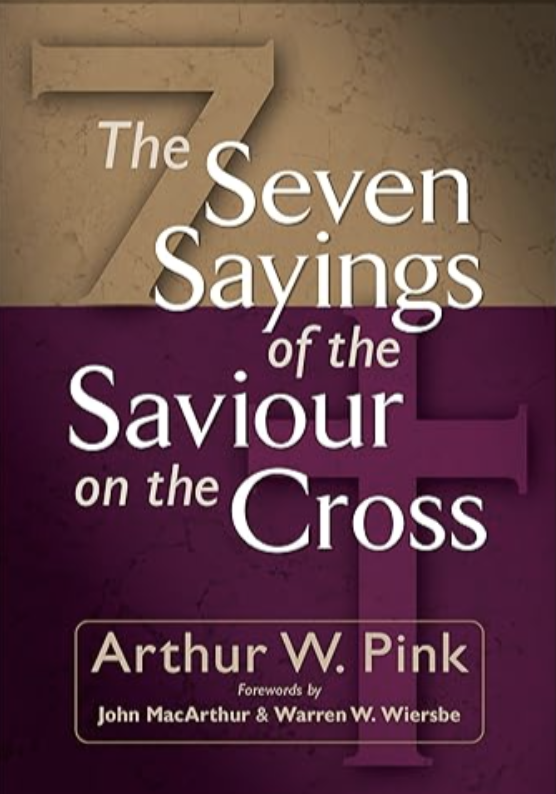
This series draws on the structure and ideas in “The Seven Sayings of the Saviour on the Cross” by Arthur W. Pink, 1984, Baker Book House. Direct quotations are indicated. AI was NOT used in the creation of this Blog post.
 

The Significance of Jesus’ Final Words on the Cross (1/7)


As a teacher of English literature, I often point students to explore the significance of a character’s final words, spoken when they exit a text or when the author brings the whole story-world to a conclusion. In these final words we see the essence of each character’s intentions, motives, and – well, how else can I say it – character! These words also crystallise what the author wants us to know or remember about the character, their actions and meaning.

What can we learn then from Jesus’ final words – the words of the Word of Life, the Author and perfector of our Faith? “The Seven Sayings of the Saviour on the Cross” is a book by Arthur W. Pink which has been waiting on my desk for some time. It seems like this Easter week is a perfect time to make actually reading it a priority. At the end of each chapter, I’ll offer you some insights on the significance of Jesus’ final words, which reveal his heart, mind, and purpose. Stay with me if you want to know more, but can’t see yourself reading the whole book.


Before we begin to explore Jesus’ words more deeply, let me remind you of the key facts of Jesus’ crucifixion. This summary is provided by Charles Swindoll:

Jesus of Nazareth said He would “suffer . . . be killed, and be raised up on the third day” (Matt. 16:21). Betrayed by Judas, He was seized, placed under arrest, pushed hurriedly through several trials (all of them illegal), and declared guilty . . . first of “blasphemy,” next of “treason” (Luke 22:70–23:24). Alone and forsaken, He endured the torture of scourging, the humiliation of insults and mockery, and the agony of that walk to Golgotha (Mark 15:15–22). The horrors of crucifixion followed, leaving Him suspended for six excruciating hours . . . the last three of which were spent in eerie darkness that “fell over the whole land” (Mark 15:33). By three o’clock that afternoon He uttered His final words. “Father, into Your hands I commit My spirit” (Luke 23:46). Then . . . He died (Matt. 27:50Mark 15:37Luke 23:46John 19:30).

(NB. I also recommend Swindoll’s The Darkness and the Dawn as another great read for Easter. It will give you a much insight into the last 24 hours of Jesus’ life.)

  1. Words of Forgiveness

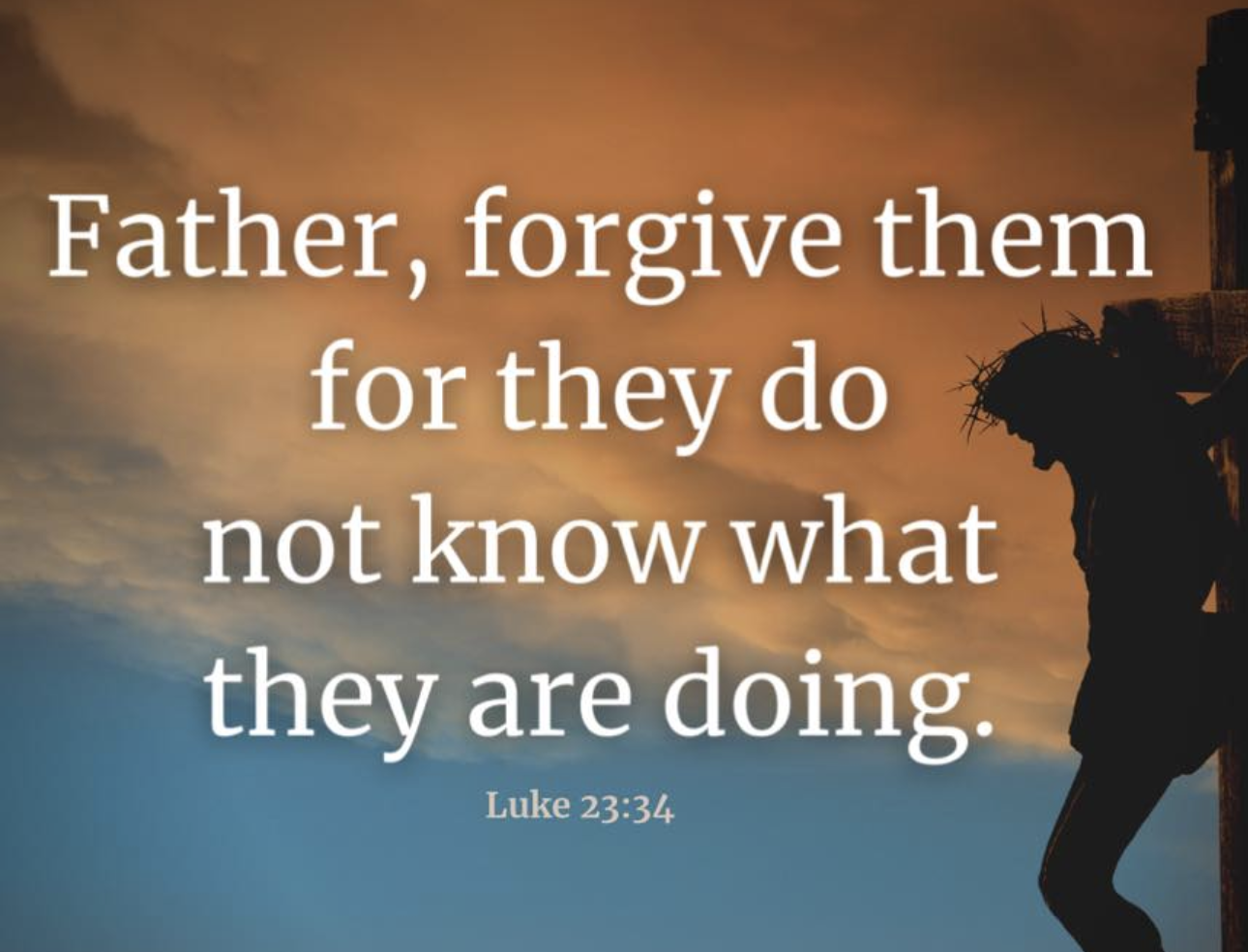
“Jesus said, “Father, forgive them, for they do not know what they are doing.”
Luke 23:34 (NIV)

These first “last” words, also translated more poetically as “they know not what they do”, are probably the most famous words associated with Jesus’ crucifixion. They sum up his compassion and humility, and emphasise just how undeserving he is of such punishment at the hands of sin-blinded humans. In this moment, Jesus is praying for his enemies, both those who are inflicting this ultimate form of Roman torture and those who have forsaken him and fled. Jesus prays for forgiveness from the Father, for all who acted in wilful ignorance. He prays for these people (people just like us) on their behalf, that the Father might forgive them.

Here are 4 most important things to know about this first phrase, when Jesus prays “Father, forgive them, they know not what they do.”

1. A Prophecy Fulfilled: The book of Isaiah foretold that the promised Saviour would make “intercession for the transgressors”. In these complex terms we find the significance of Jesus’ gracious prayer at the time of the crucifixion. Intercession means the act of intervening or praying on behalf of others; in this case, the ‘others’ are transgressors – criminals or offenders – who break laws or moral principles. Now read Isaiah 53 again, or at least verse 12: “. . . He poured out his life unto death and was numbered with the transgressors. For he bore the sin of many and made intercession for the transgressors.In the words ‘Father forgive them‘, Jesus prays for all those who have rejected and beaten him, who mocked and spat on him. He pleads for his crucifiers and asks on their behalf for forgiveness. Jesus’ prayer fulfills this role of the promised Messiah. (All of Isaiah 53 points to Jesus’ death (hundreds of years later) with pinpoint accuracy. Please spend some time there.)

2. The Blindness of the Human Heart:They know not what they do” does not mean these people didn’t know the facts of the crucifixion and their role in it. They are fully aware of the impact of their cries to “crucify him” and how they delight in the spectacle of his mocking trial, torture, and death. But they do not know the enormity of their crime against the Son of God. It is what they are doing that they don’t know. They are rejecting the promised Saviour. Yet Pink says they should have known. “From the start of Jesus’ ministry, His was a life on which was stamped the Father’s approval: ‘This is my beloved Son, in whom I am well pleased’.” Pink laments that this tragic rejection of Jesus continues to be repeated across time and place: “Sinner, little you know what you are doing in neglecting God’s great salvation. You little know how awful is the sin of slighting the Christ of God and spurning the invitations of his mercy” (p.26). May God reveal the truth of Christ in the lives of all who continue to deny Him.

3. Christ Identifies with His people: In asking “Father, forgive them,” Jesus reveals how much he identifies with the humans whose sin he carries. This is the only time when Jesus requests that His Father bestow forgiveness. Prior to this, Jesus himself is the one forgiving the sins of multiple people (often with simultaneous healing). To forgive sin is a divine prerogative and that is why Jesus must call on the Father instead to forgive. When Jesus is raised from earth, hanging on the Cross as the Son of Man, he has given up his divine position. He has “become” sin for us, taking our place as one of us and carrying the weight of our sin. He pleads with the Father to forgive those whose sins he has taken as his own.

4. Jesus’ Prayer is fulfilled: Jesus’ request that the Father “forgive them” is fulfilled just over a month later with the astonishing conversion of 3000 souls on the Day of Pentecost. This connection is made clear by the Apostle Peter in Acts 3: 17-20:
17 “Now, fellow Israelites, I know that you acted in ignorance, as did your leaders. 18 But this is how God fulfilled what he had foretold through all the prophets, saying that his Messiah would suffer. 19 Repent, then, and turn to God, so that your sins may be wiped out, that times of refreshing may come from the Lord, 20 and that he may send the Messiah, who has been appointed for you—even Jesus.” Pink sees this as a direct and perfect fulfilment of Jesus’ prayer: “it was not Peter’s eloquence that was the cause, but the Saviour’s prayer” (p.21) which turned these once ignorant people to Him and won their salvation.

In summary, Pink says that “in praying for His enemies, not only did Christ set before us a perfect example of how we should treat those who wrong and hate us, he also taught us never to regard any as beyond the reach of prayer. If Christ prayed for His murderers, then surely we have encouragement to pray now for the very chief of sinners! Christian reader, never lose hope (p.20).

Let’s rejoice that Jesus’ prayer continues to be answered. According to the World Christian Encyclopedia, around 2.7 million people convert to Christianity from other religions each year, which is about 7500 people per day! The Encyclopedia also notes that Christianity is “the religion with the largest net gain in population through religious conversions.” In an article about the unexpected surge of Global Christianity (2024), Frontier Partners International reports that “Christianity is not only growing in numbers but is also expanding geographically.”

Let’s continue to pray that Jesus’ prayer would be fulfilled this Easter – that forgiveness may be won and souls redeemed to new life in Him. Catch you again on Day 2. You may like to think ahead and consider the significance for yourself. Luke 23:42-43

And here is a song which I think sums up much of the compassion of the dying Saviour who seeks forgiveness for us on our behalf: “Glorious Day” by Casting Crowns:

https://youtu.be/2ntwGWzdCwc?si=8PhGFJj4cj2RKg2y

(This series draws on the structure and ideas in “The Seven Sayings of the Saviour on the Cross” by Arthur W. Pink, 1984, Baker Book House. Direct quotations are indicated. AI was NOT used in the creation of this Blog post.)

Explaining Christmas (from John Piper)

From the devotional app, Solid Joys, a great explanation of Jesus, God’s gift of grace to the world:

Why Jesus Came

Since therefore the children share in flesh and blood, he himself likewise partook of the same things, that through death he might destroy the one who has the power of death, that is, the devil, and deliver all those who through fear of death were subject to lifelong slavery. (Hebrews 2:14–15)

This, I think, is my favorite Advent text because I don’t know any other that expresses so clearly the connection between the beginning and the end of Jesus’s earthly life — between the incarnation and crucifixion. These two verses make clear why Jesus came; namely, to die. They would be great to use with an unbelieving friend or family member to walk them step-by-step through your Christian view of Christmas. It might go something like this, a phrase at a time:

“Since therefore the children share in flesh and blood . . . ”

The term “children” is taken from the previous verse and refers to the spiritual offspring of Christ, the Messiah (see Isaiah 8:18; 53:10). These are also the “children of God” (John 1:12). In other words, in sending Christ, God has the salvation of his “children” especially in view. 

It is true that “God so loved the world, that he gave [Jesus]” (John 3:16). But it is also true that God was especially gathering “the children of God who are scattered abroad” (John 11:52). God’s design was to offer Christ to the world, and to effect the salvation of his “children” (see 1 Timothy 4:10). You may experience adoption by receiving Christ (John 1:12).

“ . . . he himself likewise partook of the same things [flesh and blood] . . . ”

This means that Christ existed before the incarnation. He was spirit. He was the eternal Word. He was with God and was God (John 1:1; Colossians 2:9). But he took on flesh and blood, and clothed his deity with humanity. He became fully man and remained fully God. It is a great mystery in many ways. But it is at the heart of our faith — and what the Bible teaches.

“ . . . that through death . . . ”

The reason he became man was to die. As God pure and simple, he could not die for sinners. But as man he could. His aim was to die. Therefore he had to be born human. He was born to die. Good Friday is the purpose of Christmas. This is what most people today need to hear about the meaning of Christmas.

“ . . . he might destroy the one who has the power of death, that is, the devil . . . ”

In dying, Christ de-fanged the devil. How? By covering all our sin. This means that Satan has no legitimate grounds to accuse us before God. “Who shall bring any charge against God’s elect? It is God who justifies” (Romans 8:33) — on what grounds does he justify? Through the blood of Jesus (Romans 5:9).

Satan’s ultimate weapon against us is our own sin. If the death of Jesus takes it away, the chief weapon of the devil — the one mortal weapon that he has — is taken out of his hand. He cannot make a case for our death penalty, because the Judge has acquitted us by the death of his Son!

“ . . . and deliver all those who through fear of death were subject to lifelong slavery.”

So, we are free from the fear of death. God has justified us. Satan cannot overturn that decree. And God means for our ultimatesafety to have an immediateeffect on our lives. He means for the happy ending to take away the slavery and fear of the Now.

If we do not need to fear our last and greatest enemy, death, then we do not need to fear anything. We can be free. Free for joy. Free for others.

What a great Christmas present from God to us! And from us to the world!

From “Born to Die for Freedom”


Hush, hush

A powerful song on a new (to me) album from Nichole Nordeman, Every Mile Mattered. Just adding via my phone, without the trimmings. Enjoy

https://open.spotify.com/track/4pAORtSFhzppR11YzxD57S

What are we waiting for? (For King and Country)

I’m enjoying the new album from For King and Country! This Youtube clip is from a few days ago. 40 minutes of time well spent. The messages of their songs are quite beautiful!

From the clip details:

We’re bringing our brand new album straight to your living room! Join us for ‘WHAT ARE WE WAITING FOR?’ THE WORLDWIDE SPECIAL: a global streaming event from the Mojave desert🏜🎶 in partnership with Convoy of Hope benefiting Ukrainian refugees.

Donate to support Ukrainian refugees by visiting: convoy.org/forUKRAINE or text to give “forUKRAINE” to 68828 Stream/download WHAT ARE WE WAITING FOR?: https://forkingandcountry.lnk.to/what…

https://www.pinterest.com.au/jeyanayagam/

Love Me Like I Am (King and Country)

LYRICS (excerpt)

I am a little unstable

Loose wires always getting tangled now

I am a little bit difficult I can be a little self-critical now

I am a little unable

To put all my cards on the table now

But somehow

You’re still with me

It’s amazing that

You can Love me like I am

And even when I can’t

You still love me as I am

Oh, I don’t know how You do it

And I know I put You through it

It’s amazing that You can

Love me like I Love me like I am,

ooh You love me like I am

Messiah – the long-awaited precious promise

Ready for your new favourite Christmas song? Here it is.

From the album, This Christmas, by Francesca Battistelli (2020)

Lyrics:

Long awaited precious promise
Son of God and son of man
Heaven’s glory in a manger
Has come to us in Bethlehem

Messiah
Messiah
A baby born to save us all
Messiah
Messiah
On our knees we fall

All we longed for, all we needed
Shining in this child’s eyes
Hope forever, death defeated
Because of this one holy night

O come let us adore him
O come let us adore…

The Christmas Letter I’d like to write

nativitystorythe_photos_1“For God, who said, “Let light shine out of darkness,” made his light shine in our hearts to give us the light of the knowledge of God’s glory displayed in the face of Christ.” (2 Corinthians 4:6)

At this time of year many people write and share a recount of the year that has been. They assemble great photos to illustrate their ventures, and list the things they and their family have achieved at work, at school, at home, at church, the house renovations and holidays.

While it is great to reflect on and share all these blessings, in thankfulness to the God who grants them, I can’t help thinking the ‘rosy Christmas letter’ can be somewhat discouraging to others, to people who consider their own personal achievements as nothing but disappointing by comparison. Perhaps their circumstances and God’s plans have taken them down a more difficult and lonely path. (And if I am being honest, such loneliness occurs even in the midst of a busy household at times.)

So, if I were to write an honest Christmas letter about the struggles of the year, here are some of the things I would like to share – to help others know they are not alone. Life is hard and being a Christian doesn’t magically end the difficulties, but God is good and there is joy to be found in Christ amidst the difficulties.

In 2016:
* I have faced ongoing challenges as a parent, spouse, home owner and friend. I have fought to love my children and husband, to serve selflessly.
* I have faced various mysterious and apparently unrelated health issues, which have shown only slight signs of improvement. These challenges will continue in the New Year.
* I have fought the discouragement of watching others pursue fulfilment apart from Christ, and disappointment with myself for not knowing how/being willing to challenge others for such attitudes.
* I have fought to acknowledge the reality of God and his grace in my own thinking about the circumstances of day to day living.
* I have fought disappointment with myself when I see pride or envy, or any of the things Christ died for, rising up in me again.
* I have worked hard as a teacher, with many many unseen extra hours of toil. While this brings some moments of great joy, largely it is draining and I see little gain for all my efforts.
* I have sometimes been cold to others and showed little genuine concern for them.

* I have become more aware of my own sin and selfishness.
* I feel like I have aged more and had worse quality sleep this year than any to date. The ‘days of trouble’ that the writer of Ecclesiastes speaks of have certainly arrived (or at least made an appearance).
* I have been hooked on checking my phone notifications and other comforts that I selfishly enjoy.
* I have battled against staying up later than I should, mindless television and being more excited about things that have no eternal value than I should be!

But all these things do NOT bring me to a point of despair! (Sorry if it sounds that way.) These struggles prove that Christ is at work in me and this is the main reason I can be joyful this Christmas!

As James says (1:2-4): “Consider it pure joy, my brothers and sisters, whenever you face trials of many kinds, because you know that the testing of your faith produces perseverance. Let perseverance finish its work so that you may be mature and complete, not lacking anything.”

The ‘World’ just doesn’t get this. They think we have bought into a big fat lie which only brings us guilt and hard work.
But we have met the risen Saviour, we have seen the glory of God in the face of Christ, God with us, Immanuel!
What else can we do but follow him?

Blessings to you this Christmas,
from Ros

Maybe we should begin with balloons?

2015 year 12s GrovesAs the clock ticks over the 11pm mark on this sultry summer eve, I am contemplating the year ahead. Yes, I know we have already celebrated the New Year (and for some reason I like even years better than odd ones! Is anyone else with me on that?) But in just 9 hours time the working day will officially begin and I will be “back” for the school year – along with a few hundred eager, or not-so-eager, students. I’ve spent the day, and the last few weeks, preparing for what is to come. This waiting period is often more stressful than the actual event. Once we are back at school the tasks become more about the day to day than staring blankly at a whole term or year and wondering how on earth we will get through it all.

The students will bring their own problems, concerns, interests and passions. It is up to us as teachers to teach them to be learners, life-long learners, who look at life with a positive outlook, take hold of opportunities and seek to be the change in situations that frustrate them. We encourage them not to let the problems they bring, or the excuses in their head, or their poor self-esteem, hold them back. As you can imagine, this task is no small thing. And half the time we have problems, excuses and doubts about how we as teachers can make a difference.

As Christian teachers there is an extra challenge – or two. We try our best to model Christ, to be Christ-like in our dealings with students. We seek to achieve restoration when students break trust or relationships with us and others. We try to share the Gospel –  ready to give a reason for the hope that is in us.

With all this on my teaching plate, I ask you fellow bloggers to spare a prayer for me when you can, that I can be some small positive influence in the lives of students this year – and that through me they can know a little more of Christ and the acceptance we know in Him.

Blessings!
Ros

(Note: The photo is the final day of school for the students I looked after as Year 12 Coordinator in 2015. Apparently the balloons were biodegradable, in case you were wondering. 🙂 Maybe we should begin with a balloon release.)

In all honesty: Tim Keller Praying your tears

Tim Keller Praying your tears
This is a great encouragement.
(Link reference at the end)

I’d like to tell you about two great talks I listened to recently: Praying our Tears and Praying our Fears by Tim Keller. They’re both free online, and are part of a series on the Psalms about responding to our feelings. Today I’ll tell you about the one on tears; next time, the one on fears.

I love the Psalms! It seems that every emotion I’ve ever felt is expressed there, ready to be prayed to God. Sometimes I feel like getting older is just working through the Psalms, one emotion at a time!

There’s no better guide to what to do with our feelings before God than the Psalms. I like Tim Keller’s way of putting it: that the Psalms teach us a gospel third way of responding to our emotions.

1. Many Christians are uncomfortable with feelings, so we deny and suppress them.
2. The world tells us that we need toacknowledge, express and follow our feelings, so we vent and dump them.
3. The Psalms give us a gospel third way of responding to our emotions: to pray our feelings.

But what about suffering? How do we pray our tears? How do we use them to soften, rather than harden our hearts? Here’s what Keller says. I’ve included a few quotes: they’re wonderful, so take the time to read them. I know they’ll live on in my heart and mind for a long time.

1. Expect tears
I’m often surprised when I suffer. Isn’t God good? Isn’t he supposed to protect me? What have I done to deserve this?! But I should expect to suffer more as I become more like Jesus. If I don’t expect tears, I’ll always be crying about two things instead of one. “You’re weeping about the thing that made you weep, and you’re weeping about the weeping …. You’re going to sink under that. One thing at a time is all we can take.”

2. Invest your tears
“Those who sow in tears will reap with songs of joy” (Ps 126:5-6). If a farmer leaves his seed in the shed, or dumps it all in one spot, there will be no harvest: he must sow his seed. We shouldn’t deny or dump our tears, but see them as an opportunity for growth. Tears give way to joy (Ps 30:5) but they also produce joy (2 Cor 4:17). So how do we plant our tears?

3. Pray your tears
When we pour our tears into prayer, it transforms both the tears and the weeper. We should plant our tears in three things.

a. A realisation of God’s grace.
We need to know before we start crying that it’s safe to pour out our hearts to God. That’s why the Bible includes disturbing psalms like Psalm 39, which ends “get away from me, God!” Derek Kidner says,

The very presence of such prayers in the Scripture is a witness to God’s understanding. He knows how we speak when we are desperate. … Psalm 39 shows where your deepest feelings – your anger, your tears – belong. … Ultimately where your tears belong is not managed or packaged or manicured in some little confessional prayer. They belong in pre-reflective outbursts from the depths of your being in the very presence of God. … “I want you to speak and feel in my presence. It’s safe. I understand what it’s like to be desperate. … I’m a God of grace. I understand.”

b. A vision of the cross.
God understands our desperation because Jesus experienced desolation. Jesus cried, “My God, my God, why have you forsaken me?” and found heaven empty, so that when we cry “Turn your face away!” God won’t abandon us (Ps 39:13,Matt 27:46).

When I look to the cross, I can suffer withoutguilt, for I know God isn’t punishing me because Jesus was punished instead of me. I can suffer without impatience, for I can trust that God’s purposes are good even when I don’t understand, just like people didn’t understand the cross. I can suffer without self-pity:

Weeping is fine. Weeping and grief is fine. Weeping and disappointment is fine … but weeping in self-pity will make you a small little person, someone who can’t forgive, someone who is always feeling ill-used, someone who gets incredibly touchy and incredibly over-sensitive. … Look at the cross and say, “… My sufferings are nothing compared to yours. If you suffered for me I can be patient with this suffering for you.”

c. An assurance of his glory.
All sorrow ends in joy (Ps 126:6). The final psalms are all psalms of joy. But how does a prayer of tears become a prayer of joy? Eugene Peterson says,

What the psalms are teaching us is that all true prayer pursued far enough will become praise. Any prayer, no matter how desperate its origin, no matter how angry and fearful the experience it traverses, will become praise. It does not always get there quickly. It does not always get there easily. In fact, the trip can take a lifetime! But the end is always praise. This is not to say that other kinds of prayer are inferior to praise, but that all prayer pursued far enough becomes praise. Don’t rush it. Don’t try to push it. It may take years, it may take decades before certain prayers arrive at the hallelujahs of Psalm 150. Not every prayer is capped off with praise. In fact most prayers, if the psalms are a true guide, are not. But prayer is always reaching toward praise, and if pursued far enough, will arrive there.

Sometimes we’re afraid to weep because we think we’ll never stop weeping. But if we know that sorrow ends in joy – that sorrow producesjoy – we can dare to weep. Tim Keller asks, are you happy enough to be a weeper? – to get involved in the lives of others even when it’s painful? If so, there will be a harvest of joy for them and you.

He prays, “Father, make us happy enough to weep.” Amen.

images are from Chapendra, IRRI Images and Jacopo Cossater from flickr

http://jeaninallhonesty.blogspot.com.au/2010/05/tim-keller-praying-your-tears.html?m=1