Grace comes like a flood from our faithful God


“Finish What He Started”

I don’t have to know you
To know that you will go through hard times
It’s just part of life
Don’t let that moment blind you
And don’t let it define you
Take heart, that’s not who you are
Our God is able, more than capable
To be faithful to the end
He’ll finish what He started

No matter what you’ve done
Grace comes like a flood
There’s hope to carry on
He’ll finish what He started
No matter what you face
His mercy will not change
He’s with you all the way
He’ll finish what He started

Remember you’re forgiven
So there’s no need to give in
To the lie that you’re disqualified
Our God is able, more than capable
To be faithful to the end
He’ll finish what He started

This work He started in you now
He’s faithful to complete it
The promise was sealed when He cried out
It is finished
He’ll finish what He started

No matter what you’ve done
Grace comes like a flood
There’s hope to carry on
He’ll finish what He started
No matter what you face
His mercy will not change
He’s with you all the way
He’ll finish what He started

By Mercy Me

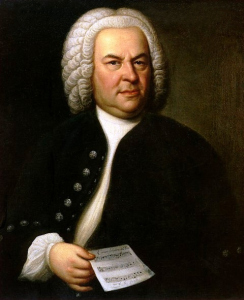
Bach’s Deathbed Hymn

robstroud's avatarMere Inkling Press

jsbBlind and restricted to his deathbed, Johann Sebastian Bach asked a fellow organist to play one of his own hymns. Bach then did what any brilliant composer would have done.

No, he did not criticize his colleague for the way he interpreted it musically. Bach, in his final hours, revised his own composition, making a number of musical improvements.

And the genius did not rest there, he retitled the work and modified its strains in a manner which perfectly addressed his circumstances. Anticipating his imminent encounter with his Creator, he changed the name to Vor deinen Thron tret’ ich hiermit (Before Your Throne I Now Appear). The first and last verses of the hymn are as follows.

Before your throne I now appear,

O God, and beg you humbly

Turn not your gracious face

From me, a poor sinner.

Confer on me a blessed end,

On the last day waken…

View original post 717 more words

How proud am I?

trespasser58's avatarsermons and soda water

Mere cover

Love one another with brotherly affection.
Outdo one another in showing honor.’
Romans 12:10 ESV

When Jesus washed his disciples’ dirty feet he took a swipe at their competitive nature, a not so subtle dig at their itch to be ‘first’ in his Kingdom. In this third brief post on the theme of pride, C S Lewis suggests that our competitiveness may be the best barometer of our problems with that particular sin.

‘If you want to find out how proud you are the easiest way is to ask yourself, ‘How much do I dislike it when other people snub me, or refuse to take any notice of me, or shove their oar in, or patronise me, or show off?’The point is that each person’s pride is in competition with everyone else’s pride. It is because I wanted to be the big noise at the party that I am so annoyed…

View original post 140 more words

Watch “MercyMe – Greater (Official Lyric Video)” on YouTube

Greetings from school holiday land (aka teacher prep time). I’ve previously written a post about the lyrics of this song, but have just found a neat new official lyrics video that I thought I would share. It is such an uplifting and joyful tune. Blessings to you.

I JOHN 4:4-6
“You, dear children, are from God and have overcome them, because the one who is in you is greater than the one who is in the world.
They are from the world and therefore speak from the viewpoint of the world, and the world listens to them. We are from God, and whoever knows God listens to us; but whoever is not from God does not listen to us. This is how we recognize the Spirit of truth and the spirit of falsehood.”

Why you should keep practising your instrument 

I found this set of eight helpful suggestions for finding time to enjoy practising your instrument. I’m sure we could all use the encouragement to keep learning skills and enjoying the gifts we have developed.

healthy habits

1. Sight read often 

Believe it or not, sight reading can be fun. Not convinced? Dig out your old grade books from two or three grades back and try playing through a few of the pieces you didn’t learn at the time. Not only is this good sight reading practice, it’s a good way to reacquaint yourself with your instrument if you’ve taken some time off over summer. PLUS you’ll learn new repertoire that you might enjoy AND you’ll give yourself a confidence boost by sight reading music you once thought was impossible.


2. Don’t separate theory from repertoire

 Time’s up! Another lesson or practice session has come to an end and, alas, there was no time for theory. Don’t sweat it! Make musical theory a part of your everyday practice and lessons. Stop playing briefly and analyse one passage of your sonata. Grab your smartphone and check that you know all the definitions for the Italian terms in your piece. Play on and ask yourself ‘what key am I in? What relationship is this key to the original key?’


Spend a lot of time online? (Answer: ‘Yes!’) Sacrifice just 10 minutes of precious internet browsing time to do a lesson or a test from an online theory course once a week. You’ll be a theory guru in no time. 


3. Compose 

We all have memories of that time we were playing around on our instrument, came up with a brilliant riff, never wrote it down and learned the true meaning of regret. Are you the next Brahms? Maybe not. Do you have great ideas that other people might like to hear? Absolutely. Keep a pencil and a manuscript or manglescript pad with you while you practice.


Ideas don’t often strike out of the blue like a bolt of lightning (especially in this drought-ridden country!) – so write them down if they do! Then you can spend some time working them into something more substantial through ongoing exploration and experimentation. Working on your own musical ideas can also be a great way of really engaging with the sound that you are making, sparking musical ideas for your other repertoire.


Insightful Clara Schumann says, ‘There is nothing greater than the joy of composing something oneself and then listening to it.’ 


4. Record yourself 

A recording device may be one of the most effective practice tools and most students just aren’t using one regularly. There is no need for fancy gear, microphones or studio set-up; recording is for personal use only! Your smartphone, tablet, laptop or handheld digital recorder will work just fine.


Recording yourself puts you in the teacher’s or examiner’s chair, helping you to listen critically to your own playing. How would you rate your pitch, articulation, phrasing, tone quality and overall performance? Make a conscious change to your performance, record and evaluate again. As musicians, there is often a significant disconnect between what we feel we are creating and what we actually produce on our instruments.  Recording is an important reality check and benchmark and the best tool for students who are eager to see practice results first-hand – even if it is a little scary at first!


5. Master the short-and-focused practice session

berstein

You don’t have to wait for a two-hour window to appear in your schedule in order to sit down with your instrument or work on your voice. Long practice sessions can be great for building stamina, but sometimes more can be achieved with multiple short sessions in which you set out to achieve one particular goal. Keep track of your goals and your targeted practice in your practice diary.


Clever Leonard Bernstein says, ‘To achieve great things, two things are needed; a plan, and not quite enough time.’ 


6. Listen to great recordings 

“Have students listen to fine performances of the pieces, even before you begin teaching it” advised Glenn Riddle to teachers at last week’s Piano Series 17workshop in Melbourne. Between concerts, recitals, studies and everything else life throws at us, most of us don’t spend enough time just listening for the sake of listening. 


Listening to music is not only an inherently pleasurable experience, it is also an incredibly beneficial exercise for the brain. A recent study from UC Berkeleyfound that listening to familiar and unfamiliar music ‘increased interaction between the nucleus accumbens and higher, cortical structures of the brain involved in pattern recognition, musical memory, and emotional processing.’ That certainly sounds convincing!


Listening to repertoire before or as you learn a piece can help to inspire you, give you ideas for your own phrasing and interpretation and allow you to see the piece from another performer’s perspective. Grab a recording of your exam repertoire from iTunes or Spotify, plug in your earphones and talk a walk outside. You never know what details you might hear!


7. Go to concerts 

Seeing a live classical music performance is insanely exciting… the nerves, the spectacle, the variety, the triumph! So why do we so often save concert-going for ‘special occasions’ or one-off experiences? It is easy to think of concerts as expensive ventures or special-occasion experiences, but this is not necessarily the case!


Google your local university music department and attend one of their (usually free) lunchtime concerts. Most professional concerts also offer discounted student tickets or last-minute ‘student rush’ tickets. Even better, have a soirée-of-sorts with your musical friends. Get an opportunity to practice performing in front of others, support your friends and be introduced to a lot of great music!


8. Have fun!

john cage

Remember that all of your hard work is really aimed at making it easier to get your instrument or voice to do what you want it to do. From time to time, play around with the sounds you can make – beautiful sounds, ugly sounds, funny sounds and sad sounds! Get up close and personal with your instrument (or voice) and experiment away. If you’re not enjoying playing or singing at the moment, maybe you just need to reacquaint yourself with the joy of making sound. Learning music is challenging but should also be fun and rewarding. 


Happy John Cage says, ‘Be happy whenever you can manage it. Enjoy yourself. It’s lighter than you think.’ 


Upgrade your practice with these simple tips.


http://www.ameb.edu.au/8-simple-music-hacks

Our Saviour chose the Mercy Tree

This a beautiful song – a blessed Easter to you!
May your celebrations proclaim the grace and mercy of the empty tomb.

MERCY TREE

On a hill called Calvary
Stands an endless mercy tree
Every broken weary soul
Find your rest and be made whole
Stripes of blood that stain its frame
Shed to wash away our shame
From the scars pure love released
Salvation by the mercy tree

Verse 2
In the spot between two thieves
Hung the blameless Prince of Peace
Beaten, battered, scarred, and scorned
Sacred head pierced by our thorns
It is finished was his cry
The perfect lamb was crucified
His sacrifice, our victory
Our Savior chose the mercy tree

Chorus
Death has died, love has won
Hallelujah! Hallelujah!
Jesus Christ has overcome
He has risen from the dead

Verse 3
Hope went dark that violent day
The whole earth quaked at love’s display
Three days silent in the ground
This body born for heaven’s crown
On that bright and glorious day
When heaven opened up the grave
He’s alive and risen indeed!
Praise him for the mercy tree!

Verse 4
One day soon, we’ll see his face
And every tear, he’ll wipe away
No more pain or suffering
Praise him for the mercy tree

(Chorus 2x)
On a hill called Calvary
Stands an endless mercy tree

Official music video of “Mercy Tree” by Lacey Sturm, as seen in the film “The Cross” featuring Billy Graham. To watch the film visit http://watchbillygraham.com.

At night His Song is with me

SING

“We’re in the middle of a series on spiritual dehydration and what to do when your faith feels worn out and dried up. . . Remember, we’re dissecting the three elements found in Psalm 42, verse 8: “By day the Lord commands his steadfast love / and at night his song is with me / a prayer to the God of my life.”

I don’t know about you, but I find that during phases of spiritual dehydration, the night is the hardest part of the day. It’s probably because I don’t have any activities to distract my brain; I’m forced to lie in bed and think about all the different elements that are contributing to my depression.

What should you do during these long and restless nights? The Psalmist tells us – sing!

I once was counseling a woman who was severely depressed, and she said to me, “My mind was constantly racing. I couldn’t get a hold of my thoughts or harness my emotions or even read my Bible. But the one thing that brought my soul peace was the music of the church of Jesus Christ.”

Maybe you should grab a pair of ear buds and sing silently in your head as you listen to your iPod while you struggle to sleep. Maybe you should sing aloud as you sit on the couch or clean up the house. Maybe you should gather with your small group and devote an hour to simply singing the theological truths that you normally talk about.

Whatever method you choose, sing good theology! Remind and refresh your soul through praise. God created music for the good of his people.

Especially in the darkness of spiritual dehydration and depression, light the candle of praise.

God bless

Paul David Tripp”

REFLECTION QUESTIONS:

What are some of your favorite worship songs?

What theological truths from those songs do you need to be reminded of?

How can you incorporate song during times of spiritual dehydration?

How might you be able to minister to others through song?

He is absolutely worth it all

There is absolutely nothing we could go through in this life that would prove our faith in Christ worthless. The joy, peace and assurance of our salvation in Him far outweighs any difficulties which faith in Christ brings.

“Indeed, I count everything as loss because of the surpassing worth of knowing Christ Jesus my Lord. For his sake I have suffered the loss of all things and count them as rubbish, in order that I may gain Christ and be found in him, not having a righteousness of my own that comes from the law, but that which comes through faith in Christ…”
(Philippians 3:8-9)

This assurance is beautifully expressed in a song sung by Meredith Andrews, the title track of her album Worth it All.

Meredith Andrews’ acoustic version:

Meredith Andrews’ studio version:


Worth it All

All I am Lord here before You
Reaching out for more
You’re the promise never failing
You are my reward
You are my reward

Chorus 1

I let go of all I have just to have all of You
And no matter what the cost
I will follow You
Jesus ev’rything I’ve lost I have found in You
When I fin’lly reach the end I’ll say
You are worth it all
(You are worth it all)

Verse 2

There’s no riches earthly treasure
That will satisfy
Ev’ry longing for You Jesus
Set this heart on fire

Misc 1

(Bridge)
When I’m there in Your glorious presence
Ev’ry knee is bowed before You
Hear the sound of heaven singing
You are worth it all
All the saints cry holy holy
Angels singing worthy worthy
Forever I will shout Your praises
You are worth it all
(You are worth it all)

Ben Cantelon | Benji Cowart | Jason Ingram | Jonathan Smith © 2011 Word Music

http://www.worshiptogether.com/songs/songdetail.aspx?iid=1908216

New Song from Keith & Kristyn Getty (& Graham Kendrick) | Worship Matters

New Song from Keith & Kristyn Getty (& Graham Kendrick)

by Bob Kauflin on February 10, 2015


Not too long ago I was in Nashville with Julie and we stopped by to see our friends, Keith and Kristyn Getty. While we were there Keith asked me if I wanted to hear a song they had been working on with Graham Kendrick. Of course, I said.

He played “My Worth is Not in What I Own.” I immediately thought, I want to sing this song and I want other people to sing this song. Now we can.

Col. 3:16 says that songs are meant to teach and admonish us while enabling the word of Christ to dwell in us richly. This song definitely accomplishes both goals.

Here are the words:

My worth is not in what I own;
Not in the strength of flesh and bone.
But in the costly wounds of love at the cross.
My worth is not in skill or name;
In win or lose, in pride or shame.
But in the blood of Christ that flowed at the cross.

I rejoice in my Redeemer, Greatest treasure
Wellspring of my soul
I will trust in Him, no other;
My soul is satisfied in Him alone.

As summer flowers we fade and die:
Fame, youth and beauty hurry by.
But life eternal calls to us at the cross.
I will not boast in wealth or might,
Or human wisdom’s fleeting light.
But I will boast in knowing Christ at the cross.

Two wonders here that I confess;
My worth and my unworthiness.
My value fixed–my ransom paid at the cross.
(c) 2014 Getty Music Publishing (BMI) and Makeway Music (Adm. by musicservices.org).

We’re reminded of where our true value lies – not in our accomplishments, efforts, skills, reputation, wealth, might, or wisdom–but in the finished atoning work of the Savior. We are valued not because we are valuable, but because God has set his affection on us. Our worth is in the “costly wounds of love at the cross.” Nothing in this world will satisfy us like Jesus Christ. These are truths we need to preach to ourselves constantly. And this song helps us do just that in a way that is memorable and beautiful.

Keith and Kristyn kindly gave me permission to give away the choir chart and hymn chart for the song for a week. Enjoy.

http://www.worshipmatters.com/2015/02/10/new-song-from-keith-kristyn-getty-graham-kendrick/

Ascribing greatness to the one true God

We find the deepest meaning in life when our hearts freely go out to admire God’s power, rather than turning inward to boast in our own — or even think about our own. We discover something overwhelming: It is profoundly satisfying not to be God, but to give up all thoughts or desires to be God.

In our giving heed to God’s power there rises up in us a realization that God created the universe for this: So that we could have the supremely satisfying experience of not being God, but admiring the Godness of God — the strength of God. There settles over us a peaceful realization that admiration of the infinite is the final end of all things.

We tremble at the slightest temptation to claim any power as coming from us. God has made us weak to protect us from this: “We have this treasure in jars of clay, to show that the surpassing power belongs to God and not to us” (2 Corinthians 4:7).

O what love this is, that God would protect us from replacing the everlasting heights of admiring his power with the futile attempt to boast in our own!

John Piper
http://www.desiringgod.org/articles/how-do-you-give-god-strength