Grace Upon Grace

“My sin is erased, my heart is amazed by your grace upon grace.”

Here are some beautiful song lyrics from a recent song by Josh Wilson, on the album “That was Then, This is Now” (2015). 

“Grace Upon Grace”

Every morning I open up my eyes to see mercy’s brand new
Darkness disappears and the day reveals all You’ve carried me thru
You are so faithful and I am so grateful God

Heavenly Father
You love like no other
You call me Your own
You never let go
You are my rescue
How can I thank You?
My sin is erased, my heart is amazed by Your
Grace upon grace

Seems impossible, a love unstoppable that just won’t give up on me
You left the 99 to find a heart like mine that’s all the proof that I need
You are so faithful and I am so grateful God

Heavenly Father
You love like no other
You call me Your own
You never let go
You are my rescue
How can I thank You?
My sin is erased, my heart is amazed by Your
Grace upon grace

I am Yours, I am Yours
I was made for You, I was made for You
I am Yours, I am Yours
I will live for You, I will live for You (Lord)

Heavenly Father
You love like no other
You call me Your own
You never let go
You are my rescue
How can I thank You?
My sin is erased, my heart is amazed
Forever oh God I will give You my praise
My sin is erased, my heart is amazed by Your
Grace upon grace

Don’t Burn that Bridge – from The Blazing Center

bridgeHe who demands mercy and shows none burns the bridges over which he himself must later pass. -Thomas Adams

“Blessed are the merciful, for they shall receive mercy”. Matthew 5:7

Are you merciful? Is that who you are? Of all people on the face of the earth, we who believe in Jesus should be the most merciful. The quickest to forgive. The most forbearing with other’s sins against us. Why? Because we have received such incredible mercy from God ourselves. Each of us has sinned horrifically and repeatedly against the Holy One who will tolerate no sin in his presence. Yet he so loved us he sent his Son to become the lightning rod for the wrath we deserved. To have it strike him instead of us. Jesus got what we deserve and we received what we never deserved – Mercy. If we appreciate the mercy we’ve received, we should be quick to pour it out. And pour it out on those who don’t deserve it.

We should pour out mercy on those who sin against us. Those who hurt us. Who misunderstand us and can’t see our point. Those who insist that they are right and we are wrong. Those who don’t realize they are sinning. We should quote Jesus regularly: “Father, forgive them for they know not what they are doing.” They don’t realize their sin. They don’t see their pride and stubbornness. They don’t know how much they are hurting me. Or maybe they do, but Father, have mercy on them as you have had mercy on me. And help me to have mercy on them. As John Piper says, we should:

“Be stunned that you are a beneficiary of mercy – be reminded and stunned that you and I deserve nothing but wrath from God, and in Christ receive nothing but mercy from him. Be stunned. And then pray that God would make you merciful to the undeserving.Oh, how sweet marriages would be if we stopped thinking about what we deserve and thought more about how to show more mercy – how to do more undeserved good to each other. Oh, how sweet would be the fellowship of the church if we all really felt undeserving of any good and lavished with God’s mercy. And, oh, how bright the gospel would shine if we touched the poor with Christ-exalting mercy. May God raise up many who will build, with joy, ministries of mercy to the city and the nations.”

Are you stunned by the mercy you’ve received from God? Do you reflect regularly on the mercy you’ve received? Are you a merciful person – is that who you are? Not just something you do, but something you are? Who do you most struggle to feel merciful toward? Pray for that person. Affirm that you forgive them, whether they have asked your forgiveness or not. Ask God to bless them. You and I are not yet perfect. We will need mercy in the future. We don’t want to burn bridges we’ll need to pass over later. Lord Jesus, make us merciful, as you are merciful.

http://theblazingcenter.com/2016/03/you-dont-want-to-burn-that-bridge.html

Sing in me, Breath of God

image

“Singing is a profound example of how we are made in the image of God. Whether we come to it through the science of the body, the breath drawn in and transfigured into music, just as the breath of God brought the first human to life (according to Genesis); or whether we find it through the mathematics of the intervals of sound that work together to produce beauty; or the soul of the artist, painting with sighs; there is room for everyone to come together with God in that work of creating God’s image on earth.

Whether you are the outgoing type who just has to share all your feelings and words with the people around you; or whether you are more on the shy side, hiding yourself inside the notes, letting the music speak for you, give you a voice, there is room for every image of God in the choir, in the song.

And just as we never reach the end of the image of God, so we never reach the end of the ways that music can speak to us and for us. It is a gift.

And those who sing it show us the image of God, and bless us with the image and echoes of immortality.
Amen.”

Originally published at http://wp.me/p1sWUy-1jn

Take refuge in the only place of strength

I wrote this a month or two ago, and forgot to post. Better late than never.

words pic
Often our lives can feel like one new stress after another. We just get one thing sorted out, and a new challenge comes along. Someone changes their mind about something and doesn’t see the implications for others. We feel like we are under attack, that we can barely keep our heads above water. As time marches on and we are old enough to benefit from hindsight and some accumulated wisdom, it is then aspects of our health that present new and unexpected challenges.

This year I have worked full time in a Christian high school, with a great bunch of like-minded people, who are always willing to go above and beyond for the sake of their students. Being part of this is a joy, but also pretty taxing on the body and mind. So as I take a break for our long summer holidays here in Australia, I want to reflect on how I could cope with the demands of life and work and family a little better.

Our pastor today spoke from Psalm 11, where David shares the fact that the Lord is his refuge. Amidst the physical and political attacks he faced, the enemies who pursued him, it was the Lord who provided the only place of safety.

And so, I ponder: Where do I run, what do I run to, when things are falling apart, when things get busy, when the stress piles up? Is it the Lord that I run to? Or something else? Can I truly say it is the Lord in whom I take refuge?

And what would this look like?
As I reflect on the year that has been and contemplate the future challenges, I will endeavour to take refuge in the Lord by:

* Getting better at taking time to be alone, to meet with Him in his Word and in prayer.
* Praising Him to others, deliberately and purposely, in normal conversation.
* Making decisions more slowly, praying and considering his wisdom and how it applies to the challenges I face, rather than simply relying on my wisdom.
* Immersing myself in His Word at more opportunities, rather than seeking refuge in the humour or drama or news that this world provides, which mostly promotes and leads us to self-reliance, rather than God-dependence.

These may sound like a bunch of New Year resolutions but these are some things I hope to pursue in the busyness of life this year. It is in the busyness of life that we all live and this is where we need to seek the Lord. That elusive, quieter time may never come. Seek the Lord while he may be found….today.

Just get writing!

writingOne thing I love about the blog writing process, and the whole community of world-wide blogging, is that it helps writers develop backbone. Once you share a few posts, and experience the joy of interaction, you learn that it is okay, applauded even, if you are willing to construct and share your opinion, no matter how controversial it may be. Though it is pretty scary to put your ideas up for the scrutiny of an unknown audience, once you see how your thoughts can create a stir, there is a great reward! I suppose it is akin to the ‘butterfly effect’, where a small action or even just a word can create significant ripples in our global village.

The writing process also helps us get over that great concern we humans share for ‘what other people will think’. I see this fear at work in many places in life, in church, in music, in families, and in school. In fact, this fear of condemnation in others’ thinking is a huge burden for teenagers in the education process. I have seen so many students hold back their ideas, their creativity and enthusiasm for the fear of being judged.
“If we’re constantly dependent on the approval of other people we’ll always be afraid of failure. If we’re constantly needing the affirmation and praise of those around us then we’ll never take any creative risks. We’ll never have the guts to stick our necks out and possibly look silly. Because other people might disapprove of us. They might think that our painting or speech or novel or spreadsheet or organizational blog or hand sewn shirt is pretty lame. And that would sting. We would feel bad about ourselves, which would then lead to us eating a complete bag of Oreos in one sitting.”
from Stephen Altrogge: How to overcome the fear of doing creative work

This is largely why I’m encouraging my English students to start up their own blog this year . . . and simply get writing! Some students are really getting into the swing of things, writing several posts a week – and for others, they are a little slower on the uptake. One thing is for sure, if they catch the blogging bug they will quickly develop into very skilled proof-readers, and ultimately very fearless writers. The world certainly needs more writers like this. Write on!


My Lighthouse


If you have not yet met this band, they have several albums of encouraging and lively songs of praise and worship. This is one of my favourites!

My Lighthouse by Rend Collective
In my wrestling and in my doubts
In my failures You won’t walk out
Your great love will lead me through
You are the peace in my troubled sea

In the silence, You won’t let go
In my questions, Your truth will hold
Your great love will lead me through
You are the peace in my troubled sea

My Lighthouse, my lighthouse
Shining in the darkness, I will follow You
My Lighthouse, my Lighthouse
I will trust the promise, 
You will carry me safe to shore (Oh-oh-oh-oh-oh)
Safe to shore (Oh-oh-oh-oh-oh)
Safe to shore

I won’t fear what tomorrow brings
With each morning I’ll rise and sing
My God’s love will lead me through
You are the peace in my troubled sea

Fire before us, You’re the brightest
You will lead us through the storms

Worship with a human heart

sunset-585334_1920This post comes from a student I taught about six years ago. She has recently started a blog and would no doubt appreciate some visitors and followers. I thoroughly enjoyed her post, the content of which you will find below; please visit the original post:

Worship With A Human Heart

The church fellowship I attend is small. Worship is usually run by a singer and one – or, if we’re lucky, two – musicians, along with someone in charge of displaying lyrics. . . This week, it didn’t quite go smoothly. Sometimes the lyrics were out of order, sometimes the guitar was louder than the singer, sometimes the congregation was off-key or sang at the wrong time. At one point the musician couldn’t find the music sheet for a song, so we ended up singing one song twice!

This is my favourite worship. When we raise up our voices and stumble, when our plans go awry and the guitarist stumbles. And when we continue anyway. Because we must. I love these moments. They make me smile, and I like to think they make God smile too.

Because we aren’t a concert of professionals with a stage and fancy lightning. Because we aren’t here to produce beautiful, on-key music without missing a beat. We are here as humans to worship the one true God.

And how remarkable, how astounding that He loves our worship, stumbles and all. How awesome is it that He loves such imperfect humans.

“But God demonstrates his own love for us in this: While we were still sinners, Christ died for us.” Romans 5:8

We don’t need to be perfect to come before God. In fact, He came to us, arms held wide, while we were unworthy. How can we not praise Him? How could anyone stand to wait until perfection before raising off-tune voices in worship to our God?

Thank you, Lord, that You love it when we worship with a fallible human heart.

Maybe we should begin with balloons?

2015 year 12s GrovesAs the clock ticks over the 11pm mark on this sultry summer eve, I am contemplating the year ahead. Yes, I know we have already celebrated the New Year (and for some reason I like even years better than odd ones! Is anyone else with me on that?) But in just 9 hours time the working day will officially begin and I will be “back” for the school year – along with a few hundred eager, or not-so-eager, students. I’ve spent the day, and the last few weeks, preparing for what is to come. This waiting period is often more stressful than the actual event. Once we are back at school the tasks become more about the day to day than staring blankly at a whole term or year and wondering how on earth we will get through it all.

The students will bring their own problems, concerns, interests and passions. It is up to us as teachers to teach them to be learners, life-long learners, who look at life with a positive outlook, take hold of opportunities and seek to be the change in situations that frustrate them. We encourage them not to let the problems they bring, or the excuses in their head, or their poor self-esteem, hold them back. As you can imagine, this task is no small thing. And half the time we have problems, excuses and doubts about how we as teachers can make a difference.

As Christian teachers there is an extra challenge – or two. We try our best to model Christ, to be Christ-like in our dealings with students. We seek to achieve restoration when students break trust or relationships with us and others. We try to share the Gospel –  ready to give a reason for the hope that is in us.

With all this on my teaching plate, I ask you fellow bloggers to spare a prayer for me when you can, that I can be some small positive influence in the lives of students this year – and that through me they can know a little more of Christ and the acceptance we know in Him.

Blessings!
Ros

(Note: The photo is the final day of school for the students I looked after as Year 12 Coordinator in 2015. Apparently the balloons were biodegradable, in case you were wondering. 🙂 Maybe we should begin with a balloon release.)

Violin design – sonic power

How a Renaissance design doubles a violin’s sonic power

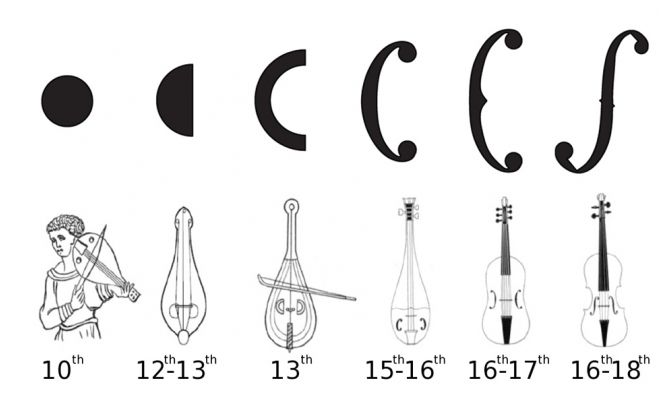
Scientists have discovered that the distinctive “f-hole” (so-called because it resembles a written “f”) in a violin is not just a pretty shape. It is perfectly designed to maximise the sound issued from the instrument.

The shape is twice as efficient at transmitting sound as a round hole researchers found.

MIT accoustics expert Nicholas Makris studied the development of the holes. he found that the the more elongated the sound hole, the more sound can escape from the violin, and set about to prove it mathematically.

He says that, while it is unclear whether the instrument makers understood the mathematics behind the efficiency of the f-hole, it developed in an “evolutionary” way.

He and his team analysed 470 instruments made between 1560 and 1750 and found that the change from round hole to the f-hole was gradual but consistent.

Whatever they knew about the maths, instrument makers “definitely knew what was a better instrument to replicate,” says Makris.

As Jennifer Chu writes in MIT News:

The more elongated these are, the more sound a violin can produce. What’s more, an elongated sound hole takes up little space on the violin, while still producing a full sound — a design that the researchers found to be more power-efficient than the rounder sound holes of the violin’s ancestors, such as medieval fiddles, lyres, and rebecs.

Makris didn’t set out to study violin acoustics, Chu reports, but arose when he took up a new hobby – playing the lute.

“I’m an acoustics expert, but promised myself I wouldn’t think about the acoustics of the instrument, I’m just going to play the thing,” Makris told Chu.

That thinking didn’t last long, as he began trying to understand his instrument better.

How the shape developed

How the shape developed

In all honesty: Tim Keller Praying your tears

Tim Keller Praying your tears
This is a great encouragement.
(Link reference at the end)

I’d like to tell you about two great talks I listened to recently: Praying our Tears and Praying our Fears by Tim Keller. They’re both free online, and are part of a series on the Psalms about responding to our feelings. Today I’ll tell you about the one on tears; next time, the one on fears.

I love the Psalms! It seems that every emotion I’ve ever felt is expressed there, ready to be prayed to God. Sometimes I feel like getting older is just working through the Psalms, one emotion at a time!

There’s no better guide to what to do with our feelings before God than the Psalms. I like Tim Keller’s way of putting it: that the Psalms teach us a gospel third way of responding to our emotions.

1. Many Christians are uncomfortable with feelings, so we deny and suppress them.
2. The world tells us that we need toacknowledge, express and follow our feelings, so we vent and dump them.
3. The Psalms give us a gospel third way of responding to our emotions: to pray our feelings.

But what about suffering? How do we pray our tears? How do we use them to soften, rather than harden our hearts? Here’s what Keller says. I’ve included a few quotes: they’re wonderful, so take the time to read them. I know they’ll live on in my heart and mind for a long time.

1. Expect tears
I’m often surprised when I suffer. Isn’t God good? Isn’t he supposed to protect me? What have I done to deserve this?! But I should expect to suffer more as I become more like Jesus. If I don’t expect tears, I’ll always be crying about two things instead of one. “You’re weeping about the thing that made you weep, and you’re weeping about the weeping …. You’re going to sink under that. One thing at a time is all we can take.”

2. Invest your tears
“Those who sow in tears will reap with songs of joy” (Ps 126:5-6). If a farmer leaves his seed in the shed, or dumps it all in one spot, there will be no harvest: he must sow his seed. We shouldn’t deny or dump our tears, but see them as an opportunity for growth. Tears give way to joy (Ps 30:5) but they also produce joy (2 Cor 4:17). So how do we plant our tears?

3. Pray your tears
When we pour our tears into prayer, it transforms both the tears and the weeper. We should plant our tears in three things.

a. A realisation of God’s grace.
We need to know before we start crying that it’s safe to pour out our hearts to God. That’s why the Bible includes disturbing psalms like Psalm 39, which ends “get away from me, God!” Derek Kidner says,

The very presence of such prayers in the Scripture is a witness to God’s understanding. He knows how we speak when we are desperate. … Psalm 39 shows where your deepest feelings – your anger, your tears – belong. … Ultimately where your tears belong is not managed or packaged or manicured in some little confessional prayer. They belong in pre-reflective outbursts from the depths of your being in the very presence of God. … “I want you to speak and feel in my presence. It’s safe. I understand what it’s like to be desperate. … I’m a God of grace. I understand.”

b. A vision of the cross.
God understands our desperation because Jesus experienced desolation. Jesus cried, “My God, my God, why have you forsaken me?” and found heaven empty, so that when we cry “Turn your face away!” God won’t abandon us (Ps 39:13,Matt 27:46).

When I look to the cross, I can suffer withoutguilt, for I know God isn’t punishing me because Jesus was punished instead of me. I can suffer without impatience, for I can trust that God’s purposes are good even when I don’t understand, just like people didn’t understand the cross. I can suffer without self-pity:

Weeping is fine. Weeping and grief is fine. Weeping and disappointment is fine … but weeping in self-pity will make you a small little person, someone who can’t forgive, someone who is always feeling ill-used, someone who gets incredibly touchy and incredibly over-sensitive. … Look at the cross and say, “… My sufferings are nothing compared to yours. If you suffered for me I can be patient with this suffering for you.”

c. An assurance of his glory.
All sorrow ends in joy (Ps 126:6). The final psalms are all psalms of joy. But how does a prayer of tears become a prayer of joy? Eugene Peterson says,

What the psalms are teaching us is that all true prayer pursued far enough will become praise. Any prayer, no matter how desperate its origin, no matter how angry and fearful the experience it traverses, will become praise. It does not always get there quickly. It does not always get there easily. In fact, the trip can take a lifetime! But the end is always praise. This is not to say that other kinds of prayer are inferior to praise, but that all prayer pursued far enough becomes praise. Don’t rush it. Don’t try to push it. It may take years, it may take decades before certain prayers arrive at the hallelujahs of Psalm 150. Not every prayer is capped off with praise. In fact most prayers, if the psalms are a true guide, are not. But prayer is always reaching toward praise, and if pursued far enough, will arrive there.

Sometimes we’re afraid to weep because we think we’ll never stop weeping. But if we know that sorrow ends in joy – that sorrow producesjoy – we can dare to weep. Tim Keller asks, are you happy enough to be a weeper? – to get involved in the lives of others even when it’s painful? If so, there will be a harvest of joy for them and you.

He prays, “Father, make us happy enough to weep.” Amen.

images are from Chapendra, IRRI Images and Jacopo Cossater from flickr

http://jeaninallhonesty.blogspot.com.au/2010/05/tim-keller-praying-your-tears.html?m=1