1 Corinthinans 13…Remixed For Today

Thanks go to the folks at Blazing Center for this insightful application of 1 Corinthians 13:

If I status update with such insight, hilarity, godliness, or profundity, that I get a thousand retweets and likes, yet have not love, I’m a cellphone that won’t stop ringing, or a car alarm at 2 AM.

If I understand every nuance of every complicated doctrine, including eschatology and predestination, and am a constant defender of orthodoxy, and if I am renowned for my ability to communicate truth with passion, but have not love, I’m nothing more than a first grader in the kingdom of God.

If I am a fantastic worship leader, able to lead hundreds of people in passionate worship of God, yet have not love, my skills are worth jack.

If I am a blog warrior, constantly on the attack against those who would distort the faith, yet have not love, I’m that yippy dog next door who won’t stop barking…even at 3 AM.

If I live a life of radical sacrifice, crazy love, and wartime mentality, and sponsor lots of kids through Compassion International, and go on mission trips in “closed countries”, but have not love, I gain nothing.

If I am a great artist, able to capture a snapshot of the glory of God on canvas, or in song, or in prose, or on film, and yet have not love, my creative “genius” is utterly useless to God.

If I preach like Piper or Chandler or Chan or Platt, and yet have not love, I’m nothing more than a squawking parrot who likes to imitate others.

If I read all the books by all the smart theologians, and can quote them off the top of my head, yet have not love, WHO REALLY CARES!!!!

Love is patient and kind; love does not envy or boast; it is not arrogant or rude. It does not insist on its own way; it is not irritable or resentful; it does not rejoice at wrongdoing, but rejoices with the truth. Love bears all things, believes all things, hopes all things, endures all things.

http://www.theblazingcenter.com/2014/09/1-corinthinans-13-remixed-for-today.html?

Should worship be fun?

From the Archives: Should Worship be Fun?People-Laughing

(by Bob Kauflin at Worship matters)
More than once I’ve heard Christians insist that worship should be fun, or act like they had a responsibility to prove that Christians knew how to “party” in church. I’ve always been uncomfortable with that connection, so I started thinking about the place of “fun” in worship, if one even exists. I’m going to address this question by answering it as I posed it, and then considering two other ways it might be phrased.

Should worship be fun? If we take the exhaustive testimony of Scripture, the answer would have to be a resounding NO. “Fun” wouldn’t characterize any of the scenes in the Bible where people encounter God together, at least not the zany, slap-happy, crazy, mindless kind of fun. We’re told to worship God with reverence and awe, for he is a consuming fire (Heb. 12:28-29). To have “fun” one of our primary motives as we gather. Among other things our goals include remembering, rehearsing, and reveling in the gospel, magnifying God’s glory in Christ, spurring one another on to love and good deeds, presenting our petitions before God, and being strengthened by his Word and the communion of the saints. Celebration will certainly be included in that, but there are also times when worshipping God will produce awe, tears of repentance, or a profound silence.

But let me rephrase the question. Can worship be fun? It depends on how we define “fun.”

If “fun” is defined as a lighthearted activity with no purpose or meaning, strictly meant to amuse, then the answer to the question, “Can worship be fun?” must surely be no. When we worship God together, we are not looking to be merely entertained or momentarily distracted from the cares of this world. We’re not seeking to promote a Christian alternative to Saturday Night Live (Sunday Morning Live?). Diversion is not the same as worship. Our joy and gladness are meant to be grounded in and informed by God’s character, nature, and acts.

But when I looked up “fun” on my desktop dictionary, the first meaning was “enjoyable.” If we’re asking, “Can worshipping God be enjoyable?” then surely the answer must be yes. That doesn’t mean Isaiah 6 has no relevance to our meeting together to engage with God. But Isaiah 6 isn’t the only chapter in Scripture that describes how we are to relate to God. There have been countless times that I’ve been leading or singing as part of the congregation and thought, “I love doing this!” Joy floods my soul, and I could legitimately say I’m having “fun!”

It may be similar to what the Israelites experienced in 2 Chronicles 30. They so enjoyed celebrating the Feast of Unleavened Bread for seven days that Hezekiah and the people spontaneously decided to keep the feast for another seven days (2 Chron. 30:22-23)! That must have been some celebration! On another occasion, Ezra and the priests told the people not to mourn or weep because that day was “holy to the Lord” and that the joy of the Lord was their strength (Neh. 8:9-10). Holiness and joy aren’t necessarily exclusive.

When my children were growing up, I wanted them to look forward to singing worship songs, and not see a relationship with God as something that was only serious, sober, and solemn. After all, singing to God is meant to be pleasant (Ps. 135:3; Ps. 147:1). David danced before the Lord with all his might as he brought the ark back to Jerusalem (2 Sam. 6:12-15). The Psalmist was glad when they said to him, “Let us go up to the house of the Lord” (Ps. 122:1). So yes, when defined as enjoyment and not seen as the only aspect of our time together on Sunday morning, worshipping God can be very “fun.” People shouldn’t find our meetings dull or dour. Smiles and even laughter should abound as we consider how kind, merciful, and gracious God has been to us (Ps. 126:2)!

But let me rephrase the question one more time, to broaden the application.

“Should our fun be worship?” Well now the answer must surely be “yes.” We’re told in 1 Cor. 10:31 that whether we eat or drink, or whatever we do, we’re to do it all for the glory of God. Rather than focusing on making our corporate worship fun, maybe we should spend more time making sure our “fun” is worship.

Here are some questions that can lead us in that direction.

  • Do I choose a fun activity because there’s nothing else to do, or because I believe it will in some way cause me to grow in my love for God?
  • When I play games, participate in sports, or pursue a hobby, does my attitude demonstrate the fruit of the Spirit?
  • When I go out with a group of friends, am I seeking just to have fun, or to glorify God through encouraging them, challenging sin, and serving them?
  • Do the activities I consider “fun” increase my affections for God or dilute them?
  • Do I view my free time as belonging to me or to God?

The fun this world offers is unsatisfying, deceptive, and temporary. Let’s not idolize it or imagine it’s God offers nothing better. As Christians, we can enjoy fun activities without believing they’re the root of our happiness. The joy we experience when in worshiping God together is greater than the world will ever know, because the root is knowing our sins have been paid for through the substitutionary sacrifice of Jesus Christ and we worship a risen and reigning Savior.

Our joy is ultimately in God himself. We’d be fools to look for it anywhere else.

For more on this topic, download the following messages from the Sovereign Grace Ministries website:
Worshiping God as the Source of All Secondary Joys by Randy Alcorn
A Biblical Understanding of Leisure by Jeff Purswell

[This is a slightly edited version of a post from Feb. 6, 2007]

Don’t let the Word be strange – the Psalms included

psalms-59-16I had the privilege of leading music at a women’s conference in Brisbane last month, a conference called “Dazzled by Grace”. The speaker was Kathleen Nielson, head of women’s initiatives at the Gospel Coalition (USA). Her focus across three talks was how to read the Psalms in a way that allows us to drink deeply the beauty, poetry and truth they contain.
First she spent some time defining the Psalms, as:
*The beating heart at centre of God’s Word.
*The heart cries of God’s people: the thoughts, prayers and praises of people living in His story and seeking to trust Him through life’s ups and downs.
*Cries from a kingdom, the gathered people living under an earthly king, which points us right to God’s chosen perfect King, Jesus.

In addressing our modern difficulties in reading and appreciating the Psalms, Kathleen pointed to the fact that reading poetry has simply fallen out of practice in our culture. This was a regular practice in families for centuries gone by. They would sit around and listen to poetry, to appreciate the imagery and the repetition it contains. People would even hire poets to recite poetry for their dinner guests, and children would learn much poetry by heart. But now we live in a culture which is saturated not by poetic images, but Instagram, Facebook, Flash chat and the likes. We have trained ourselves through new technology to be addicted to cool graphics and images, through the multiple screens about us. So when it comes to the Psalms, their poetic form has become so foreign, so strange to us, something we are not used to reading.
This must really delight our enemy: “The devil is happy with a people who live on images and sound bites and tweets. He wants words of bible to seem foreign.”

So it is no wonder that we struggle to drink from the riches of the Word if the word is strange to us. How easily our minds can wander when we don’t see the point or the beauty of the poetry. But the more we immerse ourselves in it, the more the words of the Psalms become familiar to us, the more strength and confidence these words will bring to our lives. We must make friends with the imagery, the emotion, the shape, the rise and fall, of the tapestry of the Psalms. And naturally this applies to all of God’s word. We must not let His Word be a stranger to us. God has provided it for our strengthening and joy!

(Finally let me just add that I haven’t forgotten my project, of gathering all the most singable arrangements of hymns for congregational use! These talks highlighted for me the importance of us singing the Psalms together. Thanks for continuing to read along, dear followers. And welcome if you have just joined us! If you would like to spend some more time exploring the Psalms, check out this blog: Singing in Babylon)


The Song of a People

Enjoyed this post about the power of song to unite and encourage people. No wonder God calls us to praise Him!

Michael's avatarA 'Mike' for Christ

US Air Force CC-NCUS Air Force CC-NC

I love hearing the different anthems at global events, like the Olympics, and watching folk be patriotic.

A national anthem is “a generally patriotic musical composition that evokes and eulogizes the history, traditions and struggles of its people.”1

View original post 222 more words

Remembering grace – specifically!

prayer2No matter who we are or what circumstances and concerns we have, all of us have to deal with trouble in our lives. This post comes from Paul David Tripp with some great advice for turning our troubles into a time when we can be thankful, when we can remember God’s grace to us in a very specific way – quite a challenge!

“When trouble comes, it’s vital that you talk to yourself. . . no one is more influential in your life than you are because no one talks to you as much as you do. What you say to you in moments of trouble will impact the way you respond.

David was a man well acquainted with trouble. Poor David; if you read the Psalms, he always seems to be in trouble! But in these moments, David was always talking to himself. We saw this in Psalm 27 – “The Lord is my light and my salvation; whom shall I fear? The Lord is the stronghold of my life; of whom shall I be afraid?” (Psalm 27:1)

There’s something else David did in times of trouble that’s very helpful; it’s found in Psalm 4 – “Answer me when I call, O God of my righteousness! You have given me relief when I was in distress. Be gracious to me and hear my prayer!” (Psalm 4:1, ESV, emphasis mine). In the midst of trouble, David remembered the acts of God. Notice how the above phrase is in the past tense – “you have given me relief when I was in distress.” He’s not thanking the Lord for currently relieving his distressing circumstances.

What can we learn from David? In times of trouble, it’s helpful to remember with specificity the past acts of God’s relieving mercy and grace. You and I have such a short-term memory. Because of sin, we’re all about the gratification and pleasure of today. When trouble comes knocking, we get absorbed in the immediate, forgetting what God has delivered us from in the past and what he’s transforming us into for the future.

David speaks gospel sense to his soul: “Remember, this is not new. I’ve experienced trouble in the past and God was good to me then. He remains good to me today, and what I’m facing is not out of his loving and wise rule.”

I would guess that David learned this theological skill from his ancestors. In the Old Testament, God stops the rushing waters of the Jordan River so the nation of Israel can cross on dry land. The Lord tells Joshua to set out 12 memorial stones. Why? “So that all the peoples of the earth may know that the hand of the Lord is mighty.” (Joshua 4:24)

I would encourage you to take notes from Joshua and David. Remember, with specificity, the good things God has done for you. Journal, take a picture, or do whatever else can help you, so when trouble comes knocking, you can say like David, “You have given me relief when I was I distress.”

REFLECTION QUESTIONS:

1. How often do you talk to yourself?
2. Reflect on some of the things you’ve said to yourself in the past week. What were you saying to you?
3. What, or who, are some influences that can shape what you say to you?
4. What are some examples from your life when God has given you relief from distress?
5. How can you create “memorial stones” to remind yourself that the hand of the Lord is mighty?


Live to Express, not impress

IMG_0148.JPG
Greetings! I’m just wanting to share this great sign with you today, which was hanging up in a classroom at our school. What stood out for me was how much pain and trouble we could avoid in our lives if we truly lived by that motto, live to express not impress. In so many areas, most especially in music performance, church music and theology/bible knowledge, we strive hard to impress. We often forget that our better goal would be simply to express concepts and emotions, like God’s wonderful redemptive love, for the good of others. We need to get our eyes off ourselves, on hoping to make others value us more, and simply share for the good of others. Let me know how you go. I have found this to be a really challenging thing to contemplate!

Come awake!


Christ is Risen (by Matt Maher)

Let no one caught in sin remain
Inside the lie of inward shame
We fix our eyes upon the cross
And run to Him who showed great love
And bled for us Freely You’ve bled for us

Christ is risen from the dead
Trampling over death by death
Come awake, come awake
Come and rise up from the grave
Christ is risen from the dead
We are one with Him again
Come awake, come awake
Come and rise up from the grave

Beneath the weight of all our sin
You bowed to none but heaven’s will
No scheme of hell, no scoffer’s crown
No burden great can hold You down

In strength You reign
Forever let Your church proclaim

O death, where is your sting?
O hell, where is your victory?
O church, come stand in the light
The glory of God has defeated the night

Sing it, o death, where is your sting?
O hell, where is your victory?
O church, come stand in the light
Our God is not dead, He’s alive, He’s alive

Preach to yourself your daily need for grace

“It is so tempting and attractive to preach to yourself a gospel of your own righteousness, but in doing so, you minimise your daily need for grace.”

Paul David Tripp

Watch “Psalm 139 (Live) – New Scottish Hymns” on YouTube

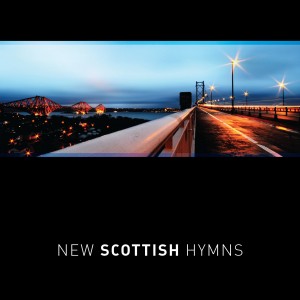
If you are looking for new ways to sing the Bible’s song book (the Psalms) with your local church then NEW SCOTTISH HYMNS could have some answers. If you liked the version of Psalm 139 then click here to download and print sheet music.

Here is what they have to say about their music:

Great hymns speak timeless truths with profound passion. They unite the church, giving Christians words to sing that articulate afresh the glories of Jesus Christ.  The New Scottish Hymns project seeks to reignite that spirit of Scotland’s great hymn-writing tradition, and uncover its treasures for a new generation.

new-scottish-hymns-cover-final-300x300ABOUT THIS PROJECT

 One aim of this album was to introduce some new songs that churches in Scotland might find useful in their own unique worship services. Scottish traditional music and folk melodies have an adaptable quality that renders the best of them timeless. Paraphrases from the Scottish Psalter like Psalm 23 have been sung across the world for centuries, and it’s important to remind new generations that these ancient words of scripture remain profoundly relevant. Scottish writers like Horatius Bonar and James Montgomery showed that a wealth of transforming biblical truths could be taught and absorbed through songs, so we also wanted to introduce examples of their lyrics to new listeners.

 The motivation for making this hymns recording did not spring simply from a desire to create art. Hymnwriting is about making music firstly out of gratitude to Jesus Christ. With all our imperfections and limitations, Christians struggle to express anything more than an echo of His greatness, but we believe that this is a thing eminently worth sharing. For the person who finds this idea strange, it will hopefully make more sense as you listen! Our hope is that every listener might hear the joy that comes from the gospel: the good news of God’s saving and transforming love, made available to every person through his son.

Sharing the Gospel online

20140806-143041-52241411.jpg

This article from Paul Steinbrueck is an interesting read for anyone involved in promoting the gospel online, particularly through the local church:

What’s the best way to share the good news of Jesus Christ with people in your community? Are churches supposed to put on great services and outreach events that draw non-Christian people from the community to hear the Good News? Are individuals supposed to share their faith with their friends and neighbors?
The answer, of course, is both/and.
Even more than that, though, churches and the individuals who make them up can both be more effective at sharing their faith – online and offline – if they recognize what they’re each good at and work together.

People don’t have relationships or friendships with a church. They have relationships with other people. They listen to people. They trust people. It’s the people within a church that have relationships with those outside the church that don’t know Christ. It’s also the people within the church that have God stories. Their lives have been transformed. They have experienced God’s grace, provision, and protection.
Churches are great organizers and facilitators. They put on services and events. They have buildings and websites that can serve as the hub of their community of Christ. They can communicate and distribute content to everyone whose connected with the church.
Knowing that, here are…
7 Ways Churches and Their People Can Work Together to Share the Gospel Online
1) Share sermons. Churches – make your sermons available online. People – share them with your friends on Facebook, Twitter, email. Send the link to specific people who you think would benefit from seeing/hearing it.
2) Share events. Churches – facilitate services and events geared for unchurched people. Create web pages and Facebook events for them. Promote them on Facebook and Twitter. People – invite your friends to them.
3) Share God stories. Churches – ask people in your church to share their God stories in a worship service. Put video of those stores on YouTube, Facebook, and your website. People – share these stories with your friends on Facebook and Twitter. Send the link to specific people who you think can relate to the stories.
4) Share life. People – blog, Facebook, and tweet about what you see God doing in your life. Churches – listen to your people’s Facebook updates and tweets. Retweet those that will encourage others in your church.
5) Inspire and train. Churches – inspire and train your people to live their faith online. Preach about it. Provide resources like those on the Internet Evangelism Day website. People – listen, learn, and life your faith.
6) Collaborate. Churches – seek out and embrace the biggest bloggers, Facebookers, and Twitterers in your church. People – seek out your church leaders. Collaborate.
7) Share great content. Churches – follow creators of great Christian content – authors, bloggers, podcasters, video producers. Share their great content online. People – share and retweet the great content your church is providing you with your online friends.
Which of these ways is your church and its people working together to share the gospel online? What other ways can churches and their people work together to share the good news online?

http://blog.ourchurch.com/2011/05/17/7-ways-churches-and-their-people-can-work-together-to-share-the-gospel-online/