Good Shepherd

This is a great modern hymn from Keith Getty (2013) and friends. Enjoy the rich lyrics and the performance from his wife Kristyn and Joni Eareckson Tada. If you know Joni’s story you will understand the significance of her singing this song, particularly the last four lines:
“Earth’s struggles overcome
Heav’n’s journey just begun
To search Christ’s depths
And ever to follow.”


Good Shepherd of my soul
Come dwell within me.
Take all I am and mould
Your likeness in me.
Before the cross of Christ
This is my sacrifice:
A life laid down
And ready to follow.

The troubled find their peace
In true surrender.
The prisoners their release
From chains of anger.
In springs of living grace
I find a resting place
To rise refreshed,
Determined to follow.

I’ll walk this narrow road
With Christ before me
Where thorns and thistles grow
And cords ensnare me.
Though doubted and denied
He never leaves my side
But lifts my head
And calls me to follow.

And when my days are gone
My strength is failing
He’ll carry me along
Through death’s unveiling
Earth’s struggles overcome
Heav’n’s journey just begun
To search Christ’s depths
And ever to follow.

Words and Music by Keith Getty, Kristyn Getty, Fionan de Barra, and Stuart Townend
© 2013 Getty Music Publishing (BMI) and Fionan de Barra (admin MusicServices.org) and Townend Songs

http://www.gettymusic.com/hymns-goodshepherd.aspx?

Celebrating the Anchor of Grace – with Rend Collective

Tomorrow starts a new chapter for me as I head back to the classroom teaching Senior English. No doubt there will be many challenges ahead, yet also many opportunities to bless and encourage these high school students to put their hope in Christ. This will mean considerably less blog writing, but I’ll endeavour to share any great songs I discover as often as possible.
At the moment I’m really enjoying the bright, energetic sound and biblical lyrics of Rend Collective.

Here are a few favourites I’ve recently discovered:
(All the chord sheets can be found here: http://rendcollective.com/chords/)

Build your Kingdom Here (Come, Set your rule)

Finally Free

My LightHouse

Prayer Isn’t Simply Plowing Through A List. What Is Prayer? This.

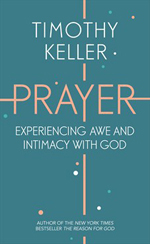
prayer girlBlessings for the New Year! I’m sure that like me you are keen to be more prayerful in 2015. This post from Blazing Center should whet your appetite for more. Keller’s book, referred to in this post, is certainly on my to read list.

What is prayer?

“Prayer is continuing a conversation that God has started through his Word and his grace, that leads to a full encounter with him,” Tim Keller writes in his book Prayer: Experiencing Awe and Intimacy with God.

That’s astounding, if you slow down and think about it. Prayer is talking tTim Keller Prayero the Creator of all that is. Even more, it’s talking back to him, in response to his initiative to start a conversation with us. But even that definition fails to adequately describe what actually happens when we pray. So before he gives a definition of prayer, Keller quotes the English poet George Herbert’s poem “Prayer (I).” Herbert doesn’t define prayer; instead, he describes it, in all its richness and variety. Here is the poem. Don’t rush. Read it slowly.

Prayer the church’s banquet, angel’s age,

God’s breath in man returning to his birth,

The soul in paraphrase, heart in pilgrimage,

The Christian plummet sounding heav’n and earth

Engine against th’ Almighty, sinner’s tow’r,

Reversed thunder, Christ-side-piercing spear,

The six-days world transposing in an hour,

A kind of tune, which all things hear and fear;

Softness, and peace, and joy, and love, and bliss,

Exalted manna, gladness of the best,

Heaven in ordinary, man well drest,

The milky way, the bird of Paradise,

Church-bells beyond the stars heard, the soul’s blood,

The land of spices; something understood.

Can we define prayer? Yes, certainly. But is defining it the end goal? By no means. We haven’t exhausted the meaning of prayer until we have personally experienced and entered into the riches Herbert describes. Don’t be content with a definition. Hear God’s invitation to you through Christ: you’re invited to the banquet. Enter the conversation. “For through [Christ] we both have access in one Spirit to the Father” (Ephesians 2:18).

By Josh Blount
http://theblazingcenter.com/2015/01/prayer-isnt-simply-going-through-a-list-what-is-prayer-this.html

Sentimentalizing, Sanitizing, and Spiritualizing Christmas | Worship Matters

Photo Courtesy of Shutterstock

Here is an excellent description of three possible ways to celebrate Christmas – and the consequences of each. Praying your Christmas celebrations are both merry and meaningful. God is with us – Emmanuel! Blessings to you this Christmas!

“It’s difficult, if not impossible, to overstate the significance of the Incarnation.

Writers, philosophers, poets, and composers through the centuries have searched in vain for words that adequately capture the wonder, mystery, beauty, and power of Jesus as Emmanuel, God with us.

The miracle and meaning of the Incarnation can be so difficult to grasp that we can give up and start to view Christmas in ways that leave us impoverished and unimpressed with the real story. Even in the church our songs and reflections about about Christmas can fail to leave people gasping in amazement or humbled in awe that God would come to dwell among us.

Sometimes we sentimentalize Christmas.
Sentimentalism is focusing on the sights, sounds, and smells of Christmas that give us good feelings. Dazzling decorations, fresh baked sugar cookies, poinsettias, family get-togethers, gift shopping, twinkling lights, Christmas carols, cards from friends, tree-cutting expeditions, wrapping presents. Of course, all these Christmas traditions are an expression of common grace, for which we can joyfully thank God. My family has developed a few of our own over 30+ years and I look forward to them every year. But man-made traditions aren’t the whole story, or even the main story of Christmas, and they fail to solve our deepest problems or fulfill our deepest needs.

Sometimes we sanitize Christmas.
We sanitize Christmas when we only present a picture-perfect, storybook rendition of what took place in Bethlehem 2000 years ago. Kind of like the picture above. The straw in the manger is fresh and clean. There’s no umbilical cord to cut and no blood. It’s a “silent night.” The surroundings are strangely free from the pungent odor of manure. Joseph and Mary are calm, cool, and collected. Everyone gets a good night’s sleep. There’s no controversy or gossip surrounding the birth. It’s a pleasant, appealing way to think about Christmas, but obscures the foulness, uncertainty, and sin that Jesus was born into. We forget that rather than coming for the put-together, well-to-do, and self-sufficient, Jesus identified with the rejected, the slandered, the helpless, and the poor.

Sometimes we spiritualize Christmas.
Spiritualizing Christmas is ignoring Christmas as earth-shattering history and using it simply to promote general virtues like brotherhood, peace, joy, generosity, and love. And tolerance, of course. Again, it’s evidence of God’s common grace and a reason to give thanks that our culture sets aside a time of year, however commercialized it might be, to celebrate and commend loving your neighbor. But the fruit of Christmas is impossible to achieve or sustain apart from the root. We understand what love is by looking not to ourselves and our good deeds, but by considering Jesus, who came into the world to lay down his life for us (1 John 3:16). Preaching or singing about peace without recognizing our need for the Prince of Peace is a shallow peace indeed.

By this time, most of us have already made our choices about what Christmas means to us and how we’re going to present it to others. But Christmas comes every year. And it’s not too early to start thinking about next year.

More importantly, the glory of God becoming man was never meant to be marginalized to a few weeks. It means something cataclysmic every day.

  • Jesus, the eternal Son of God who before time was worshiped by countless angels, set aside his glory and entered the world through the birth canal of a young woman he had created.
  • He came not into a 21st century environment with trained doctors, sterilized instruments and fetal monitors, but into a 1st century cave filled with flies, animal excrement, and filth.
  • The fullness of deity took of residence in the body of a baby gasping for its first breath.
  • The one who spoke the universe into existence lay silent, unable to utter a word.
  • He came by choice and with the sole intention of redeeming a fallen and rebellious race through his perfect obedience, substitutionary death, and victorious resurrection.

If we have the privilege of leading others in corporate worship at Christmas, let’s be sure to help them understand why nothing is more wonderful about Christmas than Christ himself.

God from God, Light from Light, true God from true God,
Begotten, not made, of one Being with the Father. (Nicene Creed)

The incorporeal and incorruptible and immaterial Word of God entered our world. In one sense, indeed, He was not far from it before, for no part of creation had ever been without Him Who, while ever abiding in union with the Father, yet fills all things that are. But now He entered the world in a new way, stooping to our level in His love and Self-revealing to us. (Athanasius, On the Incarnation of the Word)

He deigns in flesh t’appear, widest extremes to join;
To bring our vileness near, and make us all divine:
And we the life of God shall know, for God is manifest below. (Charles Wesley)

The Son of God descended miraculously from heaven, yet without abandoning heaven; was pleased to be conceived miraculously in the Virgin’s womb, to live on the earth, and hang upon the cross, and yet always filled the world as from the beginning. (John Calvin, Institutes of the Christian Religion, II, xiii, 4)

See the eternal Son of God, immortal Son of Man,
Now dwelling in an earthly clod whom Heaven cannot contain!
Stand amazed, ye heavens, look at this! See the Lord of earth and skies
Low humbled to the dust He is, and in a manger lies! (Charles Wesley)

Herein is wisdom; when I was undone, with no will to return to him,
and no intellect to devise recovery, he came,
God-incarnate, to save me to the uttermost
as man to die my death,
to shed satisfying blood on my behalf,
to work out a perfect righteousness for me. (The Valley of Vision)

As He sleeps upon the hay, He holds the moon and stars in place
Though born an infant He remains the sovereign God of endless days (God Made Low)

And who would have dreamed or ever foreseen that we could hold God in our hands?
The Giver of Life is born in the night, revealing God’s glorious plan
To save the world (Who Would Have Dreamed)

Mild He lays His glory by, born that man no more may die.
Born to raise the sons of earth, born to give them second birth. (Charles Wesley)

But when the fullness of time had come, God sent forth his Son, born of woman, born under the law, to redeem those who were under the law, so that we might receive adoption as sons. (Galatians 4:4-5)

And the Word became flesh and dwelt among us, and we have seen his glory, glory as of the only Son from the Father, full of grace and truth. (Jn. 1:14

O come, let us adore him.”

by Bob Kauflin

http://www.worshipmatters.com/2014/12/18/from-the-archives-sentimentalizing-sanitizing-and-spiritualizing-christmas-2


The truth that rescues, renovates and restores

rainbow treeAnd I will give you a new heart, and a new spirit I will put within you. And I will remove the heart of stone from your flesh and give you a heart of flesh. (Ezekiel 36:26 ESV)

But God, being rich in mercy, because of the great love with which he loved us, even when we were dead in our trespasses, made us alive together with Christ—by grace you have been saved. (Ephesians 2:4-5 ESV)

I just love the grace and truth of these two favourite passages (of mine) from God’s word. They sum up the compassionate heart of a God who would send his own son to die in order to make alive those dead in their rebellion against himself! They explain that the abundant new life we have in Christ is in no way something we have dreamed up. This is the intervention of an all-powerful God into the hearts of mortal men and women!

I also love the way the band Tenth Avenue North have described this rescue and restoration plan of our loving God (album: Light Meets the Dark). He came to bring us truth, which is his very substance. He came to bring us back to the start, to a relationship with him unhindered by our sin. He came to touch our hard hearts, to soften and make them tender and alive toward him. I trust you will enjoy meditating on the truth of these verses, particularly the grace of God which they reveal, grace which comes to us by no merit of our own.

“The Truth Is Who You Are”

It would be easier if You were just a thought in my head
Simply something that I once read
A belief needing my defense

And it would be easier if You were something I once knew
A hope just to hold on
But You’re holding out Your hands

You came to take us back to the start
You came to touch the hardness of our hearts
You gave us truth, that truth is who You are, it’s who You are

And it’s not enough to just say, “I believe”
‘Cause truth is that talk is cheap
So grace give me eyes to see

You came to take us back to the start
You came to touch the hardness of our hearts
You gave us truth, that truth is who You are
It’s who You are

Flesh and blood You offer us
Oh, to eat the bread and drink the cup
Oh, to taste, to see, to feel, to touch
Emmanuel, God with us

‘Cause You came to break the chains apart
To wake the dead and the sleeping of our hearts
You gave us truth that truth is who You are
It’s who You are
It’s who You are
It’s who You are

Here is a video commentary by the lead singer, explaining more about the meaning of the song:
http://vimeo.com/11339654

Seven Christmas Meditations from John Piper

Nativity_tree2011I found each of these short Christmas devotions really encouraging. You will easily find a place to share them in your home, your church, your classroom or your facebook wall this Christmas!

1. A Big God for a Little PeopleLuke 2:1–5

Have you ever thought what an amazing thing it is that God ordained beforehand that the Messiah be born in Bethlehem (as the prophecy in Micah 5 shows); and that he so ordained things that when the time came, the Messiah’s mother and legal father were living in Nazareth; and that in order to fulfill his word and bring two little people to Bethlehem that first Christmas, God put it in the heart of Caesar Augustus that all the Roman world should be enrolled each in his own town?

Have you ever felt, like me, little and insignificant in a world of four billion people, where all the news is of big political and economic and social movements and of outstanding people with lots of power and prestige? If you have, don’t let that make you disheartened or unhappy. For it is implicit in Scripture that all the mammoth political forces and all the giant industrial complexes, without their even knowing it, are being guided by God, not for their own sake but for the sake of God’s little people—the little Mary and the little Joseph who have to be got from Nazareth to Bethlehem. God wields an empire to bless his children. Do not think, because you experience adversity, that the hand of the Lord is shortened. It is not our prosperity but our holiness that he seeks with all his heart. And to that end, he rules the whole world. As Proverbs 21:1 says: “The king’s heart is a stream of water in the hand of the Lord; he turns it wherever he will.” He is a big God for little people, and we have great cause to rejoice that, unbeknownst to them, all the kings and presidents and premiers and chancellors of the world follow the sovereign decrees of our Father in heaven, that we, the children, might be conformed to the image of his Son, Jesus Christ.

2. Calvary Road—Luke 2:6–7

Now you would think that if God so rules the world as to use an empire-wide census to bring Mary and Joseph to Bethlehem, he surely could have seen to it that a room was available in the inn. Yes, he could have. And Jesus could have been born into a wealthy family. He could have turned stone into bread in the wilderness. He could have called 10,000 angels to his aid in Gethsemane. He could have come down from the cross and saved himself. The question is not what God could do, but what he willed to do. God’s will was that though Christ was rich, yet for your sake he became poor. The “No Vacancy” signs over all the motels in Bethlehem were for your sake. “For your sake he became poor.” God rules all things—even motel capacities—for the sake of his children. The Calvary road begins with a “No Vacancy” sign in Bethlehem and ends with the spitting and scoffing and the cross in Jerusalem.

And we must not forget that he said: “He who would come after me must deny himself and take up his cross.” We join him on the Calvary road and hear him say: “Remember the word that I said to you, ‘A servant is not greater than his master.’ If they persecuted me, they will persecute you” (John 15:20). To the one who calls out enthusiastically: “I will follow you wherever you go!” Jesus responds, “Foxes have holes, and birds of the air have nests, but the Son of Man has nowhere to lay his head.”

Yes, God could have seen to it that Jesus have a room at his birth. But that would have been a detour off the Calvary road.

3. Fear Not—Luke 2:8–11

The angel said to Zechariah: “Fear not!” He said it to Mary: “Fear not!” And now he says it to the shepherds: “Fear not!” It’s a natural thing for a sinner to fear. The more guilt we have, the more things we fear: fear of being found out for some little deceit, fear that some ache we have is God’s judgment, fear of dying and meeting the holy God face to face.

But even though it’s natural, God sends Jesus with the word: Fear not! Hebrews 2:14 says: Jesus became man “that through death he might destroy him who has the power of death, that is, the devil, and deliver all those who through fear of death have been held in lifelong bondage.” Doesn’t this last phrase imply something tremendously liberating for our daily life? If the worst fear—fear of death—has been taken away through the death of Christ, then surely God does not want us to fear the lesser things in life: job insecurity, not having enough time to finish a sermon, having over for lunch someone who can’t speak English, failing a test in school, being rejected by your friends, etc. The message of Christmas is fear not! God is ruling the world for the great good of his children. Believe his promises: “Fear not for I am with you. Be not dismayed for I am your God. I will help you; I will strengthen you; I will uphold you with the right hand of my righteousness . . . Do not be anxious about your life, what you shall eat or what you shall wear . . . Cast all your anxieties on God because he cares for you . . . The Lord is my light and my salvation: whom shall I fear? The Lord is the stronghold of my life: of whom shall I be afraid?”

4. Rejoice!

And in the place of fear Jesus puts joy. Joyless faith in Jesus is a contradiction in terms. Paul summed up the goal of his whole ministry like this: “for the advancement and joy of your faith.” And he told the Philippians and Thessalonians, “Rejoice always, and again I will say rejoice.” Always? Yes. Not without tears of grief and pain. But still joyful. When my mother was killed, I cried for about half an hour before I could stop. But as I knelt there by my bed, I was not only grieving. I was hoping. And while it is very hard to describe, there was a kind of joy in God and his sovereign goodness that later on at her funeral I tried to express.

So don’t oversimplify: it is not wrong to cry (weep with those who weep), but there is a joy rooted in God’s rule of love that is never overcome in God’s children.

5. Peace for Whom?—Luke 2:12–14

Peace for whom? There is a somber note sounded in the angels’ praise. Peace among men on whom his favor rests. Peace among men with whom he is pleased. Without faith it is impossible to please God. So Christmas does not bring peace to all.

“This is the judgment,” Jesus said, “that the light has come into the world and men loved darkness rather than the light because their deeds are evil.” Or as the aged Simeon said when he saw the child Jesus: “Behold this child is set for the fall and rising of many in Israel and for a sign that is spoken against . . . that the thoughts of many hearts may be revealed.” O, how many there are who look out on a bleak and chilly Christmas day and see no more than that.

6. For Everyone Who Believes

He came to his own and his own received him not, but to as many as received him to them gave he power to become the sons of God, to as many as believed on his name. It was only to his disciples that Jesus said, “Peace I leave with you. My peace I give to you; not as the world gives do I give to you. Let not your heart be troubled, neither let it be afraid.” The people who enjoy the peace of God that surpasses all understanding are those who in everything by prayer and supplication let their requests be made known to God. The key that unlocks the treasure chest of God’s peace is faith in the promises of God. So Paul prays: “May the God of hope fill you with all joy and peace in believing“. And when we do trust the promises of God and have joy and peace and love, then God is glorified. Glory to God in the highest, and on earth peace to men with whom he is pleased: men who would believe.

7. Spreading the Light—Luke 2:17–20

In him was life, and the life was the light of men. The light shines in the darkness, and the darkness has not overcome it. There was a man sent from God whose name was John. He came for testimony, to bear witness to the light that all might believe through him.

If you are ever granted to see that light for what it really is, you will believe it. Everybody who knows the light is like John the Baptist: we have seen the light and testify to it. We have been lifted out of the dark caverns of our sin and guilt and fear into the bright daylight of his grace. How can we help but spread the light?

To symbolize the coming of the light into our dark world and the spreading of the light through the world we will spread the flame of the Christ candle through the room.

©2014 Desiring God Foundation. Used by Permission.

http://www.desiringgod.org/sermons/a-big-god-for-little-people

5 Reasons to love singing the Gospel in Christmas carols

Sometimes in the busyness of Christmastime our enthusiasm for carolling can run pretty low. This article by modern hymn writer Keith Getty may provide some inspiration.

5 Reasons for Church leaders and musicians to love carolling the story

The ever-approaching beat of Christmas is enough for many church musicians (and their staff, family, and pastors) to feel overwhelmed, exhausted, and lacking in creative freshness. We have to work harder, produce better, innovate wider, and handle over-committed volunteers and their opinions. All the while we’re stressed, budget-squeezed, and of course, must still deal with all the usual personal and family pressures while wondering how on earth we can find a “new angle” on the Christmas story.As a local church musician and composer who’s involved in an annual touring Christmas production, I offer several instructive principles for this highly anticipated time of year.

1. Remember that Christmas is a huge opportunity to sing the gospel.There are more people in our churches over Christmas who are on the outside looking in than at any other time of the year—children, children’s families, nominals, friends, neighbors, and the needy of every description.Moreover we have inherited this privilege through the faithful witness of generations of faithful believers. This season may not always be such an open evangelistic opportunity.My high school music teacher opened my eyes to the real beauty of Christmas carols. He claims he wants his funeral to be a service of carols. Why? Because they tell the story of our faith. Indeed, the greatest carols tell the gospel story in all its undeniable richness. They tell it more beautifully, more succinctly, more elegantly than almost anywhere else.Let’s start with the rest so many long for in the advent season:Come thou long expected Jesus
born to set they people free.
From our fears and sins release us
let us find our rest in thee.

Or the beautiful sense of forgiveness in the face of deep regret that pervades the season in Phillips Brooks’s masterpiece:

How silently, how silently the wondrous gift is given
so God imparts to human hearts
the blessings of his heaven
no ear may hear his coming
but in this world of sin
where meek souls will receive him still
the dear Christ enters in.

These songs speak of the One who gives the peace and rest every soul craves to find. And while this gospel story should be the core of every Sunday worship service, it finds new hearers during Christmas when many who don’t yet know the Lord attend a church service. What a great opportunity; what a great challenge—to clearly and artfully present this world-changing story in the songs we select, present, and sing together! In the eagerness for musical innovation let’s not compromise on content.

2. Explore and immerse yourself in the abundance of historic church Christmas music.

These are the real “crossover” songs of Christian music—appearing in movies, musicals, television shows, commercials, novels, and radio charts; affecting the education of countless generations; sung more frequently and knowingly and passionately in the public square than any modern song likely ever will.

With traditional carols, there is a sense of familiarity, quality, depth, and relevance to the whole church body that a modern-based diet can almost never bring. Christmas music is the best place to see this contrast. The most widely known carols are written by the greatest composers in history, including Beethoven, Handel, Holst, and Mendelssohn. Others are a unique hybrid of folk music and church music traditions that have stood the test of time. The poems of Christina Rossetti, Phillips Brooks, as well as Charles Wesley and Isaac Watts arrest both the mind and heart.

Certainly congregations enjoy both innovation and the familiarity of tradition, new sounds and also the sounds they grew up hearing and singing. While everyone has different tastes, one thing the majority of young and old, the churched and unchurched have in common is that they love to sing carols at Christmas.

Let’s worry less about being cool or doing something new and more about playing these hymns beautifully and creatively. Then when we add something it can be genuinely fresh.

3. Educate and reinvigorate your congregation to sing well.

Congregational singing throughout time is a huge witness—seen in the Old Testament, New Testament, and church history.

These are the days to confront your congregation with this truth: they will be a witness to the unbeliever who visits your church. They have no choice in the matter. By their engagement with the songs and participation in the singing, they will testify to the joy of an excited believer or betray the chill of a disinterested spectator.

By singing great songs they already know, in a season of joy and celebration, with more inspiring instruments, choirs, and arrangements, you have a great chance to really encourage your congregation to sing well. Let’s make sure pastoral leaders are behind this goal of witness through congregational praise and that together you are preparing the church for it. Ultimately, the deepest part of ourselves—and of your non-believing guests—will respond better to authentic, passionate, a cappella singing of timeless carols than even the slickest production our churches can inspire.

4. Challenge and broaden the musical vocabulary of the church.

Traditional music invites re-interpretation—new sounds, new voices, new instruments. It’s an opportunity to be more of what you aren’t at other times of the year.

Think of it like this: If you were to chart the breadth of your personal musical taste as represented in your iTunes library, how would the breadth of your church musical expression compare? The natural posture and tendency of corporate leadership is to reduce, to find the common denominator, to extend the easy handle.

Christmas is about expansion—in the world of musical production from classical to pop almost everyone acknowledges that audience tastes are wider and more eclectic. And it’s a season when most churches welcome the role of performance music of all kinds in a worship context, from children to adult choirs, from instrumental to vocal solos.

Around 2008 and 2009 I had probably my worst ever period of creative drought—didn’t write a single good congregational melody. So I decided to change things up. I started writing solo music for Kristyn, went back to my roots and wrote choral music, collaborated with a traditional Irish musician, and wrote instrumental music and carol arrangements. Then when Kristyn became pregnant we wrote children’s carols and lullabies. It refreshed our creativity and we ended up being able to write better congregational hymns afterward.

If you are a church piano player, singer, choir director or writer—use Christmas to try new flavors or to refresh your artistry. If you’re music hasn’t grown for a few years you’re probably really boring the people whose imaginations you are supposed to inspire.

5. Seek fresh opportunities to think outwardly and to take music outside of the church building.

For every 1 car that drives into your church 99 drive past—and I bet almost all love Christmas music.

The acceptance of Christmas music in certain parts of our wider culture allows a unique occasion for witness and thinking outside the walls of our chapel. Talk to your church leaders about how you can work together to reach the community around you. Perhaps we can use our innovation to play at schools, in retirement homes, and for military groups. We can go door-to-door carolling, host neighborhood open air events, hire a concert hall, or bring music to a house party. Many of us need to understand our musical gifts as being more in tune with the wider mission of our churches.

Christmas is a huge opportunity for church musicians. If we can get that right, it sets us up for the next year and helps us re-adjust our thinking to ensure other things can find their rightful place.

5 Reasons for Musicians and Church Leaders to Love Carolling the Story

This Christmas – Idea of North

This ChristmasI somehow missed a great Christmas album two years ago. You may have done the same. The album is ‘This Christmas’ by the Idea of North. You can read the review below, or simply go and listen online. I’m sure you will enjoy it.

“If you want your Christmas to groove along with some stunning arrangements, then The Idea of North’s latest recording is an absolutely must.

This ensemble, known for its contemporary flavour and mellow vocal blend, has captured the joy of the season with a selection of traditional carols. American Christmas-themed songs (Have Yourself a Merry Christmas, The Christmas Song / Chestnuts Roasting, and I’ll Be Home for Christmas), also features along with some more modern numbers (Angel, Candlelight Carol), and are all mixed together with sophisticated jazz harmonies and some wonderfully rich orchestrations.

James Morrison’s inclusion (playing trombone) in Mary’s Boy Child lends an improvisatory edge to the setting, whilst the reprise of this song as a band mix has a more Latin feel. The title track, This Christmas, has an all-encompassing Christmas appeal (and some additional fine solo guitar work).

The inspirational song Angel (In the Arms of the Angel) has seen performances from all over the world, including from the song-writer Sarah McLachlan, Josh Groban, Westlife, Angelis, The King’s Singers, and Katherine Jenkins, not to mention this Australian version, which is as powerful as those famous renderings before it.

Australia’s most recognised contribution to the Australian carol tradition is not forgotten either, with William James’s The Silver Stars are in the Sky, which shows the group’s ability to find new harmonic gestures throughout the lullaby-like verses.

The Christmas Medley seamlessly merges rhythmic responses of Once in Royal David’s City and Hark The Herald Angels Sing, with a more straight forward God Rest Ye Merry Gentlemen. Poverty is hymn-like in its four-part traditional harmonies, giving a respite to the rhythmically energised arrangements that occupy the bulk of this recording.

Poignancy and simplicity is found in the Thad Jones signature tune, A Child is Born (complete with trumpet doubling the melody).

This CD should get a real workout this Christmas season, and become a favourite for many. Beautifully sung and meticulously recorded, The Idea of North has produced another gem in this recording, where every track has real musical magic.”

http://www.barrywalmsley.com.au/2012/12/this-christmas-the-idea-of-north/

Mary did you know?

Just watch this!

http://fascinately.com/feel-good/2014/11/incredible-performance-of-mary-did-you-know-will-get-you-in-christmas-spirit/

The blessing of songs from across the sea!

ocean

12 Apostles – Great Ocean Road Victoria Australia

Thanks to Tim Challies for a recent post on his blog entitled “Songs we sing that you probably don’t”. His aim was to share some lesser known songs that have greatly blessed his church. This got me thinking, since most followers of SevenNotes are not from Australia (and I am) there are probably many songs that have become popular here that you are missing out on! What follows is my attempt to cover the best offerings for congregational singing which we have enjoyed from Australian songwriters in the last decade or so. Most of the lead sheets will be available through Song Select (CCLI) and part or full recordings of the songs are on the net. In fact, I have compiled a playlist on Spotify called Church Songs Australia where you can find them all! I will start with most recent and work backwards (and if I have already shared something on one of them, I’ll send you to that post to explore). Clicking on song titles below will take you to an mp3 and sheet music (most of the time). (NOTE: I’ve just discovered EMU’s homepage is down at the moment so some of the links may not work! Sorry – should be fixed soon.)

OVERFLOWED, NO OTHER NAME, SEE THE MAN (all 3 by Trevor Hodgehttp://www.trevorhodgemusic.com/

MY SAVIOUR’S CROSS (Rob Smith 2013)

GRACE HAS NOW APPEARED (Rob Smith 2012)

THIS LIFE I LIVE (Michael Morrow)

UNDIVIDED (Rob Smith)

STRONGER (Reuben Morgan)

HOLDING ON TO ME (Garage Hymnal)

COME HEAR THE ANGELS SING & WE BELONG TO THE DAY (Michael Morrow)

NEVER ALONE (Phillip Percival and Simone Richardson)

HALLELUJAH TO THE KING OF KINGS (Marl Peterson)

SEE HIM COMING (Mark Peterson)

WE ARE HIS PEOPLE (Phillip Percival)

HIGHEST PLACE (Mark Peterson)

MAY THE MIND OF CHRIST MY SAVIOUR (Words: Katie Barclay Wilkinson 1859-1928. Music: © 1997 Mark Peterson)