“It’s always a good time”

Sometimes when I go to the gym in an attempt to work the knots out of my muscles, I feel rather out of place. It doesn’t bother me that I don’t fit in with the gym junkies, in the pink fluoro outfits and expensive running shoes. It is more the music film clips on the big screens all around that make me feel rather awkward. There is something about staring at women, in what equates to their swimming costumes (or less), singing and dancing rather erotically in front of my eyes that just doesn’t seem right. Images that would have been classified as pornography 40 years ago are now the stock standard of the gym environment.

Anyway, let me get to the point. In the midst of all these rather alarming images I was pleasantly surprised to encounter a film clip where the people were fully clothed (though the shorts are quite short!). They were not making “out” together, and the activities they participated in during the unfolding narrative looked more like a youth group camping trip than the events at a strip club. This is a good thing. They even cooked marshmallows on the fire, but there was no singing of Kum Ba Yah. . . . Instead they were singing their new “party anthem”  – “It’s Always a Good time” with Owl City’s Adam Young with Carly Rae Jepsen. (How clever was he, to enlist the “Call me maybe” girl in his latest hit!) Now I must warn you if you listen to this song, it may get stuck in your head for hours, which could be a good or bad thing, depending on your reaction.

If you are not aware of Owl City (from #1 songs like Fireflies and Vanilla Twilight – the ultimate “what is that in the sky” situation) he is a rather unconventional performer/composer/musician who comes across as a home grown good guy from Minnesota. He also happens to be a Christian. And despite all the references to the carefree Gen Y lifestyle (the phone, the ATM, the sleeping all day to get up at twilight) there is a clear and simple acknowledgement in this song that we have been blessed with a good life.

“We don’t even have to try, it’s always a good time.” is the catch phrase of the song.

Absolutely! We can move, sing, shout, enjoy friendships, eat, laugh – there’s so much good stuff to enjoy, simple things. We don’t even have to try that hard to enjoy this life – because it is good! We don’t need to alter our minds with drugs or alcohol to experience good things. God’s creation is good. Yes it is a creation marred by our rebellion, but God’s grace to us is that we don’t have to live out our days in misery. (Perhaps it is often our own ungrateful or entitled attitudes that make us think life is all bad!)

Yes, Adam Young, life is good.
It’s even better if you have peace with your Creator and the hope of eternal life through Christ.

You can also check out Owl City’s version of ‘In Christ Alone’ here.

And if you are interested, here is a little more on Owl City which I’m borrowing from Wikipedia (with good references!):
“Owl City’s music is described as indietronica and synthpop and is often described as belonging under the “electronic music” label.  Young has stated that he is inspired by disco and European electronic music, as well as instrumental genres such as drone, ambient, and post-rock. He cites his biggest influences as Johnathon Ford of Unwed Sailor and Thomas Newman. Young also incorporates a large amount of his Christian faith into his music, since he is a vocal Christian. Young’s faith is evident on the album, “All Things Bright and Beautiful”, especially in “Galaxies”. Explaining why the faith-filled song was added to the mix, he said, “I feel like if I were ever to hide the fact that that’s what’s so important to me, it would be a crime, that I should probably be put in jail for that.”

To know Christ means to . . . ?

Knowing-Christ-Screen-530x397” . . . everything else is worthless when compared with the infinite value of knowing Christ Jesus my Lord. For his sake I have discarded everything else, counting it all as garbage, so that I could gain Christ”.
Philippians 3:8 (NLT)

Knowing Christ is what makes us Christians. We know Christ and have decided to follow Him. We want to know Him better. We wouldn’t be following Him if we had never met him or realised his worth. But how well do we go at explaining, in practical and understandable terms, what it means to “know Christ”, to “know God”. This is something that non-Christians really want to know. What does it mean to have a relationship with God, what does that look like? We need to get a whole lot better at explaining this.
Probably a good place to start is to talk about what it means to “know” another human being. If you know a person it means you have met him, you have knowledge of their name, appearance, you have encountered their character and spent time with them. Just a knowledge of their existence is not actually “knowing”, just as you don’t know some random Facebooker who applies to be your friend, or some far distant cousin you have heard exists, sitting far out on a branch of your family tree. Knowing is about a relationship.

So knowing God means having a relationship, which has a beginning point. This may be for some a slow and gradual growing relationship starting in childhood, or it could be a sudden meeting in a dark alley, as with a stranger. And once you know Him, how could you forget – His character, His love, His grace is irresistible. HE draws us into a relationship with him, and we grow to know Him better, as we spend time soaking in His story which is revealed to us in all the pages of the Bible. He speaks to us there. We know and understand more of His character and ways. We speak to him in prayer.

And He is not far from us; He is with us. His Spirit, the Spirit of His Son has come to live in us! And we are IN Him! We are found in Christ, wrapped up in His righteousness and made perfect in Him. How much closer could this relationship be? One song my youngest daughter sings at school asks about The Creator (which is the song title):
“What if he was much closer,
Closer than your toaster,
closer than your tie?”
An interesting way to phrase it!

To me, knowing Christ means I am in the growing process of having my selfish and sinful desires replaced with his desires. I know peace with God, forgiveness through Christ’s finished work on the Cross. So I want to follow His agenda and align the desires of my heart with his. I want to obey and please Christ. I want to know Him better – He is the Word of God to us. None of this comes from myself! I am certain of that. So I know I know God because of this.

How would you go at explaining what it means to know Christ?
Casting Crowns has attempted to answer this very question in the song below – and the emphasis is on that desire to grow in knowing.

TO KNOW YOU (Casting Crowns)

To know you is to never worry for my life, and
To know you is to never to give in or compromise
To know you is to want to tell the world about you
‘Cause I can’t live without you

To know you is to hear your voice when you are calling
To know you is to catch my brother when he is falling
To know you is to feel the pain of the broken hearted
Cause they can’t live with out you.

More than my next breath, More than life or death
All I’m reaching for, I live my life to know you more
I leave it all behind, you’re all that satisfies
To know you is to want to know you more

To know you is to ache for more than ordinary
To know you is to look beyond the temporary
To know you is believing that you will be enough
Cause there is no life without you

More than . . .

All this life could offer me, could not compare to you, compare to you
And I’ll count it all as lost, compared to knowing you, knowing you


The LORD is my light and my salvation…(2)

An interesting way to think about “hiding God’s word” in our heart – and why it is important to do that. This blog “Singing in Babylon” is a good one; it’s all about Psalms, about how we, who are living in “Babylon”, as it were, can be encouraged by this ancient book of poetry/song. Enjoy!

trespasser58's avatarSinging in Babylon

‘My heart says of you, “Seek his face!” Your face, LORD, I will seek.’ Psalm 27:8.

Is it just a prejudice that comes with living in the 21st century that I have such difficulty thinking of David, living 3000 years ago, as a man so acutely self-aware in the presence of his LORD?

Even with the differences between us on a cultural level (David never drove a car or wore a suit and tie; he never had a ‘Facebook’ page or ‘blogged’ a single line, and his taste in music was so ‘Old Testament’) the similarity in his songs with what goes on in my heart when I am confronted by God amazes as well as comforts me.

Threatened with powerful enemies, this man whom the LORD described as one ‘after my own heart’ could look within himself, into his heart and find the way to meet…

View original post 347 more words

Other beings appreciate 7 notes

Tigger takes every opportunity to enjoy the 7 notes! Whenever someone plays the piano he jumps up to add his own contribution to the composition. Even when no one is around (like in the middle of the night, and yes, that proved quite a shock) he thinks it is a great time to belt out a new tune. These notes obviously provide comfort to beings other than mere humans! (Does anyone else have an animal that appreciates music?)
Proverbs 12:10 says A righteous man cares about his animal’s health, but even the merciful acts of the wicked are cruel.”
Perhaps one of the best things we can do for the health of our animals is play them some music, and even involve them in the composition.
Cats probably like Jazz best. I have tried the alto sax with our dog – it was not appreciated.
I do recall my dad’s dairy cows appreciated classical music at milking time (back in the days of hand milking).

Speaking of different musical genres, I just came across this clever clip – 16 musical genres in one song. Watch below if you don’t believe me.

Anyway, I hope there are no fleas in the piano.

How to suffer well

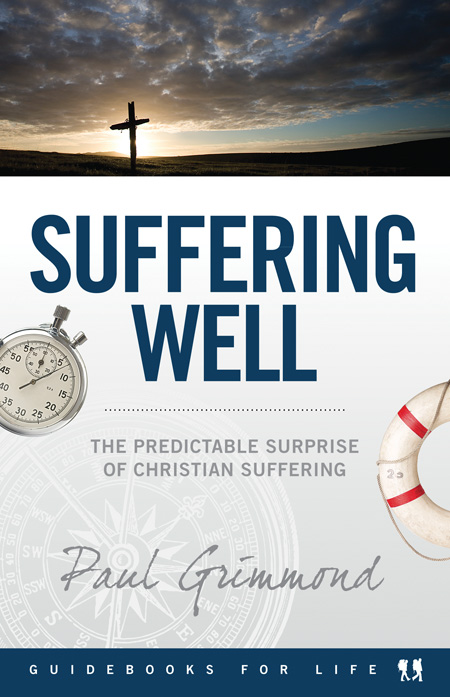
BOOK REVIEW: Suffering Well: The predictable surprise of Christian Suffering by Paul Grimmond (2011), Matthias Media.

It was John Wesley who famously said of Christians in his era “our people die well”.  Presumably they died strong in the faith, with an understanding that this life is not all there is, or all that matters, and with hope in the glorious future that awaits in Christ beyond the grave.

Could the same be said of Christians in the 21st century? How do we cope with suffering in general, let alone death? Do we suffer and die ‘well’?

In the first chapter of his challenging book ‘Suffering Well’ author Paul Grimmond states his case: when it comes to suffering we are prisoners of our age who have “lost touch with biblical truth because of the constant hum of worldly thinking that swirls around in our heads” (p.18). As a result we don’t know how to view suffering, to suffer well, or how to encourage one another in suffering for Christ.

I read this book during a month of suffering; it was not the sufferings of physical attack or public persecution, simply that the flu had descended, making an ordeal of every simple daily task. As I suffered and coughed, Grimmond’s book helped resolve some of the dilemmas about suffering which I had wrestled with before. Here are just two main points (of many great ones which the book raises) which will stay with me:

1. Don’t come to the Bible with the world’s view of suffering – start with Bible’s view and look at suffering in our world through those eyes. In the world’s view suffering, or at least the avoidance of suffering, is the new moral standard. According to Grimmond it is the only determinant of what is right: a disabled child will suffer, and so will the parents, so it is apparently “right” to terminate their existence before birth; the same goes for an injured dog and an old person with terminal cancer. Suffering is seen as the only evil, which must be avoided at all costs. “Suffering is a major part of the argument against God’s existence. The very presence of suffering . . . is a key piece of evidence. If we really have an all-good and all-powerful God then how can there possibly be suffering?” (p.25) More than that our world believes religion is one great cause of human suffering. “In our brave new world, suffering means that God is immoral and Christians are immoral” (p.28) since we believe in a God who would allow suffering to exist!

If we come to the Bible with this worldly view in our heads, no wonder we don’t know what to do with suffering, or how to speak up for the God who allows it. Grimmond takes us back to the Bible to see that God is in control, that God is God and I am not! He is the potter, we are His clay. God is in complete control over creation, which means that “the suffering of God’s creation occurs by his hands . . .Scripture never suggests suffering and difficulty come because God is out of control; rather . . . they come because he is IN control.” (p.46-7). This may seem a big and bitter pill to swallow, but it is the teaching of the Bible through and through. This God is not a god we have created, one the world would approve of, a benevolent grandfatherly figure who simply indulges us moment by moment. God wills, He purposes, He acts, He works all things together for good, including suffering. “The world is suffering because it stands under the heavy hand of God’s judgement . . . Our world, marked by suffering and death , is a world that has been bent out of shape BY GOD. . . God has visited upon us the results of our sin” (p48-49).
Yet this God has involved Himself in the suffering of His creation; suffering is at the heart of His plan to create a perfect world and glorify himself. Jesus faced the suffering that should be ours. While suffering may be painful and awful, it comes from the hand of a sovereign God who will use it for good, and who guarantees that good by the gift of his Son (p64).

2. Don’t downplay the real suffering for Christ that Western Christians experience – being scorned, reviled and mocked! In Chapter 6, entitled “Where’s all the persecution gone?” the discussion moves from the general suffering of our fallen world to specific suffering for being a Christian. Grimmond wants us to see that in taking up the cross of as Christ’s disciple, the imminent danger is not usually physical hardship, but the danger of being ashamed of Christ. “When we think of suffering for Christ “persecution” is the word we naturally use. But in the bible the language is much more diverse. It talks of being reviled and spoken against and maligned . . . The Bible’s big question for us is will you obey Jesus and speak for Him, or will you be ashamed of his words?” (p.96).  Grimmond sees the great danger for Western Christians is “the slow, spiritual death of a thousand tiny compromises crouched at the door, waiting to devour our hearts. . . at the moment we need it most we have let go of a robust theology of belonging to Christ and suffering for him”(p.97).  Though we live in a culture where words are cheap and people can say what they want and be rude to each other all the time, we don’t have to see it as weakness if those words really sting us. Grimmond suggests that we do not serve or encourage one another well when we say we don’t suffer, because it reinforces the view that suffering for Christ is only physical. “As a result we fail to teach each other to live without shame in the face of the more subtle pressures in our culture” (p.98).  So, this IS persecution and we discourage each other when we downplay it! We should also rebuke ourselves when we fear it or shy away from it. This is the shame we are NOT to be ashamed of! With regards to the promise of suffering for and with Christ, Grimmond insists we teach it to people from the moment of conversion. We must share this truth with our children so they grow up rejoicing that they’re counted as Christ’s when they suffer for him(p.103).

Grimmond says we also suffer as Christians because of our compassion. When we see the suffering, the sin, the lost people of this world through God’s eyes, it brings deep sorrow. And as for the ‘predictable surprise’ of the title . . . I might leave that for you to read about in chapter 5! If you want to get a better handle on the question of suffering, and find hope in the midst of it, grab a copy of Grimmond’s book, which successfully turns our eyes back to our Sovereign God, who is in control of all our suffering.

What are we Christians called to do in the face of suffering? We are called to wait well, to praise our God in every moment, and to ask for God’s strength to do good – even to our enemies (p.139).

You can buy Paul Grimmond’s book from Matthias Media by following this link: suffering-well

You may also like:
Thinking about Psalm 73                                                                    Lessons from the Tissue Box
asaphrunny-nose

The gracious God who satisfies

“God is the highest good of the reasonable creature, and the enjoyment of him is the only happiness with which our souls can be satisfied. To go to heaven fully to enjoy God, is infinitely better than the most pleasant accommodations here. Fathers and mothers, husbands, wives, children, or the company of earthly friends, are but shadows. But the enjoyment of God is the substance. These are but scattered beams, but God is the sun. These are but streams, but God is the fountain. These are but drops, but God is the ocean. Therefore it becomes us to spend this life only as a journey towards heaven, as it becomes us to make the seeking of our highest end and proper good, the whole work of our lives, to which we should subordinate all other concerns of life. Why should we labor for, or set our hearts on anything else, but that which is our proper end, and true happiness?”
(Edwards, “Christian Pilgrim,” in The works of Jonathan Edwards)

Blessings (through raindrops!)

Blessings laura sThis is a song by Laura Story, author of the very popular song Indescribable, a song made famous by Chris Tomlin. (Apparently she wrote the song with the help of Tomlin’s bass player.)  I love the way she challenges us to remember that even circumstances we don’t consider “blessings” may actually be just that! My favourite line comes at the end of each chorus: “What if the trials of this life are Your mercies in disguise?” You can listen to the song by following the link at the end. Blessings!

“We pray for blessings, We pray for peace,
Comfort for family, protection while we sleep
We pray for healing, for prosperity,
We pray for Your mighty hand to ease our suffering
All the while, You hear each spoken need,
Yet love us way too much to give us lesser things
‘Cause what if Your blessings come through raindrops,
What if Your healing comes through tears,
What if a thousand sleepless nights are what it takes to know You’re near
What if trials of this life are Your mercies in disguise?

We pray for wisdom, Your voice to hear,
And we cry in anger when we cannot feel You near
We doubt Your goodness, we doubt Your love,
As if every promise from Your Word is not enough
All the while, You hear each desperate plea
And long that we’d have faith to believe
When friends betray us, When darkness seems to win
We know the pain reminds this heart
That this is not, this is not our home
‘Cause what if Your blessings come through raindrops
What if Your healing comes through tears and
What if a thousand sleepless nights are what it takes to know You’re near
What if my greatest disappointments
Or the aching(s) of this life
Is the revealing of a greater thirst this world can’t satisfy
And what if trials of this life,
The rain, the storms, the hardest nights
Are Your mercies in disguise.”


You may also like:
Lessons from the tissue box                                                                               How to Suffer Well
runny-noseSuffering Well book cover


We bear the creativity of a loving Creator

The only reason we can be creative people, who can make unique and beautiful designs in art, craft and music, is because we bear the image of an infinitely and extravagantly creative God. And when we observe how passionate some people get about their crafty creations, we are reminded of the Father’s passion for us, His new creations! Here are some thoughts I shared at a women’s Craft Day a little while ago:

Why do we treasure the things that we make? To other people it seems we place inordinate value on our creations, whether they be for ourselves or others. But we know all the thought and creative energy we have put into them. We have an intimate knowledge of their design and have blisters and sore eyes from the hours of careful manual work. We value them so much more highly than mass produced, shop bought items (just as we might value our child’s homemade card and craft so much more). Our finished creations take pride of place in our homes and on our bodies!  (One friend shared today how when she found a precious quilt she made someone scrunched up in the bottom of their cupboard; she quickly retrieved the object and decided to give it the love and care it deserves herself!) While others may admire the skill, the beauty and the design, it is their creator who holds them most highly valued. Since we know our creations so well, we also know their flaws, and are willing to work to improve them. We even treasure the broken, unfinished and seemingly useless creations, hoarding them away for the day when we will get around to finishing them.

The relationship between Creator and created is very unique, and how wonderful it is to remind ourselves that we are God’s treasured creation! He made us, He intimately knows our design, our flaws, our unfinished bits and He knows what He wants us to be when we are finished. God values us as His greatest treasure. Here are some of the phrases from God’s word which He uses to describe us. We are: His offspring, His prized possession, His handiwork, craftsmanship, masterpiece, the pinnacle of His creation and He rejoices over us with singing! This is the HOPE we have as Christians: that we are not biological accidents, but rather we are unique creations of a loving Creator. He knows us by name and by voice and fingerprint, and He has planned our days.

Rejoice! We are God’s treasure! He showed us this by sending his Son Jesus to save us from the punishment our rebellion deserved. “For God so loved the world that He sent His only son that whoever believes in Him will not perish but have everlasting life.” John 3:16
Here are two final points to ponder, which I believe you will find to be true as you follow your Creator:
1. We will be most satisfied in life when we treasure the One who treasures us most (Our Creator God!)
2. And He’s not finished making us yet! He is faithfully shaping us to be more and more like His son.

As the Message version of the Bible says in 2 Corinthians 3:18 our lives will be “. . . gradually becoming brighter and more beautiful as God enters our lives and we become like Him.”

Romans 8:28-30 (ESV)
And we know that for those who love God all things work together for good, for those who are called according to his purpose. For those whom he foreknew he also predestined to be conformed to the image of his Son, in order that he might be the firstborn among many brothers. And those whom he predestined he also called, and those whom he called he also justified, and those whom he justified he also glorified.

Lessons from the tissue box

runny-noseA friend who knows I’m sick at the moment has passed on a deep theological question, probably just to keep me busy and distracted from the headcold and sore throat. Here is the question: is God teaching us stuff in sickness always, or is sickness just bad stuff that happens as a result of being in a sin filled world, or is it both? Well I could just say ‘both ‘and be done with it! But let’s ponder for a little while.

It seems that we all have become convinced that the default setting of our body should be 100% health. We think that eternal youth is possible if we just eat well, sleep well, exercise and use the right face cream. From the moment we are born our bodies begin to visibly grow and blossom, but at the same time we are degrading! Skin cells die and flake off even on those cute little babies. And there are a thousand other processes of repair (and warfare) going on behind the scenes, minute by minute, day after day, year after year, that we are not even aware of.
Sciencemuseum.org.uk says: “A cell can die in many ways – through infection, poisoning, overheating or lack of oxygen. An uncontrolled death is messy: the cell swells up, and its contents leak away. This may damage surrounding cells. But there is another, tidier way to go – programmed self-destruction, or apoptosis. It seems that cells often choose to kill themselves. We now know that controlled cell death is crucial for normal human development and good health throughout life.”
Yet strangely it is only when this ‘cell death and repair’ process inconveniences us (or threatens our very existence) that we notice it and label it ‘sickness’. The pain in the throat, the headache and the runny nose all represent an unseen and amazing battle being fought in our bodies. They are simply doing what God designed them with the ability to do – fight off intruding viruses and other random elements. Now this is cheery isn’t it!

If sin had never entered the world through the first Adam, would people still have had to endure sickness? Probably? Their immortal bodies, that were NOT going to have to experience death, surely would have to repair themselves, and sometimes that fight to repair would mean ‘sickness’. (This is all supposition, please understand).  Sickness is perhaps not so abnormal afterall, but a mechanism designed by God to sustain and repair us. And as it is part of normal life (though perhaps made more difficult by fall of man and the groanings of the imperfect world around us) it is something we must learn to be content with and glorify God in.

Paul’s words in Philippians 4 perhaps apply here: 12 I know what it is to be in need, and I know what it is to have plenty. I have learned the secret of being content in any and every situation, whether well fed or hungry, whether living in plenty or in want. 13 I can do everything through Him who gives me strength. Being sick brings a greater need, for sleep, for relief from pain, for someone to go to the shops and buy more tissues and panadol. Yet this is just part of the normal daily challenge to look to God and see this world and ourselves from His gracious perspective. He IS teaching us everyday, but could we say especially in days of sickness we LEARN more? Perhaps we are more teachable when it is a greater challenge to be content in Him. We learn more because our self-reliance, on our own abilities and physical strength, is sorely challenged.
But in Christ, who gives us strength, we can be content even in sickness. It will be a battle, as we remind ourselves that we are in Him, and seek to rest on His strength, not ours.

Sickness also helps imprint in our hearts and minds this truth from Romans 8:28 (NLT)
“. . . God causes everything to work togetherfor the good of those who love God and are called according to His purpose for them”.

Sickness teaches us to trust Him more – and rest in Him.

You may also like:
How to suffer well
Suffering Well book cover

Thinking about Psalm 73: What did Asaph find in the Sanctuary?

asaphMany thanks to guest preacher Andrew Bain who invited us last Sunday (Mother’s Day) to consider our attitude to the prosperity of the ungodly in the world. In Psalm 73 Asaph expresses at length his bitter envy of ungodly prosperous people and he cries out to the Lord at this extreme injustice. Then midway through the Psalm he takes the time to visit God’s sanctuary (probably the temple, to pray and read God’s word). There he realises how seriously skewed was this envy and this cry of injustice!  “I finally understood the destiny of the wicked” (v17). “I realised that my heart was bitter….I was foolish and ignorant” (v21-22).   In the sanctuary Asaph gains renewed confidence in the goodness of God, and realises that it is the ungodly, not himself, who are on the “slippery slope” to ruin.

What a strange coincidence (God-incidence!) that this Psalm was explored on Mother’s Day, a day when some of the “unfair” aspects of motherhood are supposedly remedied, with gifts and much  attention and thanks being showered on mothers. The world has been shouting at us for some time that motherhood is unfair, that our biology has put women at a disadvantage in a society where prosperity and material gain is the ultimate good (and god!). When we compare our opportunites with those of most men in the developed world, it can seem unfair that women must put their career and their bank balance on hold in order to bear children (in considerable agony). . . and then stay home with them, doing daily repetitive tasks which, though extremely valuable, are deigned unimportant in the eyes of the world. Even the alternative seems unfair: we put the children in day care, head back to work and then, exhausted, enjoy very little of our life as we juggle a thousand demands on our time and attention. We may even get to the point of envying non-Christian women, who sleep in on Sundays and don’t have to add church commitments, bible reading and prayer to their already full diaries! How unfair is it that women often must battle loneliness when at home with little ones, and again at the other end of life, lonely, widowed and apparently forgotten? How unfair is it that some women who want children have been deprived the opportunity, while the ungodly despise and dispose of their unborn children in great numbers?

So what do we do when these bitter thoughts creep in, settle down and discourage us? Like Asaph we need to turn to God. As Christians, we are the temple of the Holy Spirit, He lives in us, yet we must take the time to “tune in” to God’s voice. The “sanctuary” is a place we must go to daily, as we turn away from the voices and attitudes of the world, and tune into God’s voice in His word and through prayer. Paul challenges us in the book of Romans: “Do not be conformed to this world, but be transformed by the renewal of your mind” (Rom 12:2). As we tune into God’s voice, in His word, the Spirit helps us understand and see things from a right perspective. God reminds us that the world we live in does not hold correct opinions about heavenly realities: who is King, who is in charge, what is right and wrong, and the ultimate purpose of mankind! God reminds us of the riches we have in Christ, which far surpass anything we could aspire to own or achieve in this “unfair” world. Let’s turn to God and restore our confidence in his goodness. He sent His own son, Jesus, to face extreme injustice, nailed to a cross for the sins of those who were his enemies (us!) and because of this we can draw close to God. Yet I still belong to You; You hold my right hand.  You guide me with your counsel, leading me to a glorious destiny. Whom have I in heaven but You? I desire you more than anything on earth. My health may fail, and my spirit may grow weak, but God remains the strength of my heart; He is mine forever. (Psalm 73)