“It is so tempting and attractive to preach to yourself a gospel of your own righteousness, but in doing so, you minimise your daily need for grace.”
Paul David Tripp

“It is so tempting and attractive to preach to yourself a gospel of your own righteousness, but in doing so, you minimise your daily need for grace.”
Paul David Tripp
If you are looking for new ways to sing the Bible’s song book (the Psalms) with your local church then NEW SCOTTISH HYMNS could have some answers. If you liked the version of Psalm 139 then click here to download and print sheet music.
Here is what they have to say about their music:
 ABOUT THIS PROJECT
One aim of this album was to introduce some new songs that churches in Scotland might find useful in their own unique worship services. Scottish traditional music and folk melodies have an adaptable quality that renders the best of them timeless. Paraphrases from the Scottish Psalter like Psalm 23 have been sung across the world for centuries, and it’s important to remind new generations that these ancient words of scripture remain profoundly relevant. Scottish writers like Horatius Bonar and James Montgomery showed that a wealth of transforming biblical truths could be taught and absorbed through songs, so we also wanted to introduce examples of their lyrics to new listeners.
The motivation for making this hymns recording did not spring simply from a desire to create art. Hymnwriting is about making music firstly out of gratitude to Jesus Christ. With all our imperfections and limitations, Christians struggle to express anything more than an echo of His greatness, but we believe that this is a thing eminently worth sharing. For the person who finds this idea strange, it will hopefully make more sense as you listen! Our hope is that every listener might hear the joy that comes from the gospel: the good news of God’s saving and transforming love, made available to every person through his son.

This article from Paul Steinbrueck is an interesting read for anyone involved in promoting the gospel online, particularly through the local church:
What’s the best way to share the good news of Jesus Christ with people in your community? Are churches supposed to put on great services and outreach events that draw non-Christian people from the community to hear the Good News? Are individuals supposed to share their faith with their friends and neighbors?
The answer, of course, is both/and.
Even more than that, though, churches and the individuals who make them up can both be more effective at sharing their faith – online and offline – if they recognize what they’re each good at and work together.
People don’t have relationships or friendships with a church. They have relationships with other people. They listen to people. They trust people. It’s the people within a church that have relationships with those outside the church that don’t know Christ. It’s also the people within the church that have God stories. Their lives have been transformed. They have experienced God’s grace, provision, and protection.
Churches are great organizers and facilitators. They put on services and events. They have buildings and websites that can serve as the hub of their community of Christ. They can communicate and distribute content to everyone whose connected with the church.
Knowing that, here are…
7 Ways Churches and Their People Can Work Together to Share the Gospel Online
1) Share sermons. Churches – make your sermons available online. People – share them with your friends on Facebook, Twitter, email. Send the link to specific people who you think would benefit from seeing/hearing it.
2) Share events. Churches – facilitate services and events geared for unchurched people. Create web pages and Facebook events for them. Promote them on Facebook and Twitter. People – invite your friends to them.
3) Share God stories. Churches – ask people in your church to share their God stories in a worship service. Put video of those stores on YouTube, Facebook, and your website. People – share these stories with your friends on Facebook and Twitter. Send the link to specific people who you think can relate to the stories.
4) Share life. People – blog, Facebook, and tweet about what you see God doing in your life. Churches – listen to your people’s Facebook updates and tweets. Retweet those that will encourage others in your church.
5) Inspire and train. Churches – inspire and train your people to live their faith online. Preach about it. Provide resources like those on the Internet Evangelism Day website. People – listen, learn, and life your faith.
6) Collaborate. Churches – seek out and embrace the biggest bloggers, Facebookers, and Twitterers in your church. People – seek out your church leaders. Collaborate.
7) Share great content. Churches – follow creators of great Christian content – authors, bloggers, podcasters, video producers. Share their great content online. People – share and retweet the great content your church is providing you with your online friends.
Which of these ways is your church and its people working together to share the gospel online? What other ways can churches and their people work together to share the good news online?
Even for professional worship leaders, it is easy to get so wrapped up in the logistics of leading a worship ministry that we neglect the daily art of worshiping God.

Sharing today some interesting thoughts from Nick Morrows blog, on the topic of daily worship. I’ve had an inking for a while now that many spiritual disciplines (staple daily activities for Christians for centuries) have now fallen aside in our culture of excessive entertainment and instant gratification. Other things have replaced them. (Think about things which have become daily ritual for you – are they good or the ‘best’ things you could do on a daily basis….are they in any way helping to grow your faith in Christ?)
“The deeper I dive into the world of Christian worship history, the more I want to go. Most people hear the word “history” and want to fall asleep in about seventeen seconds. But I’m convinced that we can learn much about ourselves and our spiritual ancestry by becoming students of worship history. Understanding worship history gives worship leaders a well-rounded knowledge of where we come from. As the famous saying goes, “Those who don’t learn from history are doomed to repeat it.”
Here are a few themes I’ve seen in worship history, along with some practical suggestions in incorporating them into our worship services:
Worship as a daily practice. The earliest Christians inherited the “Tefillah” from their Jewish roots, a list of eighteen prayers to be said three times daily. Worship remained a daily ritual for most  Christians up until the Middle Ages.
Many of us shudder when we hear “worship” and “discipline” mentioned in the same sentence. Many Christians today scratch their heads as to how worship works itself into our daily lives, outside of Christian radio and maybe a morning Scripture or two.
Even for professional worship leaders, it is easy to get so wrapped up in the logistics of leading a worship ministry that we neglect the daily art of worshiping God. Incorporating worship into our daily routine is more about intentionality than anything. Whether it’s reciting the Lord’s Prayer, a lunch time prayer walk, or bedtime confessions, our daily worship routines shape who we become.”
http://nickmorrowmusic.com/standing-on-the-shoulders-of-the-saints/
“We no longer expect children to endure boredom for a second. In our infancy we bounced balls, fed the rabbits, made a model with Mechano and watched the ascent and descent of a yo-yo. We also read books. Our meals were pretty predictable, and a visit to the local park was an event. Today visits to the zoo, bouncy castles, jumping on a trampoline are routine necessities. Daily playgroups and day-nurseries fill every vacant minute with watching videos, learning how to play with computers and bouncing on the soft-play. Everything is wound up to a pitch of noisy razzmatazz. The toys children play with are made of garish plastic of primary colours. The child who would cheerfully have eaten mashed potatoes and vegetables every day is now encouraged to stimulate its palate and develop a taste for chillies, aubergines, vindaloo curry or garlic.
A.N. Wilson has written, “Pascal said that all human trouble stemmed from our inability to sit quietly in one room. If he was right, then we have serious trouble ahead, with an extraordinarily restless, vacuous generation of human individuals waiting to take over the world. The lesson of how to be bored must be learnt if the child is to grow up sane, and this is for two reasons.
First, boredom is what most human lives consist of. Few jobs are interesting all of the time; and when retirement age has been reached, the long days of emptiness cannot possibly be entirely devoid of tedium. Learning how to cope with these periods of vacancy can actually reduce, or eliminate their boringness. A human being who has only grown up with the notion that he or she must be stimulated all the time will never be able to assuage ennui in the way that we grown-ups do – by walks, gardening, crosswords, or the inner life.
And this is the second and greater reason for hoping that a child will learn how to cope with an eventless afternoon. Out of what feels like boredom comes the capacity to be inward. Unless you have been bored, an essential part of your imagination will never have been allowed to grow. Stories, poetry, prayer and mathematics, all activities which have stretched the human race…have developed out of its capacity to live with boredom.”
This excerpt comes from ‘A Child Was Bored in the Service | Banner of Truth’
http://banneroftruth.org/us/resources/articles/2001/a-child-was-bored-in-the-service/
In honour of John Newton’s birthday I’m posting this one from two years ago, which many of you fine followers probably missed. I trust you will enjoy these contemplations about the enduring nature of Newton’s Amazing Grace.
 It just dawned on me that though I have been blogging for almost a year now on the subject of music and grace, I haven’t even made a single mention of that most famous combination of music and grace: John Newton’s “Amazing Grace“. It has been an anthem of hope and faith for generations.
But why has this hymn had such an impact? What does Newton point out about God’s grace that resonates with us so strongly? Is there something in the music which made it so popular?
At the time Newton penned Amazing Grace, hymnbooks did not contain music; they were simply religious poetry books. The first time Newton’s lines were joined to music was in 1808, in A Companion to the Countess of Huntingdon’s Hymns, set to the tune “Hephzibah” by English composer John Jenkins Husband. More than twenty musical settings of “Amazing Grace” circulated…
View original post 572 more words
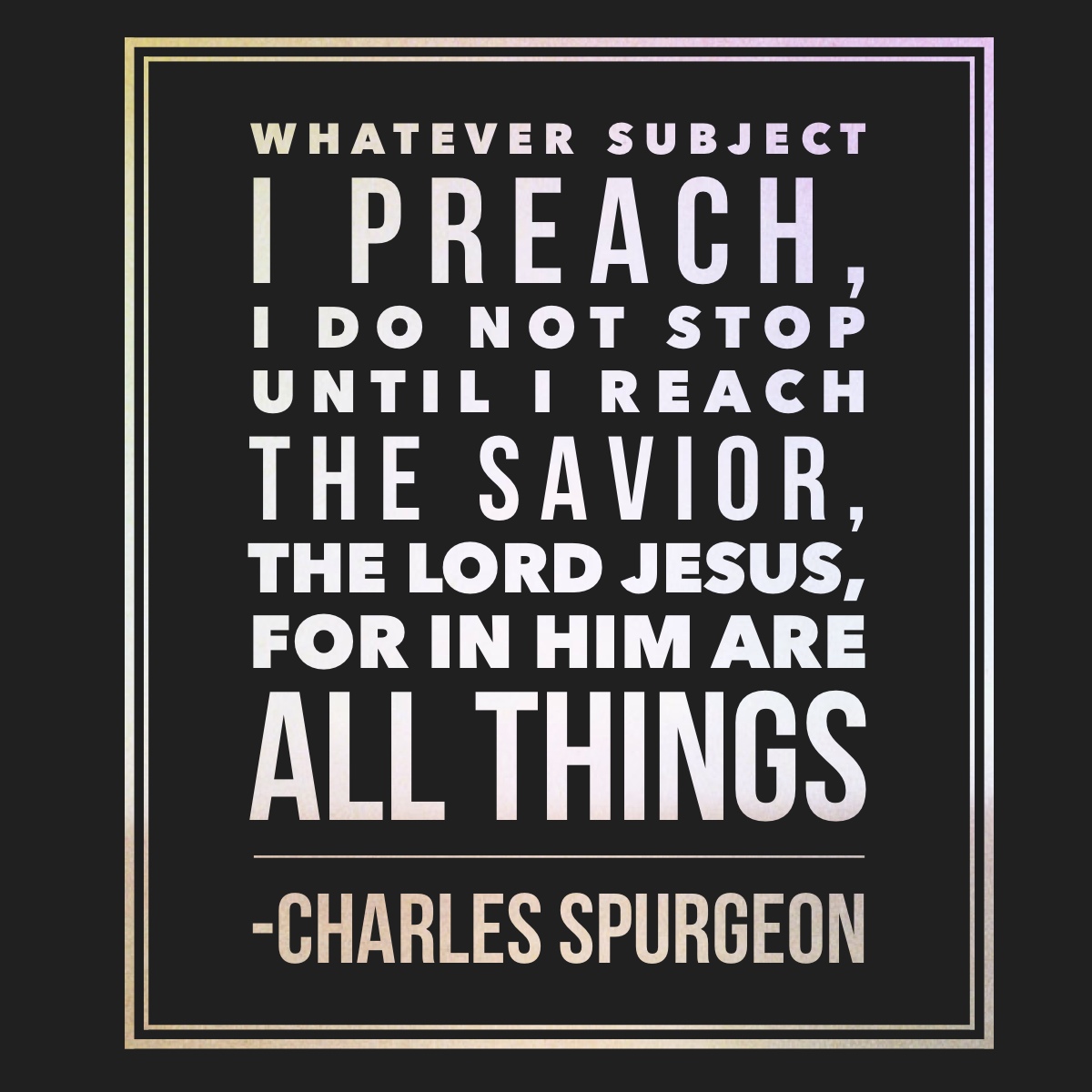 For a preacher to have mastery of a passage, the passage ought to have mastery over him.
This will make sense to some of you . . just a little musical humour to brighten your day. Blessings!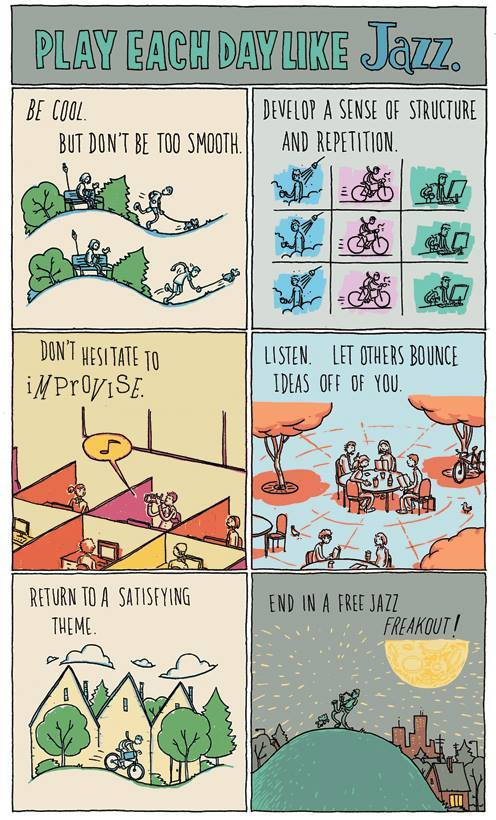
Sharing an exciting announcement from Sovereign Grace: A new Christmas album, Prepare Him Room: Celebrating the Birth of Jesus in Song, will be released on September 1. Here are the details from Bob Kauflin:
 “We released our first Christmas album, Savior: Celebrating the Mystery of God Become Man, in 2006. A few years ago I started thinking we should do another one. After all, we can never have too many songs that help us reflect on and celebrate the wonder of Jesus becoming Emmanuel, God with us.
So I was intrigued last fall when my good friend, Marty Machowski, asked if Sovereign Grace Music would be interested in producing a Christmas album to accompany an Advent curriculum he had written. After a few conversations with Marty and his publisher, New Growth Press, we decided it would be a great opportunity. The result was our next album, Prepare Him Room: Celebrating the Birth of Jesus in Song, due out Sept. 1. While the album will stand on its own, thirteen of the fourteen songs on it correspond with lessons from Marty’s devotional.
Writing songs to specific passages of Scripture in each lesson caused us to explore some new territory for Christmas songs. While not all of the songs ended up being congregational, I’m pretty excited about what we ended up with.
Below is a preview version of a song I co-wrote with Jason Hansen, a pastor in the Sovereign Grace Church in Gilbert, AZ. We started it at a songwriter retreat in January and finished it over many long distance sessions using FaceTime and Google Docs.
The song is called “Who Would Have Dreamed” and is based on Micah 5:1-2.
Now muster your troops, O daughter of troops; siege is laid against us;
with a rod they strike the judge of Israel on the cheek.
But you, O Bethlehem Ephrathah, who are too little to be among the clans of Judah,
from you shall come forth for me one who is to be ruler in Israel,
whose coming forth is from of old, from ancient days.
We tried to capture the wonder that God would choose unlikely Bethlehem as the birthplace for the Messiah, and the greater wonder that the Son of God himself would be born as an infant. Here are the lyrics:
On a starlit hillside, shepherds watched their sheep
Slowly, David’s city drifted off to sleep
But to this little town of no great renown
The Lord had a promise to keep
Prophets had foretold it, a mighty King would come
Long-awaited Ruler, God’s anointed one
But the Sovereign of all looked helpless and small
As God gave the world His own Son
And who would have dreamed or ever foreseen
That we could hold God in our hands?
The Giver of Life is born in the night
Revealing God’s glorious plan
To save the world
Wondrous gift of heaven: the Father sends the Son
Planned from time eternal, moved by holy love
He will carry our curse and death He’ll reverse
So we can be daughters and sons
And here’s the preview (above). I’m delighted that it’s being sung by my youngest daughter, McKenzie.”
(By Bob Kauflin)
I’ve been enjoying the songs on this album (Light meets the Dark) by a group called Tenth Avenue North. The song below (track 1) reveals some great aspects of grace, of what happens when grace collides with the darkness within us. It was used in the film ‘Grace Card’. I trust you will enjoy!
“Healing Begins”
So you thought you had to keep this up All the work that you do So we think that you’re good And you can’t believe it’s not enough All the walls you built up Are just glass on the outside
So let ’em fall down
There’s freedom waiting in the sound When you let your walls fall to the ground
We’re here now
This is where the healing begins, oh This is where the healing starts
When you come to where you’re broken within
The light meets the dark
The light meets the dark
Afraid to let your secrets out
Everything that you hide
Can come crashing through the door now
But too scared to face all your fear
So you hide but you find
That the shame won’t disappear
So let it fall down
There’s freedom waiting in the sound When you let your walls fall to the ground
We’re here now
We’re here now, oh
This is where the healing begins …
Sparks will fly as grace collides
With the dark inside of us
So please don’t fight
This coming light
Let this blood come cover us
His blood can cover us
This is where the healing begins …
“Create in me a pure heart, O God, and renew a steadfast spirit within me.” Psalm 51:10
Praising God in the everyday
Following Jesus while Seeking Joy and Contentment in the Christian Life
The Musings of a Writer / Editor in Training
I'm Ash. I love Jesus. I'm a wife and a mum. I'm a teacher. I'm also studying my Masters of Counselling. I started studying a few years after started the very hard work of engaging my own story of harm and trauma. This is a place where you'll hear my stories, as well as the stories of others. I'll also reflect on faith, healing and walking with Jesus. I pray that these words might encourage you to do your own painful but life-bringing work of examining your own stories, and allowing Jesus to heal the parts of you still locked in shame. For He came that we might have life, and have it to the full. Welcome, fellow traveller.
Words, words, words... well said Hamlet! A little blog to go off on tangents within the worlds of history, literature, TV and film that interest me. From the Tudors to Tom Hardy's Tess, the Boleyns to Bollywood or from the Wars of the Roses to Wuthering Heights, feel free to browse through my musings to pick up extra ideas and points for discussion!
Jesus lover, aspiring writer & Bible Gateway Partner
I write for my own sanity, but I share with hope to encourage you.
Looking for the real God
Life in the country with family, animals, and good food


